
Six researchers from a wide range of disciplines at The University of New Mexico are the 2026 recipients of the Research and Creative Works Leadership Awards, announced by the Office of Academic Affairs.
This year's recipients are innovators in their fields, which include medieval history, anthropology, smart infrastructure, exoplanets, vascular science and resuscitation.
The Research and Creative Works Leadership Awards honor recently promoted faculty who have accomplished outstanding research or creative works in their respective career stage.
The recipients, along with the 2026 distinguished professor honorees, will be recognized at a ceremony next month at University House.
The 2026 Research and Creative Works Leadership Award recipients are:
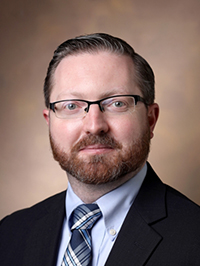
Ross Clark, M.D., associate professor, Department of Surgery, School of Medicine
Dr. Clark has developed a successful National Institutes of Health-funded research program focused on vascular science, particularly using hydrogen sulfide to improve diabetic limb salvage and wound healing, supported by multiple Small Business Innovation Research Program grants. His work includes industry collaborations and patent submissions with ongoing efforts to expand into mechanistic studies supported by a KL2 Career Development Award. He has also launched a new research direction investigating microplastics in vascular disease, generating widely recognized preliminary data and leading a large R01 proposal as well as participation in a multi-institutional P01 proposal. Dr. Clark's work has national visibility and serves as departmental vice chair for research, where he oversees research infrastructure, organizes departmental initiatives and leads faculty development programs to grow the institution's research capacity.
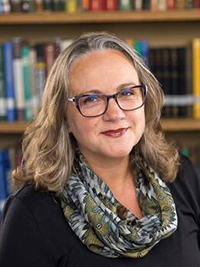
Sarah Davis-Secord, professor, Department of History, College of Arts and Sciences
Davis-Secord is a historian who specializes in intercultural and interreligious relations in the medieval Mediterranean. In recent years, she has built on her award-winning pre-tenure book with an extensive record of scholarship, including a well-received monograph on migration in the Middle Ages; a collaborative teaching volume on global medieval contexts; and edited books and articles in top-tier journals. Her work is often cited for its relevance for understanding intergroup relations today, as well as its theoretical and methodological rigor. Davis-Secord is regarded as an international leader in her field, and her work has received support from the National Endowment for the Humanities and the Institute for Advanced Study at Princeton University.
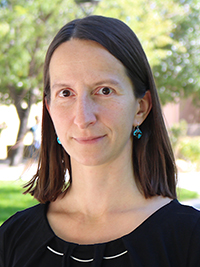
Diana Dragomir, associate professor, Department of Physics and Astronomy, College of Arts and Sciences
Dragomir studies the origin and evolution of exoplanets, or planets around other stars, with a particular interest in exoplanets that orbit far from their stars. She studies the composition and orbital properties of these exoplanets as well as the architecture of planetary systems. In her words, "Ultimately, I seek to answer the question of whether our solar system is common or rare, bringing us a little closer to understanding our place in the universe." She is considered an international leader in the fledging but burgeoning field of exoplanet exploration. She has over 93 publications, including articles in Nature and Nature Astronomy. Dragomir has also received substantial research funding and numerous awards, including a 2025 NSF CAREER Award, the NASA Silver Achievement Medal, and the UNM Office of the Vice President for Research Ovation Award for Research and Scholarship.
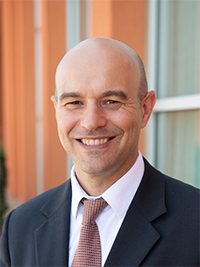
Fernando Moreu, professor, Gerald May Department of Civil, Construction and Environmental Engineering, School of Engineering
Moreu's scholarship focuses on smart infrastructure and uses sensors and wireless communications to assess the health of large structures. Since his promotion to associate professor in 2022, Moreu has published over 35 journal articles and has received four patents and three provisional patents. His work has received over $9 million in external funding is regarded by those in the field as being important to the future direction of engineering. Moreu has received numerous honors for his research leadership, including a Fulbright-Hays Award, an Eminent Engineer award from Tau Beta Pi, and a recent induction as a Fellow of the American Society of Civil Engineers.
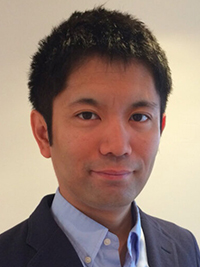
Tatsuya Norii, M.D., FACEP, professor, Department of Emergency Medicine, School of Medicine
Dr. Norii is widely recognized as an international expert in resuscitation and airway management research. He has made key contributions to global resuscitation guidelines through the International Liaison Committee on Resuscitation and the American Heart Association. Dr. Norii has contributed to major institutional initiatives such as the UNM Health Sciences Clinical and Translational Science Center and the SW CACTI grant. He has over 50 peer-reviewed publications, 35 systematic reviews and multiple book chapters, along with leadership of national registries in Japan. His work spans disciplines and has an influence on clinical practice and in acute-care research around the world.
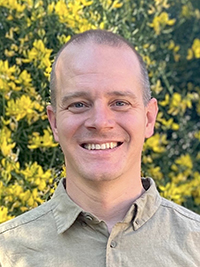
Ian Wallace, associate professor, Department of Anthropology, College of Arts and Sciences
Wallace is an evolutionary anthropologist who studies human morphology and the body's response to physical activity. His particular focus is at the intersection of anthropology and medicine — degenerative diseases that, in his words, "appear to stem from deleterious interactions between our evolutionary heritage and modern environments." His recent fieldwork centers on a geographically isolated indigenous people from Malaysia whose lifestyles have changed due to social, economic and environmental forces. Wallace's research seeks to understand how and why lifestyle changes are occurring among this population and their consequences for health and risk of disease. His work is highly interdisciplinary, frequently cited, well-funded and published in journals such as Science and PNAS (Proceedings of the National Academy of Sciences of the United States of America). Wallace's scholarship is regarded as inspirational, impressive and in the words of one reviewer, "truly transformational."


