
At The University of New Mexico, research is not an abstract pursuit confined to laboratories—it is a public good that strengthens communities, grows the economy, improves health, and prepares the next generation of New Mexico's workforce.
Guided by the Office of the Vice President for Research (OVPR), UNM's research enterprise is built on a simple belief: research is education. Students learn by doing, faculty innovate with purpose, and communities are active partners in shaping solutions to the challenges they face every day—from public health and water security to energy transition and disaster resilience.
"That is why one of my mantras is 'Research is Education," because we are not only educating generations of New Mexicans, but we're also collaborating, innovating, and creating alongside the communities we live in, ultimately impacting our neighbors, businesses, friends, and family," said Vice President for Research Ellen Fisher. "Research changes lives."
As one of the state's R1 research universities, UNM plays a role in translating discovery into real-world solutions that benefit taxpayers across all 33 counties. "It is crucial that all New Mexicans recognize what an R1 designation means to the state – it's the highest level of research activity – because that's where investment begins," said Fisher. "What UNM researchers do in our classrooms, labs and in the field directly impacts the lives of all New Mexicans whether you live in Las Cruces or up north in Taos."
Supporting Faculty, Strengthening Impact
Behind every successful research initiative is a strong support system. Through the WeR1 Faculty Success Program, UNM helps researchers adapt, grow, and lead in a rapidly changing research environment. Programs such as Faculty Scholarship Time (FaST), Fostering Research Expansion in the Social Sciences and Humanities (FRESSH) program, Program for Enhancing Research Capacity (PERC) and Leadership Innovation for Faculty Transformation (LIFT) provide targeted support that allows faculty to launch new ideas, expand interdisciplinary work, and build the capacity needed to attract competitive funding.
"When the State of New Mexico chooses to invest in The University of New Mexico, particularly in our research initiatives, it is making a profound commitment to the well-being and future of not just today's students, but also future generations of New Mexicans."
– Vice President for Research Ellen Fisher
This investment in people is also matched by investment in infrastructure at UNM. The OVPR's administrative units—including research development, compliance, innovation and sponsored projects—ensure that research is conducted responsibly, efficiently and in alignment with public trust.
"When the State of New Mexico chooses to invest in The University of New Mexico, particularly in our research initiatives, it is making a profound commitment to the well-being and future of not just today's students, but also future generations of New Mexicans," said Fisher.
Research That Serves New Mexico
UNM's Grand Challenges initiative exemplifies this mission in action. Designed to tackle problems of statewide, national, and global significance, Grand Challenges bring together interdisciplinary teams of researchers, students, and community partners to address issues that cannot be solved by any single discipline—or institution—alone. The three-tiered structure of the Grand Challenges program provides agility to quickly respond to emerging areas of importance to the State and the Nation.
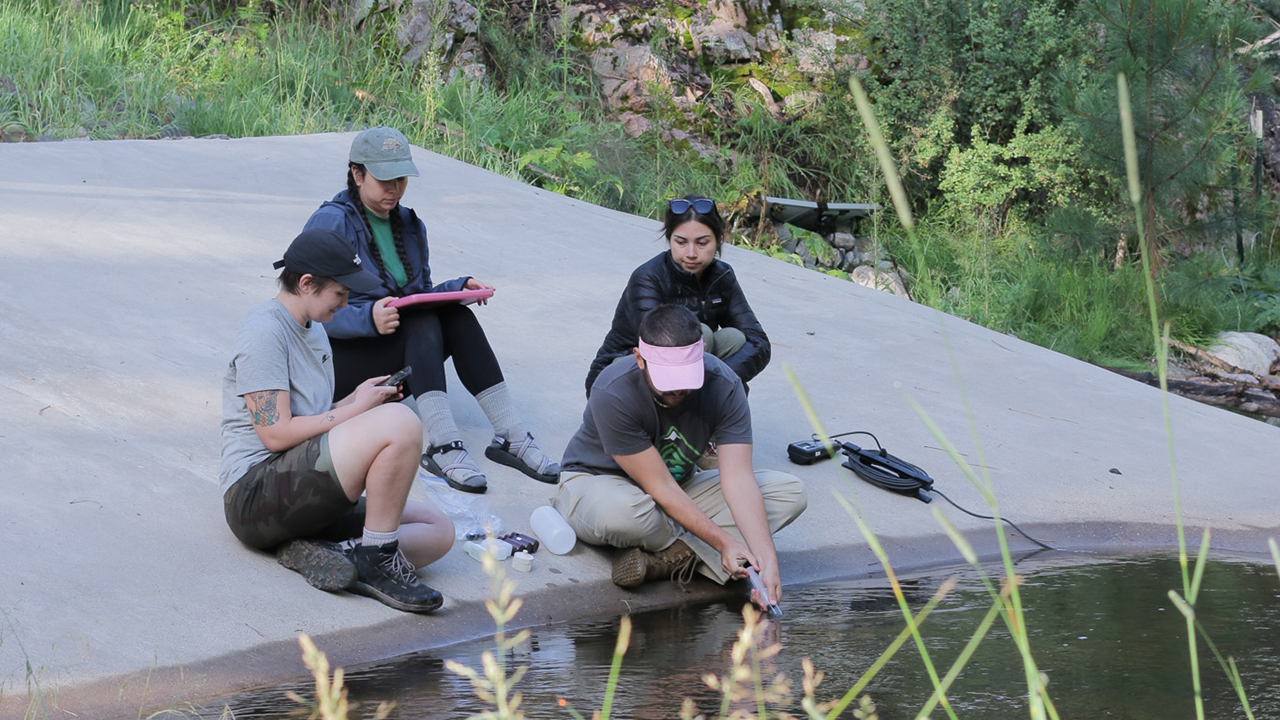
This initiative was launched in 2019 by President Garnett S. Stokes with a $2.5 million institutional investment with three inaugural teams addressing concerning issues within the state including sustainable water resources, substance use disorders, and successful aging. UNM's Grand Challenges has since generated more than $102 million in new external funding, demonstrating a powerful return on investment for New Mexico. These teams have produced more than 65 peer-reviewed publications and engaged in more than 100 community-based events, ensuring that research outcomes remain closely connected to public needs.
The reach of Grand Challenges is an example of research that extends far beyond campus. More than 130 community partners—including Tribal governments, state and local agencies, nonprofits, and private industry—have collaborated with UNM researchers. Over 700 students and 400 faculty and staff have participated, gaining hands-on experience while contributing directly to solutions that matter to New Mexicans.
"Such investments serve as a powerful message of hope and belief in the potential of young Lobos, signaling that the state is dedicated to fostering an environment wherein we elevate our community,"
– Ellen Fisher
In 2025, UNM launched six new Level I Grand Challenge teams focused on issues including disaster resilience, rural perinatal access, safer streets, biodiversity change, multilingual education, and trustworthy artificial intelligence. Selected through a competitive process, these teams reflect UNM's commitment to addressing critical state priorities in an agile way that positions New Mexico to compete for major national research investments as they arise.
"Such investments serve as a powerful message of hope and belief in the potential of young Lobos, signaling that the state is dedicated to fostering an environment wherein we elevate our community," said Fisher. "This commitment not only enhances the quality of life for our children, ensuring they have opportunities in a better and safer community, but also positions New Mexico as a home for talent and expertise from across the nation."
UNM seeks to develop authentic research experiences that are aligned with the needs of careers that are in high-demand, such as those available in the Quantum ecosystem and other high technology sectors. Many of UNM's research projects have collaborators from national labs or industry partners. In other spaces, students receive hands-on training with direct access to state-of-the-art instrumentation and research environments that allow them to become trained with the types of systems used in industry. Studies have shown that experiential learning, such as that obtained through participating in a research project at any level, provides a pathway for employment.
"When the state invests in UNM – we invest in the advancement of human ingenuity across multiple sectors including advanced computing, large-scale 3D printing, new drug discovery, safer practices surrounding artificial intelligence, transformative cancer treatments, and so much more," said Fisher.
A Research Enterprise With Economic Returns
UNM's research activity is a significant economic driver for the state. In fiscal year 2025 alone, the University reported $389 million in research expenditures, supported 1,625 student researchers, received 1,590 awards, and produced more than 3,250 scholarly publications. These investments support high-skill jobs, attract federal and private dollars into New Mexico, and help retain top talent in the state.
"It takes resources of all kinds to stay at the forefront of scientific and technological advances," said Fisher. "Needed resources include people, infrastructure like state-of-the-art facilities and equipment, and programs that meet people where they are to allow them to fully engage in the latest breakthroughs, entrepreneurship, community enrichment and advancement, as well as educational pathways to achieve their goals."
Innovation is a key part of this ecosystem. Over the past decade, UNM researchers have disclosed more than 1,100 inventions, filed 823 U.S. patents, and executed more than 500 license and option agreements. Between 2021 and 2025, UNM helped launch 36 startup companies and currently has 83 active startups spanning bioscience, advanced energy, aerospace and defense, agriculture and water technologies, and quantum systems. These companies translate university research into commercial solutions—creating jobs and expanding New Mexico's innovation economy.
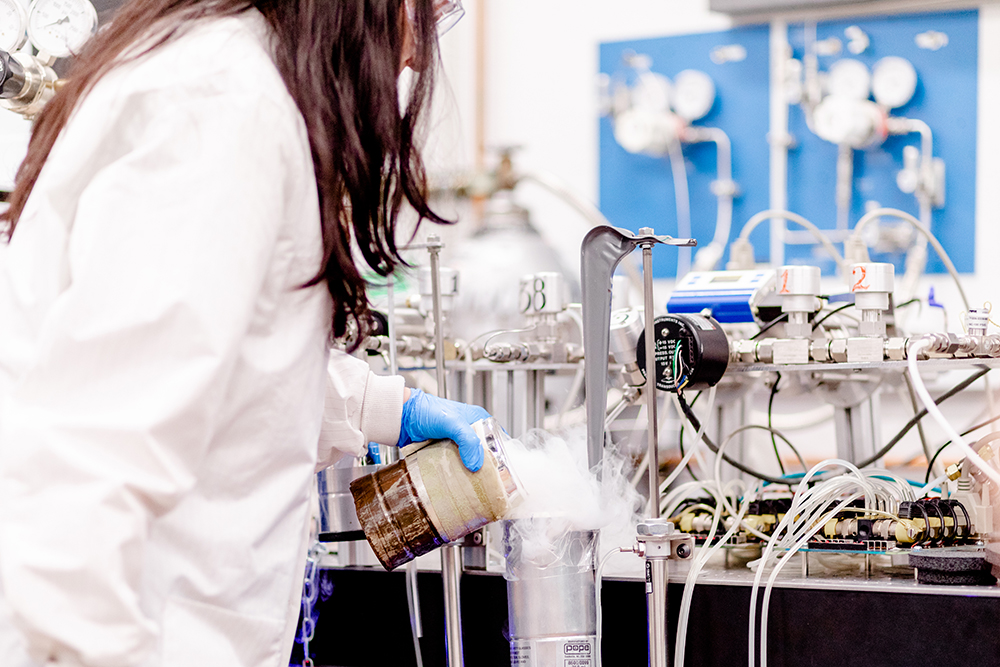
"Many of our research projects have collaborators from national labs or industry partners. In other spaces, our students receive hands-on training with direct access to state-of-the-art instrumentation and research environments that allow them to become trained with the types of systems used in industry," said Fisher. "Lastly, while still in a developmental phase, UNM is working to launch technician training programs in coordination with CNM, as well as a coordinated internship program that would allow UNM students across the institution to directly work with industry partners and entrepreneurs around the state. Expert technicians are also essential for undergraduate and graduate student research training at UNM, and we want to promote the value they provide to our entire ecosystem."
A Return on Public Trust
For legislators and taxpayers, UNM's research enterprise represents a clear return on public investment. It brings federal dollars into the state, prepares students for high-demand careers, supports rural and urban communities alike, and positions New Mexico as a leader in addressing the challenges of the future. However, in her 33 years in academia, Fisher, in addition to seeing the benefits of support, has also witnessed the direct impacts when communities do not invest in research endeavors.
"When we neglect to invest in research, the repercussions extend far beyond the confines of The University of New Mexico; they resonate throughout our communities across the State," said Fisher. "A lack of funding and support for innovative research initiatives stifles progress and limits our ability to address pressing societal challenges. But more importantly, it limits the dreams of our students."
On the other side of the coin, it's clear to see how the positive outcomes from research investment enhance the benefits statewide including students, faculty and the general population of the state.
"It is so transformative for students to actively engage in their chosen field through research and discovery and the generation of new knowledge," said Fisher. "It allows them the freedom and opportunity to truly explore all of their options, to ask the questions and discover the answers that may ultimately be critical for future generations of New Mexicans to continue to survive and thrive."
From improving maternal health access to strengthening disaster preparedness, from advancing clean energy to building safer streets, UNM research delivers results where they matter most—at home. In doing so, the University fulfills its responsibility as the state's most comprehensive R1 flagship institution: to serve the public, steward resources wisely, and turn discovery into lasting impact.


