
Earth may have produced much of its water during the planet's formation, as rocky pebbles reacted with the hydrogen-rich atmosphere surrounding the young planet, according to new research published in Nature Geoscience.
The findings offer a potential explanation for how Earth acquired one of the essential ingredients for life and suggest that similar water-producing processes could be common on rocky planets beyond our solar system.
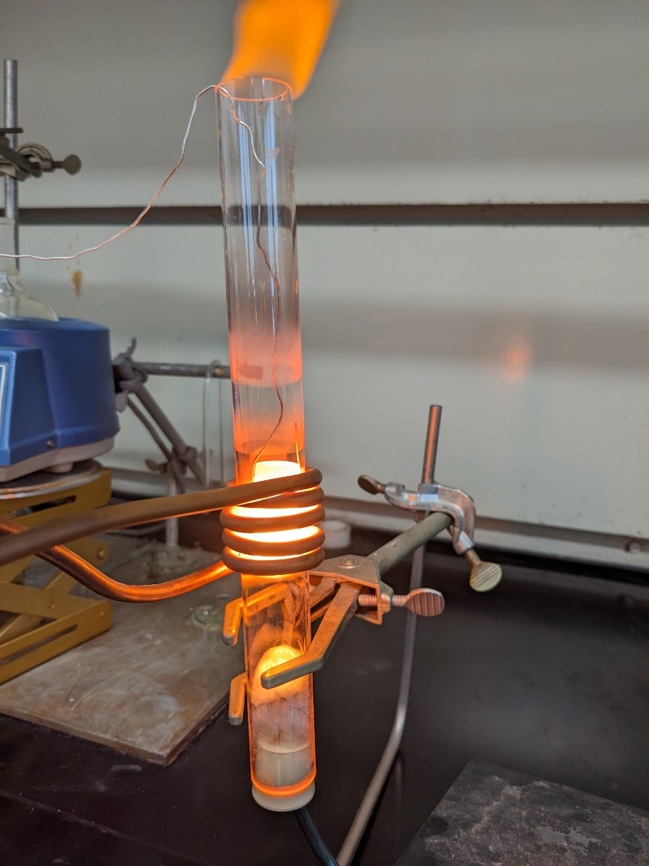
The study, led by graduate student Susmita Garai along with Zachary Sharp, professor and director of Earth and Planetary Sciences and Peter Olson at The University of New Mexico, used high-temperature experiments to investigate how iron-bearing silicate rocks react with atmospheric hydrogen under conditions similar to those found during the early stages of planetary formation.
"Previous ideas about the source of water to Earth rely on an external source, such as comets or meteorites. Here we show that virtually any Earth-sized planet should have water by this newly identified mechanism," explained Sharp. "In order to evaluate the possibility of 'pebble' rain' being a source of water, we needed to construct and execute some very challenging high temperature experiments. Dr. Garai's efforts paid off mightily, as she found that water is produced in just minutes in the high temperature environment of the Early Earth's atmosphere."
Scientists have long investigated how Earth obtained its water as the planet formed. One leading explanation involves long-distance delivery of water-rich material, including icy pebbles that formed in colder regions of the early solar system. However, questions remain about how water was delivered to Earth from so far away, and whether those processes can fully explain the planet's chemical composition.
The new research explores another possibility: Water could have formed through chemical reactions between rocky material and hydrogen in the atmosphere of the growing planet.
As Earth formed, small rocky particles known as pebbles accumulated to build a larger planetary body, a process called pebble accretion. When the growing planet became sufficiently massive, it could develop a hot, high-pressure atmosphere rich in hydrogen. As silicate pebbles fell through this atmosphere, iron oxide in the rocks could react with hydrogen to produce metallic iron and water vapor.
To test this process, researchers heated silicate rock samples at temperatures between 1,200 and 1,400 degrees Celsius in streams of hydrogen and, for comparison, helium. The experiments lasted between 15 minutes and three hours.
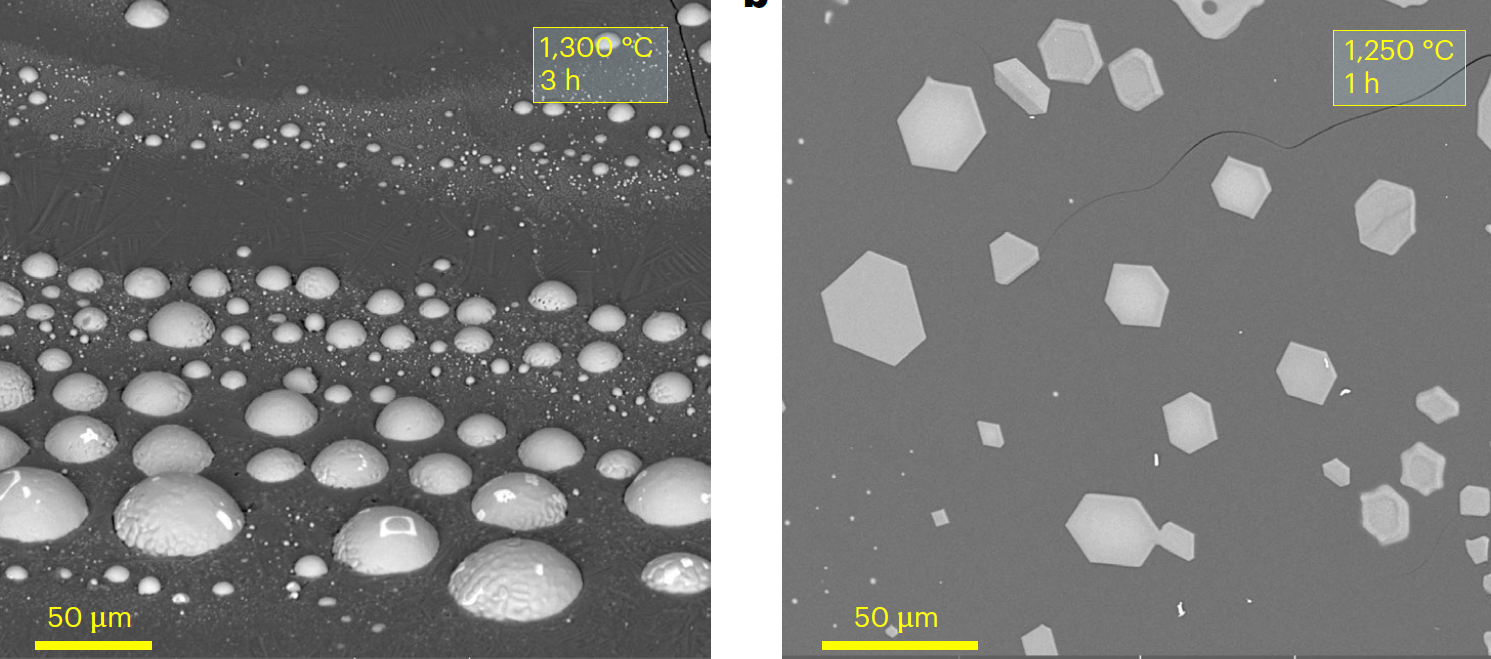
In the hydrogen experiments, nearly 80% of the iron oxide in the samples was converted into metallic iron, producing water vapor in the process. The same reaction did not occur in the helium experiments, demonstrating the importance of hydrogen to the water-producing process.
"We had suspected and hoped that we would produce iron metal and water in our reduction experiments, but we really had no way of knowing how fast and how much. We were quite surprised to find that extrapolation of our work suggests that hundreds of oceans worth of water were likely produced in this way. Looking out over a large body of water, it is hard to imagine that that water may have been produced 4 ½ billion years ago in a hell-like atmosphere, but it very well may have," said Sharp.
The findings suggest that water production may have been an important part of Earth's early development. Rather than requiring all of its initial water to arrive as ice or in other water-rich materials, a growing planet could generate water through reactions between its rocky building blocks and its surrounding atmosphere.
The research also has implications beyond Earth. If similar conditions existed during the formation of other rocky planets, the same chemical reactions could provide a widespread mechanism for producing water on Earth-sized exoplanets.
"The idea of pebble accretion is still relatively new. It's only been around for the last decade. But it seems to solve many problems that exist with the existing paradigm for planet formation," Sharp said. "And now we see that it also can explain why our planet is habitable. By extension, it is reasonable to expect that other Earth-sized bodies circling other stars would also have water and possibly life."
Although the experiments demonstrate a potential mechanism for producing water during planetary formation, determining how much of Earth's water originated this way will require further research.
The study provides new insight into the chemical processes that shaped the early Earth and expands scientists' understanding of the possible pathways through which water can develop on rocky planets.


