
Today's performance sports gear is made from spandex, polyester and even Kevlar. But UO students have been developing new ideas for an old-school staple: wool.
Since 2018, the Woolmark Performance Challenge has partnered with global sportswear companies and invited college students from around the world to weave innovative ideas for using Merino wool to make athletic gear.
Breathable, odor-resistant and sustainable, wool reacts to changes in body temperature to keep users warm when the weather is cold and vice versa.
Graduate students in the UO's sports product design program have consistently excelled in the competition, but this year they marked an all-time high. Five of the 12 finalists for 2025 were Ducks.
"It's very competitive," said professor Susan Sokolowski, the founder of the program, which offers a Master of Science degree. "The challenge is a great way for our students to shine because we focus on maximizing performance in sporting goods."
"The challenge is a great way for our students to shine because we focus on maximizing performance in sporting goods."

The Woolmark Company researches, develops and certifies Australian wool. Through its perennial design challenge for students in higher education programs, the organization advances woolly new ideas for sustainable sports performance products.
For each competition, Woolmark partners with companies such as Salomon, Adidas and Helly Hansen. This year's partner was Alpinestars, which produces motorsports apparel.
More than 700 applicants vied for 12 top spots. Those finalists worked to improve their design concepts with help from pros, then competed in another round for the grand prize.
Stretching wool's advantage
Chloe Burchard took the gold after submitting her entry while wrapping up her master's degree in sports product design. Since then, she graduated from the UO with honors and landed a design job with Burton, which makes snowboards and gear, in Vermont.
"I'm huge on natural materials," Burchard said. "I wanted to be part of the Woolmark Performance Challenge since I first heard about it. When I found out I won, it was exciting and a little surreal."
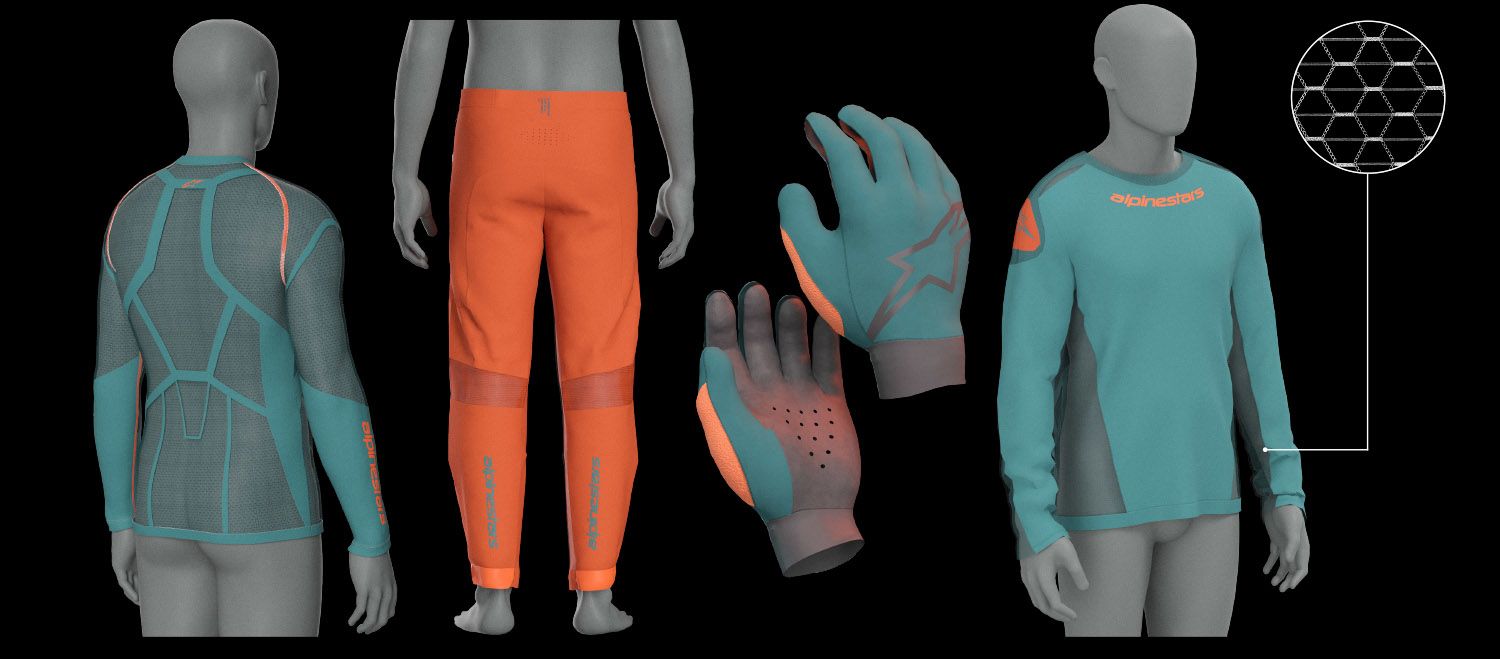
For her winning idea, Vaporate, Burchard riffed on research conducted at the Massachusetts Institute of Technology and Hong Kong Polytechnic University to develop Merino wool apparel for mountain biking that could regulate moisture and temperature.
Her novel approach helps athletes manage body moisture using natural fibers instead of new-fangled solutions such as chemical finishes, electronics or synthetic membranes. The magic of Vaporate comes from geometry and the unusual properties of auxetic fabrics, which get thicker instead of thinner when stretched.
That's because of honeycomb-like structures that unfold when pulled apart, a counterintuitive property that makes them useful for medical devices and protective gear like helmets and kneepads.
Vaporate's auxetic properties create a network of natural fibers that responds to sweat, expanding to push out tiny ventilation openings that let air in and moisture out.
As the Woolmark Performance Challenge winner, Burchard will enjoy a paid, three-month internship in Italy working with the Alpinestars materials design team.
Burchard said her UO experience was transformative, fast-paced and rigorous, both the hardest and the most rewarding thing she's ever done.
For her thesis, she designed apparel for women racing in the Iditarod Trail Invitational, the longest-running winter ultramarathon, which follows the same trail as the famous sled dog race.
"When I found out I won, it was exciting and a little surreal."

"You want to create something that's out there, conceptual, exciting and different. But you also want to bring that concept down to real life."

Putting wool and bacteria to work
Athletes usually want to keep bacteria out of their clothes. But sports product design student Jacob Kauff applied it to his winning idea, also for mountain biking.
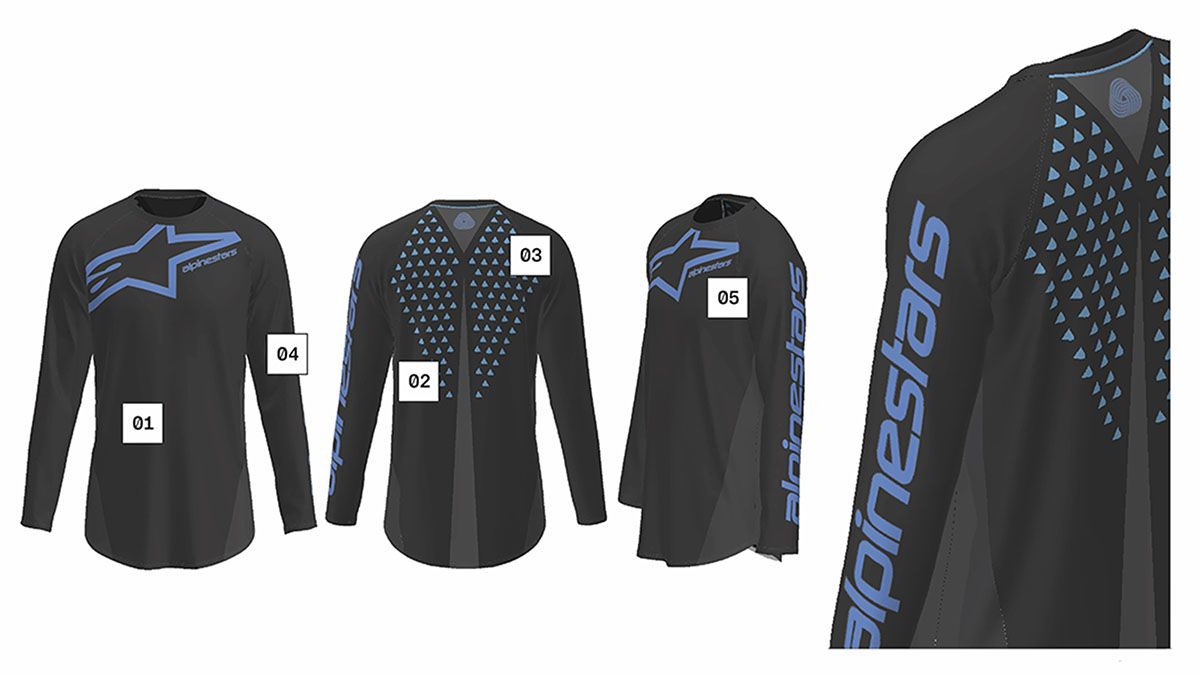
Kauff's inventive design, Nattara, explores the use of bioprinting humidity-reactive bacteria with wool. Those bacteria would remain dormant until activated by sweat, then open to create ventilation flaps that are 1 to 1.5 centimeters wide.
The germ of Kauff's idea came from a summer visit to a flower farm. In the early morning, he noticed the petals of hibiscus flowers were closed but later opened in response to temperature and light.
That got Kauff thinking about how biological systems physically move in response to stimuli, which is exactly what his bacteria-infused wool would do. The wool and the bacteria work together in harmony, Kauff said.
Wool's natural fibers and breathability enhance the bacteria's ability to open the flaps. Those open vents help the wool evaporate moisture.
Kauff's research indicates those bacteria could open and close the tiny sweat flaps more than 100 cycles before requiring reactivation.
Automatic thermoadaptation would benefit mountain bikers, Kauff said, because the exertion levels - long uphill climbs, short rests, fast coasting descents - and weather conditions are constantly changing.
His goal is to create a one-layer system that keeps riders dry and comfortable without carrying additional clothing or stopping to change.
As a Woolmark Research Bursary winner, Kauff received a $5,000 prize and will work with a mentor for one year to advance and test prototypes of Nattara.
Although Woolmark encourages blue-sky thinking, the students must also consider more pragmatic aspects of product design and manufacturing, Kauff said.
"You want to create something that's out there, conceptual, exciting and different," he said. "But you also want to bring that concept down to real life. How would it actually be developed? That's the real challenge."
As a Woolmark Research Bursary winner, Kauff received a $5,000 prize and will work with a mentor for one year to advance and test prototypes of Nattara.
Although Woolmark encourages blue-sky thinking, the students must also consider more pragmatic aspects of product design and manufacturing, Kauff said.
"You want to create something that's out there, conceptual, exciting and different," he said. "But you also want to bring that concept down to real life. How would it actually be developed? That's the real challenge."


