
By Joey Garcia, University Communications and Marketing
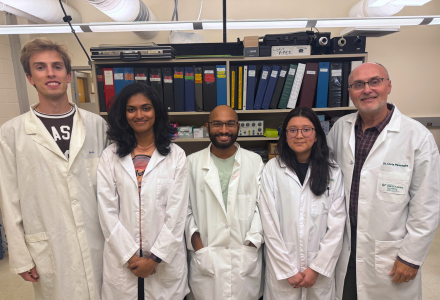
For millions of people at risk of glaucoma, healthy eye pressure can mean the difference between preserving vision and losing it. Yet despite decades of research, scientists still do not fully understand what regulates daily changes in eye pressure or how those fluctuations may contribute to glaucoma. A series of three studies led by Christopher Passaglia, University of South Florida professor and associate chair in the Department of Medical Engineering, is helping fill in those gaps.
Recently published in Investigative Ophthalmology & Visual Science, Passaglia's latest research, with USF alumna Alexandra Zamitalo serving as lead author, centers on a first-of-its-kind wireless eye-pressure monitoring system developed in his lab. The technology collects continuous measurements in rats, which share daily eye-pressure rhythms similar to those observed in humans.
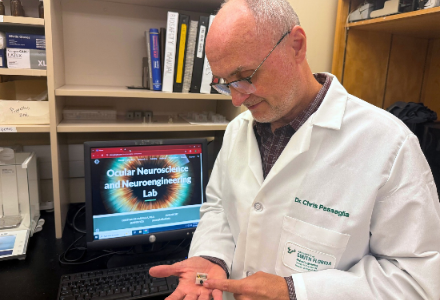
USF Professor Christopher Passaglia

Using the technology, researchers investigated how the body's circadian rhythm may help regulate pressure inside the eye. This internal clock helps manage sleep, hormone production and other daily functions, with light serving as an important signal that keeps it synchronized.
No one was continuously measuring eye pressure until we figured out a way. It was then that we started seeing patterns that had largely been invisible before, providing one of the most detailed looks yet at the biological mechanisms that control eye pressure. This could eventually help researchers develop new approaches for understanding and treating glaucoma.
Christopher Passaglia
USF Professor
EYE PRESSURE AND THE BODY'S CIRCADIAN RHYTHM
Most people think of eye pressure as a single number measured during an annual eye exam. But Passaglia notes that eye pressure constantly changes and follows a daily pattern linked to the body's circadian rhythm.
"Researchers have known for years that eye pressure rises and falls over 24 hours," Passaglia said. "The problem is that most measurements are taken when patients are awake and sitting in a doctor's office. What happens while a person is sleeping is rarely captured."
Passaglia's monitoring device uses a miniature pressure sensor connected to the rat's eye through a tiny tube, collecting data while the animals go about their normal activities. Unlike a traditional eye exam, which provides only a snapshot in time, the technology captures pressure changes throughout the day and night.
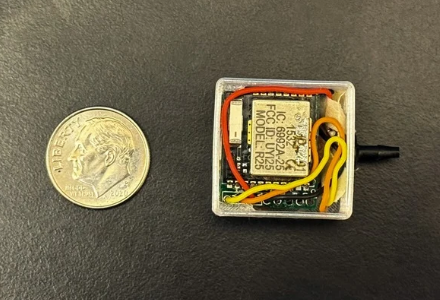
The tool enables continuous eye-pressure monitoring, revealing patterns previously difficult to detect
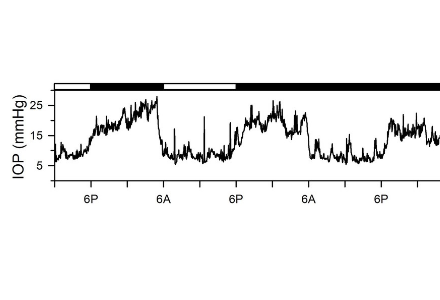
The measurements showed that eye pressure follows a daily rhythm, rising at night to levels that, if sustained continuously, are associated with glaucoma. Yet the animals do not develop the disease for reasons researchers do not yet fully understand. Researchers also found that the nighttime increase is driven by neural signals traveling from the brain to the eye. That suggests pressure is connected to the biological timing system that coordinates functions throughout the body, rather than being regulated solely within the eye.
"If you think about what the brain does, it's constantly coordinating activities throughout the body," Passaglia said. "What we're showing is that eye pressure appears to be another one of those processes under that kind of control."
Because elevated eye pressure is a major risk factor for glaucoma, understanding what drives those fluctuations could help researchers determine why some people develop the disease and how it progresses over time.
THE SURPRISING INFLUENCE OF LIGHT
To test whether circadian rhythms influence eye pressure, researchers disrupted the animals' normal light-dark cycle by exposing them to constant light.
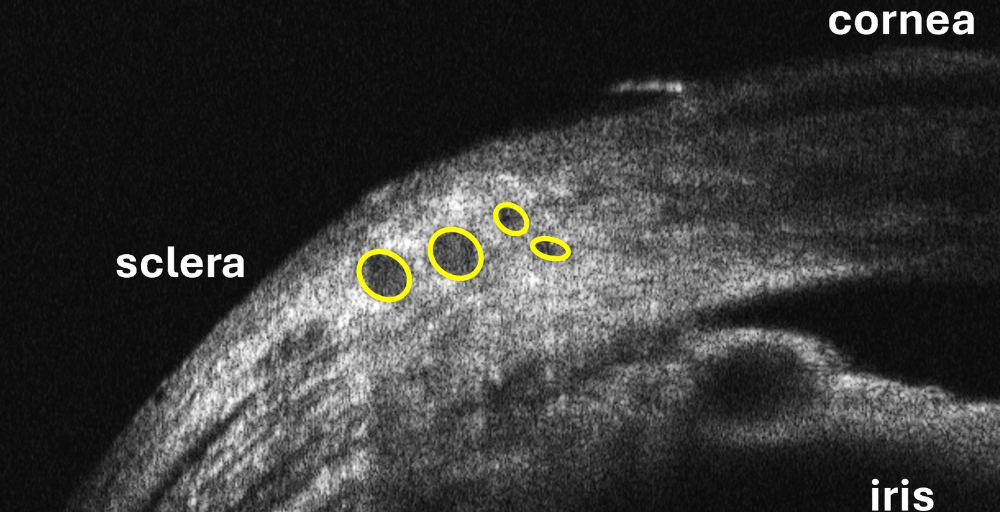
"We were actually surprised by how strong the effect was," Passaglia said. "When we exposed them to constant light, the rhythm disappeared and mean pressure started climbing. That was a much stronger effect than we expected."
The results suggest light may play a larger role in regulating eye pressure than researchers previously understood. While the studies were conducted in rats and do not suggest that everyday exposure to artificial light causes glaucoma, they provide further evidence that the eye is closely connected to the body's internal clock and raises new questions about how disrupted light cycles may affect long-term eye health.
PATHWAY FOR FUTURE GLAUCOMA RESEARCH
While the findings are not expected to immediately change how glaucoma is treated, identifying the neural pathways, chemical messengers and eye tissues involved in regulating eye pressure gives researchers a clearer picture of how the system works from the brain to the eye.
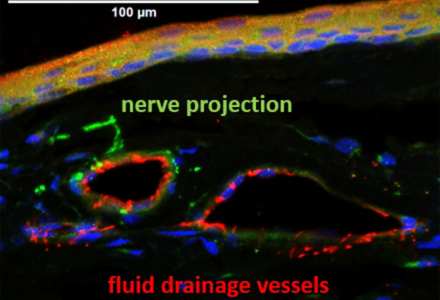
By revealing when and how circadian signals influence eye pressure, the research may help explain why some therapies work differently at different times of day and whether treatment timing could influence effectiveness.
"What we're really trying to understand is the fundamental biology," Passaglia said. "Once you understand the mechanism, then you can start thinking about better ways to intervene."


