
Written by Mukul Bhola, Director, United Nations Satellite Centre, UNITAR and Devanand Ramiah, Director of Crisis Readiness, Response and Recovery, UNDP.
We are stuck in response mode. But what good is an ambulance without a hospital?
Climate shocks are intensifying. Conflict is at record levels. Economies are fragile. Humanitarian appeals grow larger each year, while donor countries prioritise domestic and security concerns. One emergency follows another. Recovery slips further out of reach.
For years, the logic was straightforward: first save lives, then rebuild them. But in an era of overlapping shocks, that division is costly. By the time recovery begins, families have sold livestock, businesses have closed, children have left school, and local institutions are weaker than before. Crisis becomes the default condition.
If we want fewer protracted emergencies, recovery must start on day one.
The first 48 hours after a crisis are decisive. When authorities know which roads are blocked, which clinics are damaged, which markets are underwater, they can act immediately. Debris can be cleared before trade stalls. Water systems can be repaired before disease spreads. Small enterprises can reopen before savings disappear.
Until recently, a major obstacle was the speed and reliability of information. Governments were often forced to plan with fragmented or delayed data. Damage figures arrived weeks late. Assessments overlapped. Resources were deployed based on rough estimates rather than solid evidence.
That constraint is rapidly diminishing.
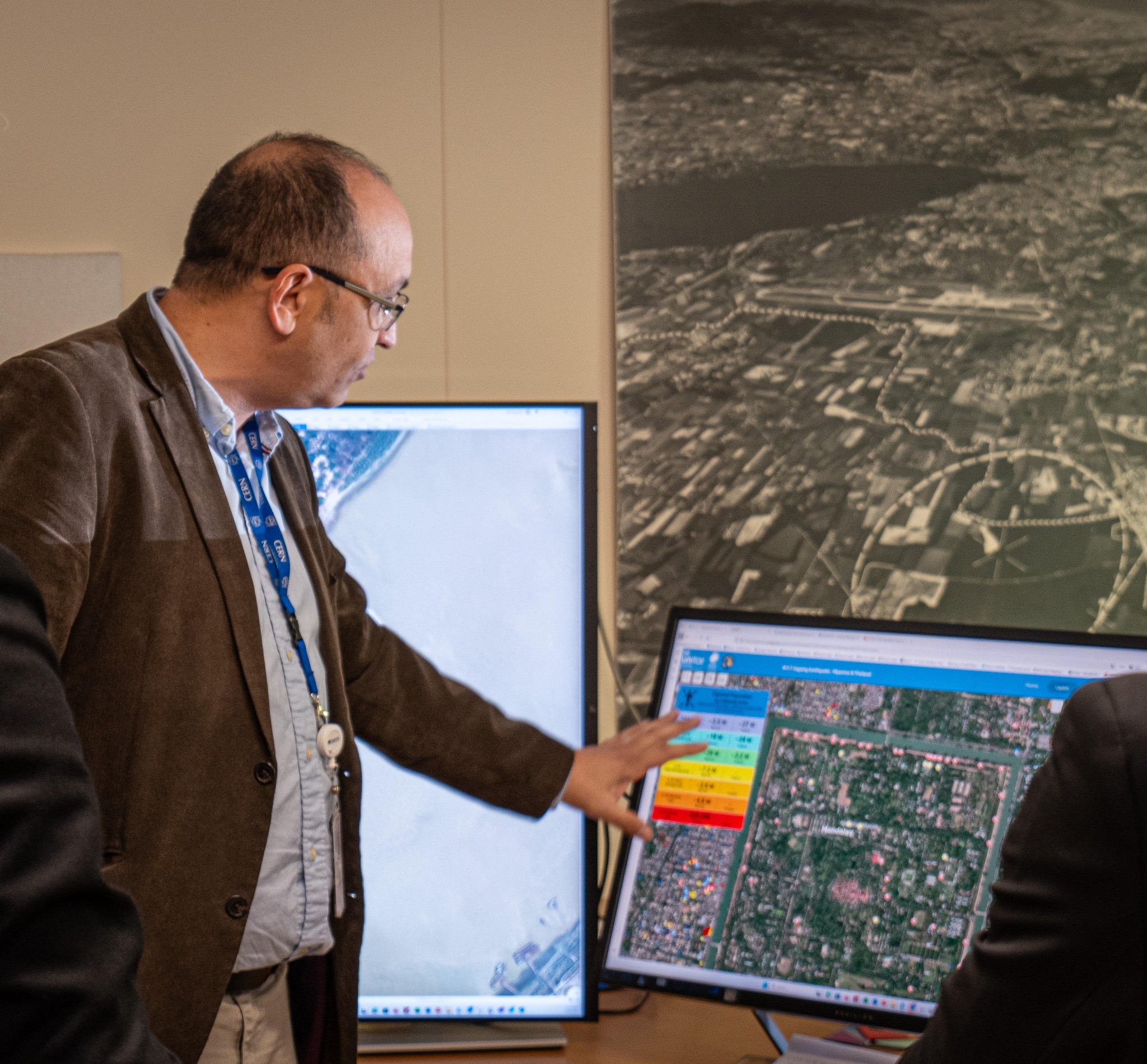
In recent years, collaboration between the United Nations Development Programme (UNDP) and the United Nations Satellite Centre, hosted at United Nations Institute for Training and Research (UNITAR), has shown what is possible when satellite data and recovery planning work together. High-resolution imagery can now identify damaged buildings within days. Follow-up checks on the ground turn those findings into clear estimates of debris, lost livelihoods, disrupted services and the cost of rebuilding.
This is not simply faster mapping. It is a coordinated process: rapid satellite images, quick damage analysis, ground checks, and immediate use of the results to guide recovery priorities and investment decisions.
In Jamaica, when Hurricane Melissa struck in 2025, satellite images quickly showed the extent of the damage. Recovery teams used that information to estimate debris and plan its removal, reopening transport routes and clearing the way for reconstruction.
In Colombia's 2024 rainy season, intensified by Tropical Storm Rafael, radar images revealed widespread flooding in Chocó and La Guajira. Ground teams confirmed crop losses and blocked river transport, allowing recovery efforts to begin before more families were forced to move.
After El Niño-driven storms, floods and landslides displaced hundreds of thousands in Burundi and damaged thousands of homes, a rapid assessment measured losses to farms, houses, public infrastructure and businesses. Those estimates helped set national recovery priorities and supported early talks with funders.
Across contexts, the pattern is consistent: when impact data arrives early, recovery decisions improve, creating the conditions for crises to shorten. Technology alone does not achieve this. Institutions that can operationalize evidence do.
The technology continues to improve. With stronger collaboration, credible estimates of physical damage and economic impact can now often be produced within 48 hours. Obstacles remain, including imagery access, weather and capacity constraints, but progress is unmistakable.
The financing architecture, however, still reflects the older reality. Emergency funding mechanisms are designed to move quickly. Recovery financing often requires additional assessments, new appeals or prolonged negotiations. The result is a predictable lag between knowing the damage and investing in repair.
That lag is no longer defensible. When development actors and satellite analysts produce validated impact estimates within days, financing decisions should align with that speed.
Breaking the cycle of repeated emergency appeals will require more than improved analysis. It will require donors and institutions to treat early recovery as integral to response and to align financing with the pace of evidence.
In an age of permanent crisis, responding sequentially is a luxury the system can no longer afford. The first 48 hours should not only save lives. They should set recovery in motion.


