Researchers from four national laboratories and industry are collaborating to unleash the full potential of biology for manufacturing fuels, chemicals, and consumer goods, and to harness biological systems as tools for agriculture and critical mineral recovery. The Orchestrated Platform for Autonomous Laboratories to Accelerate AI-Driven BioDesign (OPAL) project is using robotic systems, AI agents and models, and standardized data-sharing platforms to accelerate the biotechnology pipeline all the way from gene discovery to commercialized technology.
As part of the Genesis Mission, the OPAL team is beginning a project to develop powerful, general-purpose biology AI models, called foundation models, that can be tailored for specific applications with additional training and eventually control AI agents to manage investigations autonomously.
The Genesis Mission is a new national initiative led by the Department of Energy (DOE) to advance AI and expedite discovery, providing solutions for challenges in science, energy, and national security. A cornerstone of the Genesis Mission is the Transformational AI Models Consortium (ModCon), which will build and deploy self-improving AI models by harnessing DOE's unique data, facilities, and expertise. The OPAL team's effort is one of three ModCon projects that Berkeley Lab leads or plays a key role in.
"AI models are already transforming many fields, but building them for biological research has been slower because there are fewer datasets on genomes, proteins, and metabolic functions of organisms to train them on. And the datasets we do have are highly variable and often organized very differently - unlike the text-based datasets that large language models train on," said Paramvir Dehal, OPAL cross-cut task lead and computational staff scientist in the Lab's Biosciences Area.
The team plans to employ the automated experimental capabilities and world-class supercomputing resources available at DOE user facilities to produce the largest and most precise biological datasets ever assembled. The team will use these, along with existing data extracted from decades of national lab and industry research, to build the foundation models. "These models advance biological understanding by enabling prediction, model‑informed control, and design, with applications from environmental productivity and resilience to biomanufacturing," said Dehal.
OPAL's Berkeley Lab members are focused on foundation models for microbial engineering that link genes to their function in organisms and on building capabilities to integrate models with automated laboratory tools. These contributions will allow scientists to quickly perform experiments that would otherwise take weeks, months, or even years, alleviating traditional bottlenecks in the R&D and scale-up phases.
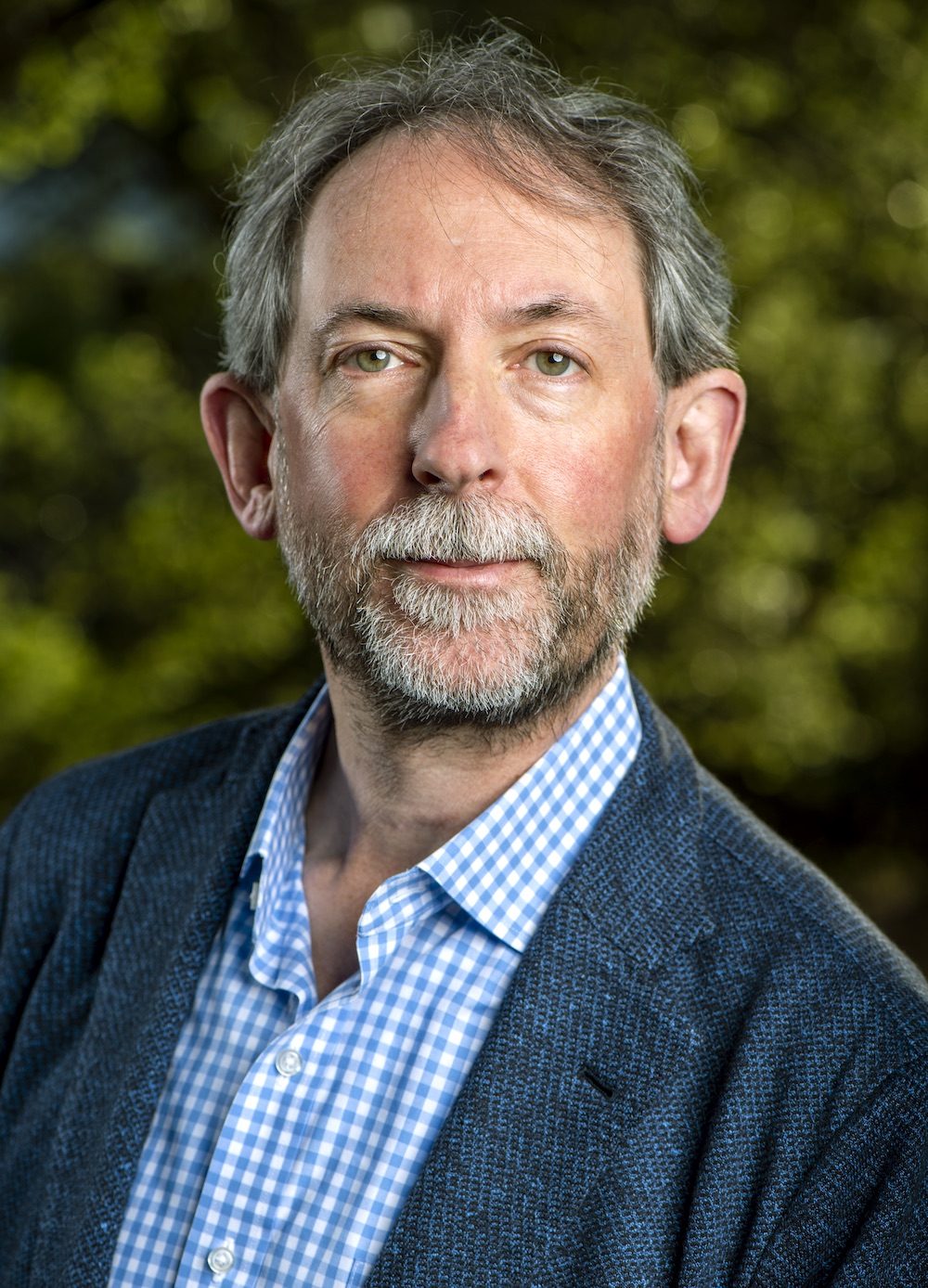
Paul Adams, Associate Laboratory Director for the Biosciences Area. (Credit: Thor Swift/Berkeley Lab)
"OPAL is at the forefront of changing how we do biological research, using advanced AI methods to dramatically improve our understanding of biological systems, but to realize that potential we need to collect significantly more data, and AI can help us do that smartly," said Paul Adams, Associate Laboratory Director for Biosciences and OPAL lead point of contact. "The foundational genomic models from our seed project will have broad application, from critical minerals to high-performance jet fuel precursors, helping to transform biotechnology and industrial processes."
The project includes scientists and engineers from Oak Ridge, Argonne, and Pacific Northwest national laboratories. OPAL is supported by DOE's Office of Biological and Environmental Research (BER) and Advanced Scientific Computing Research (ASCR) programs.