
PULLMAN, Wash. - Soils are warming quickly and at considerable depth across Alaska, with temperatures rising fastest in the state's permafrost region, a trend that could accelerate climate change and undermine the stability of roads, buildings and other infrastructure built on the continuously frozen ground.
That's a central finding of new research from Washington State University that provides a comprehensive look at soil temperatures from 1997 to 2023 in a state where the effects of climate change are pronounced. The warming permafrost comes with particular concern, because when that ground thaws it releases carbon dioxide and methane, driving even faster warming.
Alaska's air temperatures are rising at twice the pace of the Lower 48, a key sign of the "polar amplification" of climate change at the Arctic latitudes. The new research details how and where the ground is warming, compares that to air temperatures, and shows that snow cover plays a key role in regional differences.
"In the Lower 48 or further south you would expect that soil temperatures and air temperatures would change at the same rate," said lead author Erin Oliver, a post-doctoral research associate for WSU's Department of Crop and Soil Science who is based in Alaska. "Those warmer air temperatures warm the soil. But in Alaska, over half the year, our soils are covered in snow. So how would that affect things?"
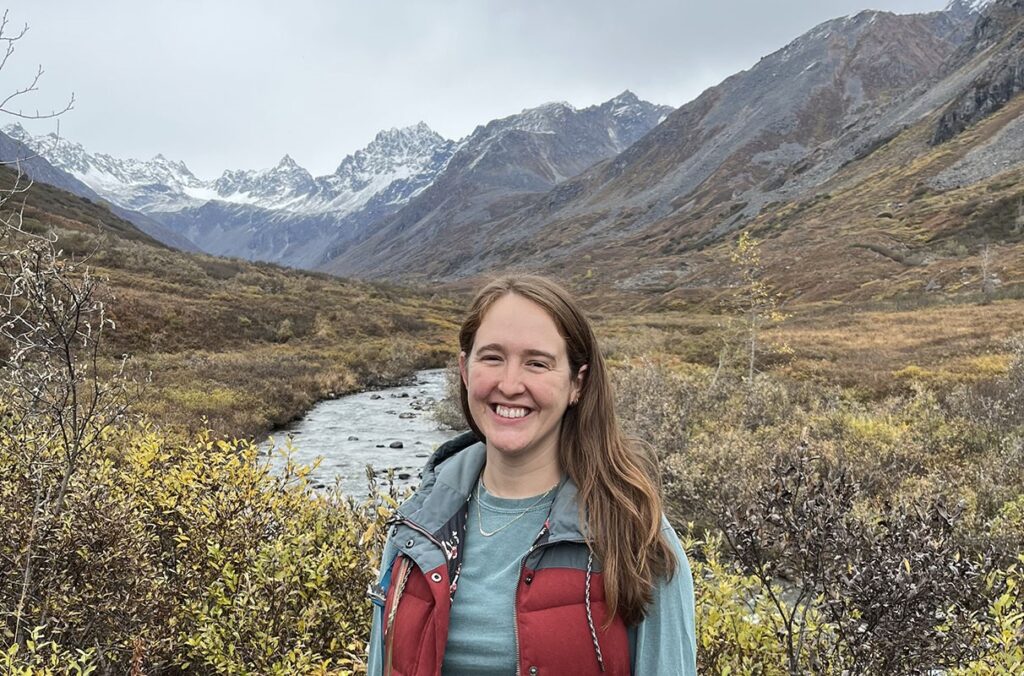
In short, her study found that soil warming is almost keeping pace with air warming, particularly in the central and maritime parts of the state. In high-latitude permafrost regions, soil warming is lagging behind air warming, but even so she saw "polar amplification" in soil temperatures too.
Over the 27 years of the study, air and soil temperatures increased across the state, but were most pronounced in the permafrost regions, where air temperatures rose at a rate of 1.15 degrees Celsius per decade and soil temperatures rose at 0.64 degrees Celsius per decade.
The research, published in the journal Frontiers in Climate, offers one of the most comprehensive studies of relationship between air and soil temperatures in Alaska. The collection of such data is challenging in the state due to its vast size and challenging geography.
"It's hard to get around in Alaska," Oliver said. "Most of the state is very remote, it's very expensive to put in these weather stations, and they really only started putting them in the late 1990s. So comparatively, we don't have as much of a record as other places."
For the study, the researchers synthesized air and soil temperature data from 43 weather stations across Alaska, and tracked soil temperatures at several different depths over 27 years. To evaluate the effects of snow cover, they divided the state into three regions: one with continuous permafrost; one with some areas of permafrost; and one without permafrost. In the latter two categories, soil temperatures rose at roughly half the rate of the permafrost regions.
That suggests that snow cover, which is deeper at lower latitudes compared to higher latitudes, during the winter slows the rate of warming, providing a buffer to changes in air temperature.
"A neat result was that soil warming rates weren't slowing down deeper in the soil," said Oliver's co-author, Claire Phillips, a research soil scientist at WSU. "People tend to think that soil temperatures are more stable as you go deeper. The seasonal fluctuations do drop out, but the long-term warming trend was actually more obvious at depth."
In the permafrost region, they found 100% of weather stations had a warming trend at 4 feet depth, while only 65% of them had warming at 2 inches, where temperatures swing more from year-to-year.
"When you go through the numbers and you find permafrost soils showing 2 to 3 degrees Celsius per decade warming at 4 foot depth in the winter months, that's upsetting," says Phillips. "But I also look at it as one of the ways this amazing planet is buffering us. The soil is storing a lot of heat that would otherwise all be held in the atmosphere."
The findings can be used to help inform planning and policymaking in Alaska as the climate changes and brings about a range of different effects.
"In the permafrost region most of the warming was in winter, and that will have obviously big effects on infrastructure," Oliver said. "But in lower latitudes most of the warming was in the summertime, and could lead to an increase in our growing season. So knowing the seasonality of it can help Alaskans to adapt."


