
Specialists from the National Meteorological and Hydrological Services (NMHSs) of Argentina, Bolivia, Chile, Colombia, and Peru came together for an intensive technical internship.
The activity took place from 4 to 8 May 2026 at the Swiss Federal Office of Meteorology and Climatology, MeteoSwiss , in Zurich, Switzerland. The internship aimed at strengthening the management, quality assurance, and operational use of meteorological information to support more effective climate services and informed decision-making.
The internship was organized through the ENANDES+ project, a regional project funded by the Adaptation Fund and the Swiss Agency for Development and Cooperation , and implemented by the World Meteorological Organization. The project promotes regional cooperation to strengthen the technical and institutional capacities of Andean NMHSs through knowledge exchange, peer-to-peer collaboration, and the development of climate services.
During the internship, participants gained first-hand insight into MeteoSwiss operational structures and workflows, exploring the full meteorological data value chain, from field observations and data acquisition to the generation of operational products and services. Participants engaged in technical dialogue, enabling the exchange of experiences, challenges, and best practices from across the region.
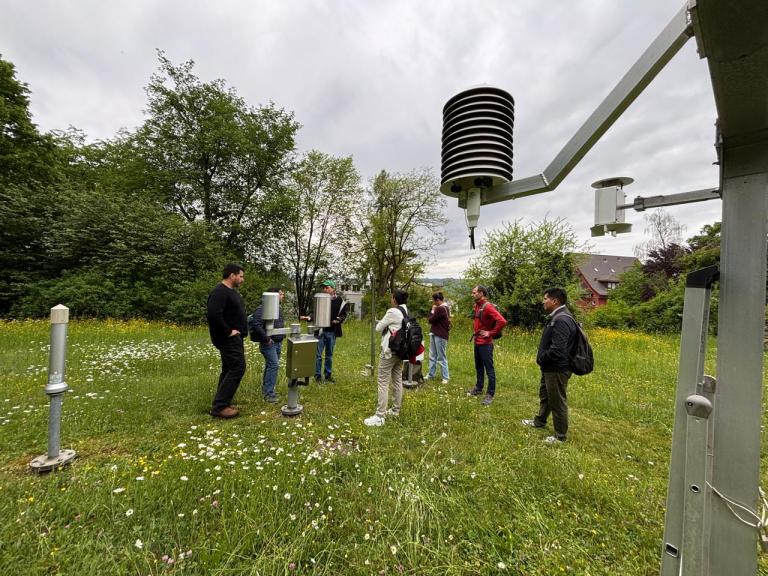
The agenda included technical sessions on the SwissMetNet surface observation network, data flows into centralized systems, and data warehouse architecture, with particular emphasis on parameter and variable standardization. Participants also reviewed quality management procedures, including both automated and manual quality control processes, as well as methodologies for the homogenization of climatological time series. In addition, participants explored key international initiatives and frameworks, including the WMO Integrated Global Observing System (WIGOS), the Observing Systems Capability Analysis and Review (OSCAR) platform, the Global Basic Observing Network (GBON), and the implementation of WMO Information System (WIS) 2.0 .
ENANDES+ continues to strengthen capacities across the Andean region by promoting technical integration, regional collaboration, and the modernization of meteorological and climate services. These efforts contribute to improving the quality, traceability, and accessibility of climate information, ultimately supporting more reliable forecasts and evidence-based decision-making for the benefit of vulnerable communities and climate-sensitive sectors.


