
The Featured Research Art & Media Exhibit spotlights research-related artwork
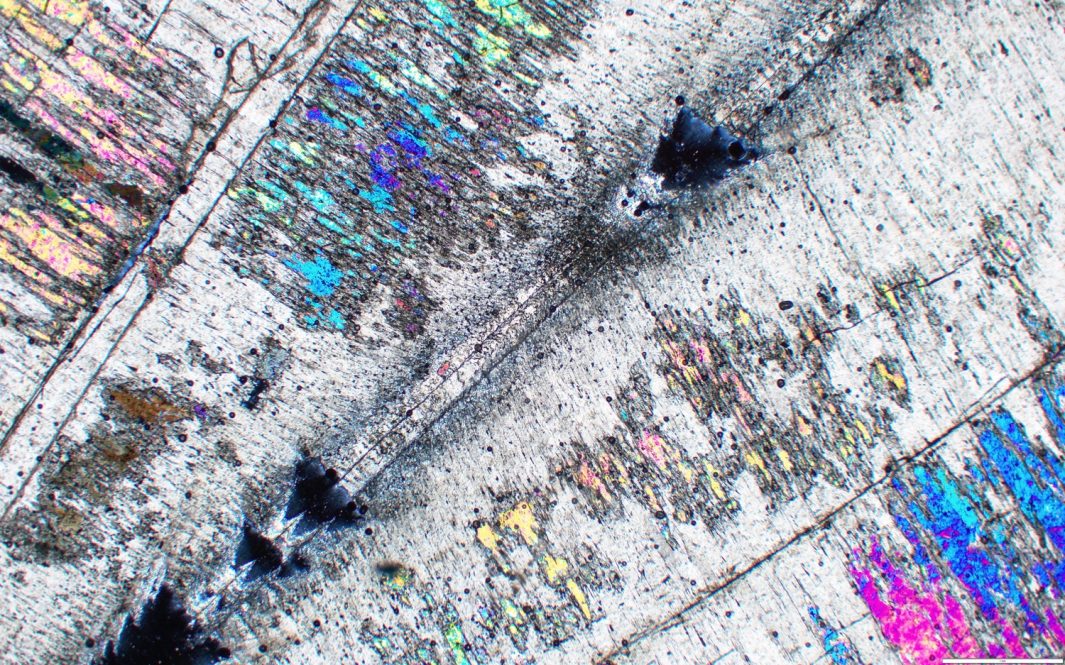
The first-place winner of the FRAME contest: Growth Rings of an Ancient Cephalopod. Cross-polarized light reveals a thin section view of a Mesozoic belemnite rostrum, where radial, fibrous calcite crystals form concentric growth rings in this ancient squid-like cephalopod. (Tracy Frank)
The Office of the Vice President for Research (OVPR) is pleased to announce the winners of the first annual Featured Research Art & Media Exhibit (FRAME) contest.
The contest received 75 entries from nearly 40 individuals across various campuses, schools, and colleges. Entries were reviewed anonymously by a panel of judges from the OVPR. They were evaluated according to the originality of the research being depicted, the creativity of their depiction, and the aesthetic success of their presentation.
Qualifying entries thoroughly impressed the judges with the creativity and ingenuity of the research taking place across UConn. The OVPR congratulates the winning entries and to everyone who submitted art. The judges appreciated the chance to see the diverse array of fascinating - and visually striking - research taking place at UConn.
Keep an eye out while walking through campus in the coming months. Winning images, and many other standout FRAME submissions, will be framed and displayed on OVPR walls in Storrs (at the Whetten Graduate Center) and in Farmington at UConn Health.
The top three contest winners are as follows:
First Place: "Growth Rings of an Ancient Cephalopod"
Tracy Frank, professor and department head, Department of Earth Sciences, CLAS
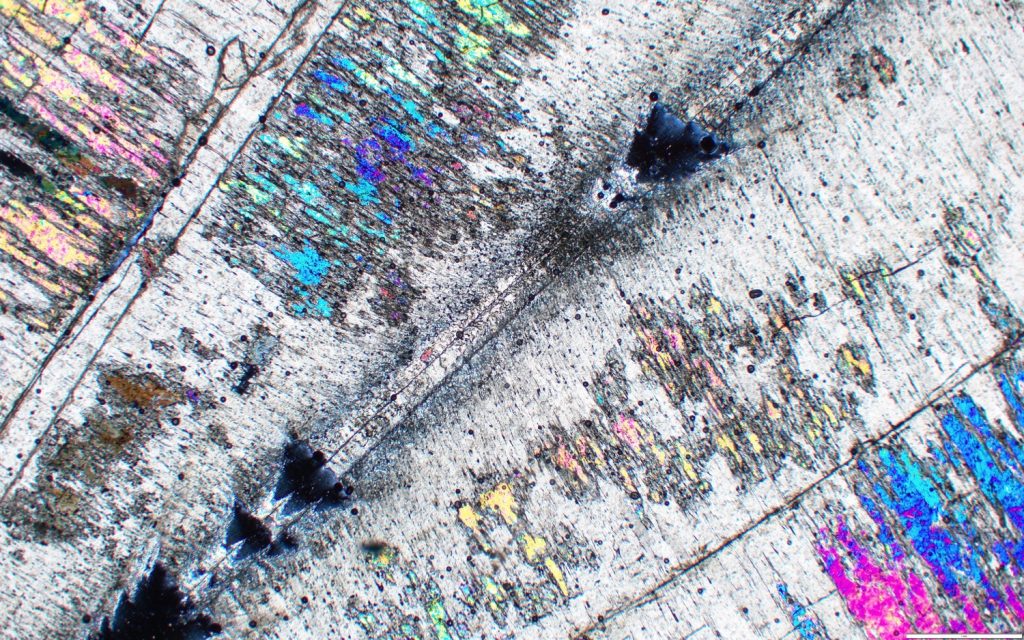
Frank's image was captured using a polarizing petrographic microscope, one of many high-powered imaging devices available for research use through the Department's facilities. The dazzling colors and geometric shapes in this image are radial, fibrous calcite crystals forming concentric growth rings in an ancient squid-like cephalopod.
Frank was awarded a pair of tickets to a show at the Connecticut Repertory Theatre (CRT), generously donated by CRT.
Second Place: "Light moves"
Paria Darbandsari, Ph.D. student in the Department of Kinesiology
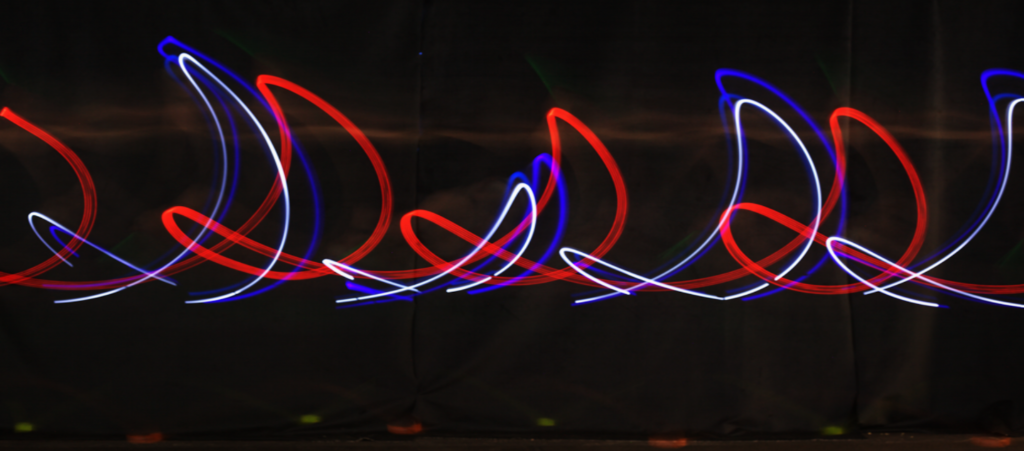
Darbandsari's submission, captured using a DSLR camera, represents an unlikely combination: physical therapy and visual arts. It is part of a project called "Movement, Creativity, and Community: Improving Gait and Quality of Life in People with Parkinson Disease through Photography and Collective Experience." In this interdisciplinary research and rehabilitation project, participants with Parkinson's disease (PD) selected their own props, such as clip-on finger lights, glowsticks, and fluorescent vests, to make patterns with light as they performed large-amplitude, high-velocity movements. Research has shown that these kinds of movements are incredibly beneficial for those with PD, and so is having agency and fun infused into their physical therapy regimens.
Darbandsari, who served as a research assistant on this project, offers special thanks to Clare Benson, MFA, Charlotte Grey, Ph.D. and Jennifer Davis, photographers; Susan Glenney, DPT; Devon Hock, DPT; and Carrie Silver-Bernstein, PT, physical therapists; and Cristina Colón-Semenza, PT, MPT, Ph.D., principal investigator.
Darbandsari was awarded a gift certificate to the UConn Dairy Bar.
Third Place: "Duplication Dance"
Juan Abrales, student in the Department of Digital Media & Design

Abrales created this digital art piece to represent the process of mitosis, when cells divide and multiply. It was created with design software including Adobe Illustrator and Maxon Cinema 4D. Three different stages of mitosis are represented in this 3D rendering.
"Opportunities like [the FRAME contest] allow us students to use our creativity to contribute to meaningful fields such as science and research," wrote Abrales on LinkedIn. "I am grateful to have been a part of this cause."
Abrales was awarded a gift certificate to the UConn Dairy Bar.


