
Key Points
ANSTO has secured a $1.62 million Medical Research Future Fund (MRFF) grant under the Australian Brain Cancer Mission's 2024 Brain Cancer Discovery and Translation program
The four-year project, Targeting Glioma with Precision Radiotherapy and Biochemical Dose Amplification, will further develop Neutron Capture Enhanced Particle Therapy (NCEPT) for aggressive brain tumours such as glioblastoma and diffuse intrinsic pontine glioma (DIPG)
The project aims to provide a new treatment option for brain cancers that currently have very few effective therapies and to reduce treatment time, side effects and the need for Australians to travel overseas for cutting-edge particle therapy
ANSTO has been awarded its first Medical Research Future Fund (MRFF) grant as lead institution, securing $1,623,306 over four years to develop a new class of precision radiotherapy for aggressive brain cancers.
The project, led by Dr Mitra Safavi-Naeini, is funded through the 2024 MRFF Brain Cancer Discovery and Translation grant opportunity, part of the Australian Brain Cancer Mission.
The Mission is investing more than $120 million to improve outcomes for people with brain cancer, with a focus on doubling survival rates, improving quality of life, expanding access to clinical trials and building research capacity.
"This grant is a turning point for our team," said Dr Safavi-Naeini. "It recognises that nuclear science, accelerators, radiobiology and radiopharmaceuticals are now central to how we design the next generation of cancer treatments for patients and families sitting in oncology clinics."
This is the first time ANSTO has been awarded an MRFF research grant as lead institution, reflecting the growing role of nuclear science and advanced radiotherapy in Australian health and medical research.
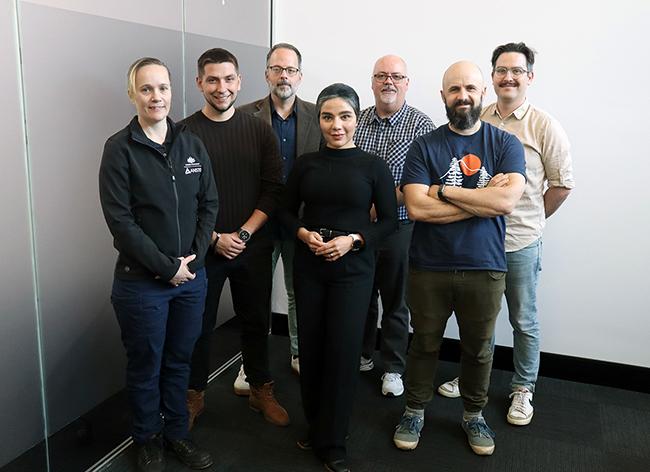
The program is delivered through three coordinated research streams under Dr Safavi-Naeini's overall leadership. Preclinical radiobiology is led by Nicholas Howell and Dr Frederic Sierro; medicinal chemistry and radiopharmaceutical development is led by Dr Chris Dobie and Professor Giancarlo Pascali; and treatment-planning and modelling is led by Dr Klaudiusz Jakubowski together with Dr Safavi-Naeini.
Across these streams, the project brings together physicists, chemists, radiobiologists, clinicians, health economists and consumer advocates from ANSTO, Australian universities and international particle therapy, tightly integrating physics, chemistry and biology required for progressing NCEPT from bench to bed. The work centres to move NCEPT towards clinical trials.
It aligns with the Australian Brain Cancer Mission's goal to double survival and improve quality of life for people living with brain cancer.
Brain cancer needs new ideas
Around 2,000 Australians are diagnosed with brain cancer every year, and five-year survival has stubbornly remained around 23-24%, while survival for most other cancers has risen above 70 per cent.
Brain cancer is also the leading cause of cancer-related death in Australian children, and some brainstem tumours such as DIPG still have five-year survival rates of around 2 per cent.
Conventional radiotherapy can control the visible tumour, but infiltrating cancer cells that extend into normal brain often survive and drive relapse. Escalating the radiation dose is limited by the risk of permanent neurological damage, especially in children.
"In glioblastoma and DIPG, we hit what clinicians sometimes call the 'geometry wall'; we can see and treat the bulk tumour, but the disease has already spread beyond what our scans can reliably define," said Dr Safavi-Naeini. "We need smarter ways to reach those isolated cells without destroying healthy brain."
Neutron capture enhanced particle therapy
The MRFF project will develop and test Neutron Capture Enhanced Particle Therapy (NCEPT) for high-grade gliomas. NCEPT is an ANSTO-led concept that combines precision particle beams (protons or carbon ions) that deliver a tightly shaped dose to the main tumour; and tumour-seeking 'neutron capture' drugs that accumulate in cancer cells and act as microscopic amplifiers of radiation dose.
During particle therapy, the primary beam generates a field of slow (thermal) neutrons inside and around the tumour. In NCEPT, neutron capture agents are designed to be taken up by tumour cells; only when these agents capture the internally generated neutrons, they release very short-range, high-linear energy transfer (LET) radiation that can kill cancer cells both within and just beyond the main treatment field.
Multiple studies led by ANSTO scientists, independently verified, have already shown that adding neutron capture agents during ion beam irradiation can produce a three to five-fold increase in cancer cell killing in vitro, and significant delays in tumour growth in experimental models in vivo.
"In simple terms, the particle beam delivers the first punch, and the neutron capture drug delivers the second punch exactly where the cancer cells are hiding," said Dr Safavi-Naeini. "The goal is to increase tumour control while reducing the dose-and, therefore, the damage to healthy brain."
"This kind of project only works when you put physicists, chemists, radiobiologists, oncologists and families in the same room," said Dr Safavi-Naeini. "MRFF funding lets us do that at scale, and it sends a clear signal that Australia wants to lead - not follow - in brain cancer innovation."


