
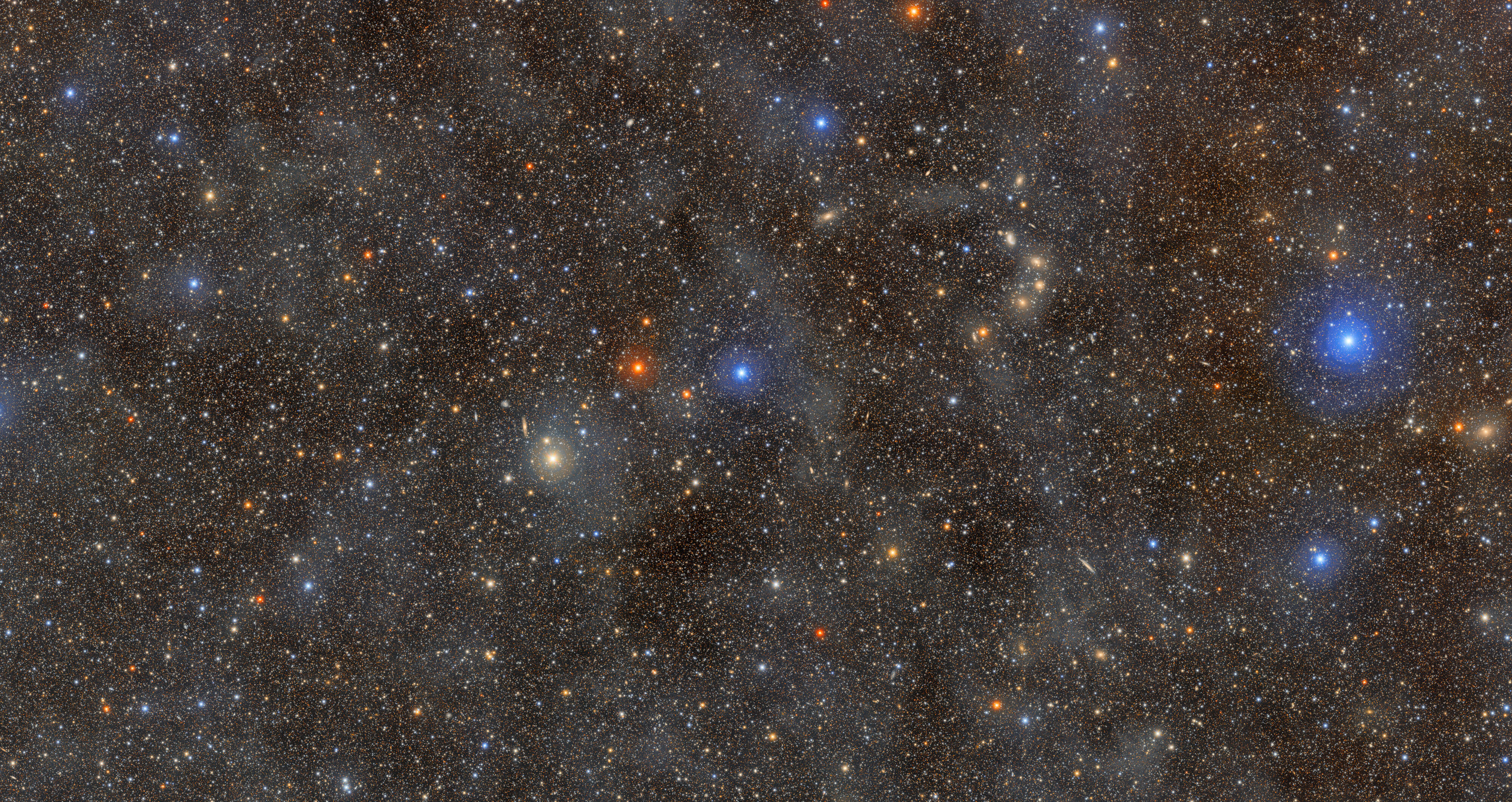
The most detailed survey of the universe ever undertaken has begun - with experts from the University of Southampton helping to lead the international effort.
The Vera C Rubin Observatory in Chile has launched its Legacy Survey of Space and Time (LSST) using the largest camera ever built to map the cosmos.
After a year of testing, it is now capturing ultrahigh-definition images to create a time-lapse of the universe.
Experts behind the survey, featuring Southampton astronomers, believe it could help solve some of space's biggest mysteries - including the nature of dark energy and evolution of galaxies
Professor of Astrophysics Manda Banerji from the University said the launch of the survey is a milestone that UK scientists have spent more than a decade preparing for.
She and fellow Southampton academic Dr Elham Saremi developed image-processing software used to uncover new populations of stars, galaxies and black holes which may have been missed using Rubin Observatory data alone.
Prof Banerji said: "Distant and cool objects slip out of the visible spectrum into the infrared, which means lots of exciting astronomical phenomena are not picked up in optical surveys such as LSST.
"Our software combines optical survey data with infrared data, opening up the door to new discoveries by both scientists and the public."
During its 10-year survey, Rubin will catalogue an estimated 17 billion stars, 20 billion galaxies and millions of events that change in the sky.
The software being developed by the Southampton team will fuse together Rubin's findings with infrared data from the Visible and Infrared Survey Telescope for Astronomy (VISTA) to find distant galaxies and black holes.
It will be available to the public so that astronomers - professional or amateur - can process data from their telescope or camera.
Researchers at Southampton also delving into the survey data to find far-off astrophysical events discovered by the telescope - such as the light given off by exploding stars, or supernovae.
Professor Mark Sullivan said: "By studying the chemistry and origins of these exploding stars we will be able to improve the way that we use them to investigate the nature of dark energy, the mysterious force driving the universe's accelerating expansion."
The UK is a major international partner of the US-led Rubin Observatory and is playing a significant role in the management and processing of the unprecedented dataset.
Its involvement is made up of 36 partner institutions, known as the LSST:UK Consortium, representing all major UK astronomy research groups.


