In the latest findings from a major national study, Flinders University has revealed new insights into Australians' top concerns and how these hot button issues are increasingly impacting their lives.
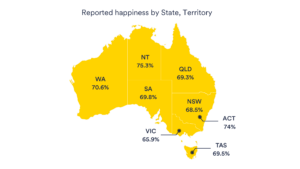
The 2026 Wicked Problems Report also introduces – for the first time – a national measure of happiness and optimism, revealing differences across states and territories.
Drawing on the views of more than 15,000 Australians – the survey shows communities continue to grapple with cost-of-living pressures, housing affordability, crime and safety, healthcare access, and the environment topping the list.
The intensity with which Australians are experiencing these community issues is apparent. The survey indicates cost pressures are hitting working-age households hardest – particularly Gen X and Gen Y – who are more likely to be balancing mortgages or rent alongside the rising cost of raising a family.
The survey also shows housing unaffordability is a growing concern nationally, particularly among Gen Z and Gen Y, and in Western Australia and South Australia. Across these top two issues, Australians point to the need for a fair go, while concerns about crime and safety have risen in 2026 in Victoria.
The top concerns, happiness levels and outlook differ across states and territories, as well as among demographic groups and income brackets.

Flinders University Deputy Vice-Chancellor (Research) Professor Raymond Chan said the annual survey makes it clear Australians continue to face persistent challenges, and the University is supercharging its research on the priority issues identified by the community.
"The latest survey shows concerns around these issues are intensifying in terms of their impact on people's lives. Flinders continues to put the voice of Australians at the centre of our research agenda, so our experts can seek to understand the root causes and help deliver solutions that bring the most benefit to the community," said Professor Chan.
"These are complex issues without clear-cut solutions. That's why Flinders is focused on regularly listening to Australians about what matters to them and bringing experts together across disciplines in collaboration with government, industry and community to tackle them through new knowledge."
The national survey found that as top concerns:
- 65% of Australians listed cost-of-living.
- 40% worried about housing unaffordability.
- 37% were concerned about crime and safety.
- 26% pointed to access to quality healthcare and community care.
- 21% worries about the environment, including climate change and environmental degradation.
- 16% misinformation in the digital age as priority issues and 15% prioritised trust in government.
While many concerns were shared nationwide, the report highlights distinct regional patterns:
- Crime and safety ranked as the top concern in the NT while rising in Victoria.
- Concerns about housing affordability were prominent in WA, SA and NSW
- Cost of living and access to healthcare was rated a higher concern for South Australians compared to the national average.
- Queenslanders are more concerned about crime, infrastructure and transport than the national average.
- ACT residents are more concerned about the environment than the national average.
- Tasmanians cited access to healthcare as their top concern.
- People living in rural areas are more worried about the quality of health and community care, compared to metro areas.
Generational and income trends:
- 45% of Gen Z and Gen Y report concern for housing affordability compared to 33% of Baby Boomers.
- 34% of Baby Boomers and 31% of Interwar generations are worried about access to healthcare compared to 19% of Gen Z.