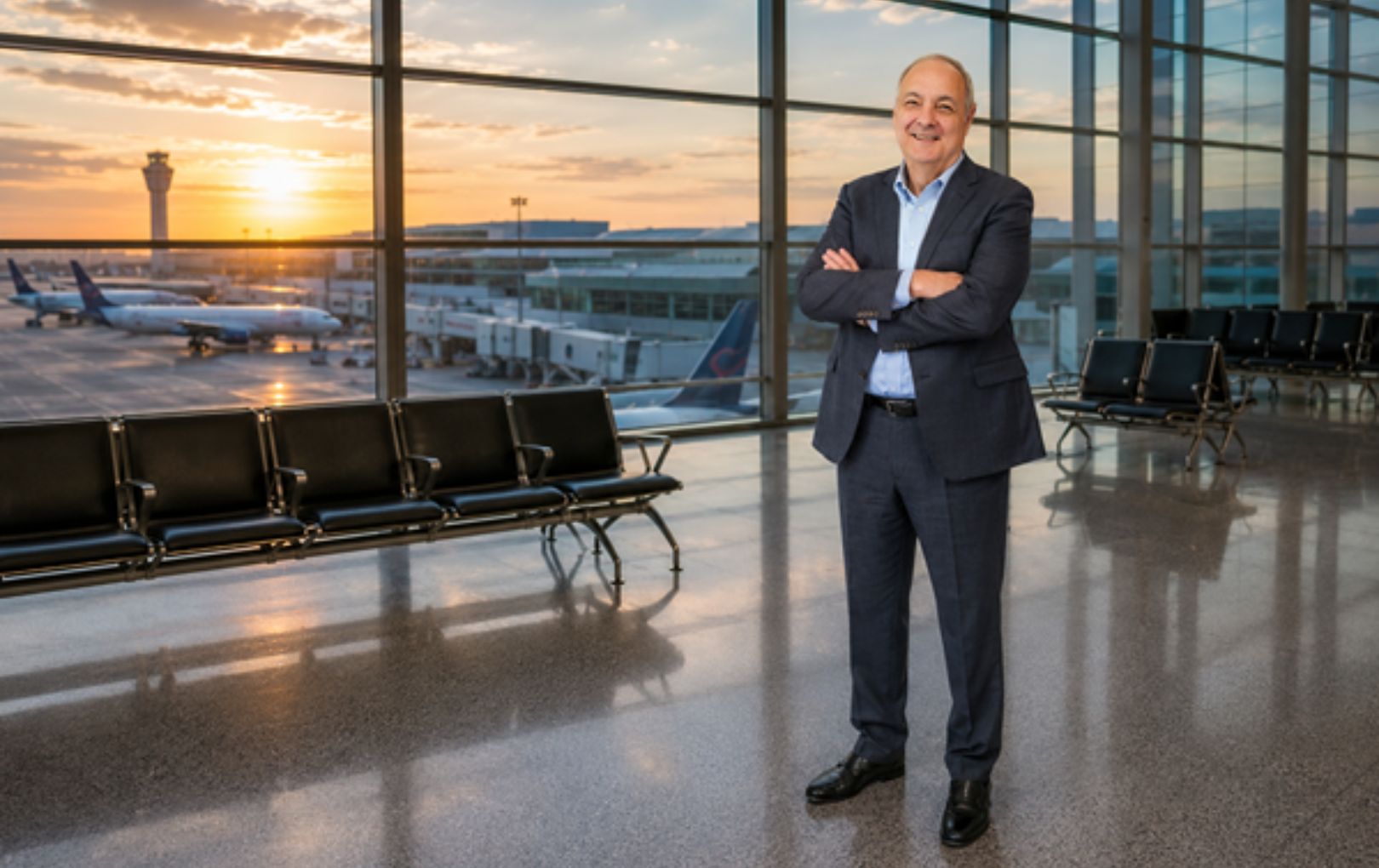
The University of Texas at Arlington has launched a new Aviation Studies pathway to prepare students for a wide range of careers in one of North Texas' largest and most dynamic industries.
Located within UTA's College of Liberal Arts, the pathway is designed for students interested in careers across the aviation industry—not only in the cockpit, but in airport operations, logistics, safety, communications, data analytics, maintenance, public policy and management.
"The need is now," said Marvin Diaz, associate professor of practice and founding director of Aviation Studies. "We've heard directly from our aviation advisory group that airlines, airports and support industries need a pipeline of talent. Our goal is to prepare students to have exciting and impactful careers throughout the aviation ecosystem."
The pathway comes as UTA sits in the heart of a major aviation hub. Dallas Fort Worth International Airport serves more than 200,000 passengers each day, while North Texas is home to one of the nation's highest concentrations of aviation-related businesses and manufacturers.
Unlike aviation programs centered primarily on flight training, UTA's pathway focuses on the broader network of people and organizations that keep the aviation industry moving.
The Aviation Studies pathway is supported through Liberal Arts Applied Programs (LAAP), including the Bachelor of Arts in Interdisciplinary Studies and the Bachelor of Applied Arts and Sciences. The flexible degree options allow students to combine aviation coursework with areas such as communication, leadership, public policy, technology and organizational management.
Sarah Lock, director of LAAP, said that interdisciplinary approach can help students develop skills that employers increasingly value.
"Students entering the workforce today are finding that employers are looking for durable skills such as problem-solving, communication, and flexibility," Lock said. "Interdisciplinary pathways help students develop those skills while learning to approach challenges from multiple perspectives."
The pathway is designed to serve students entering college for the first time as well as those returning to complete a degree or building on previous education or aviation industry experience.
As data analytics, artificial intelligence and other technologies reshape aviation, Diaz said the industry continues to depend heavily on communication, teamwork and human judgment.
"The aviation business is solely dependent on trust," he said. "Everyone involved in owning, operating, maintaining, and manufacturing aircraft trusts that the person before them followed all the rules and procedures. Aviation depends on timely, reliable, and actionable communication."
Diaz said those demands make skills such as critical thinking, problem-solving, communication, teamwork and ethical decision-making particularly valuable in aviation.
"We can't automate teamwork," Diaz said. "We can't automate the synergy created by pooling all our talents. We can't automate the passion that drives people to keep looking for better ways to do things."
About The University of Texas at Arlington (UTA)
The University of Texas at Arlington is a growing public research university in the heart of Dallas-Fort Worth. With a student body of over 42,700, UTA is the second-largest institution in the University of Texas System, offering more than 180 undergraduate and graduate degree programs. Recognized as a Carnegie R-1 university, UTA stands among the nation's top 5% of institutions for research activity. UTA and its 300,000 alumni generate an annual economic impact of $28.8 billion for the state. The University has received the Innovation and Economic Prosperity designation from the Association of Public and Land Grant Universities and has earned recognition for its focus on student access and success, considered key drivers to economic growth and social progress for North Texas and beyond.