
From tiny toadlets hidden beneath leaf litter to rare tree frogs making a comeback in East Gippsland, conservation efforts across Victoria are delivering encouraging results for some of the state's most threated amphibians.
New monitoring and recovery programs are helping scientists better understand frog populations, restore habitat and give endangered species a greater chance of survival.
From listening for the distinctive calls of Southern Toadlets around Melbourne, to releasing hundreds of Watson's Tree Frogs into the wild, and confirming the presence of Booroolong Frogs after fire and flood, dedicated conservation work is helping secure a future for these remarkable native species.
Surveys confirm Booroolong Frog survived Walwa-Mount Lawson bushfire
At Mount Lawson State Park in Victoria's Upper Murray, recent surveys have brought some encouraging news for one of the state's last remaining populations of the endangered Booroolong Frog.
After bushfires and major flooding earlier this year, there were real concerns the frogs may not have survived.
However surveys in Autumn found 17 Booroolong Frogs along a 1.5 km section of creek.
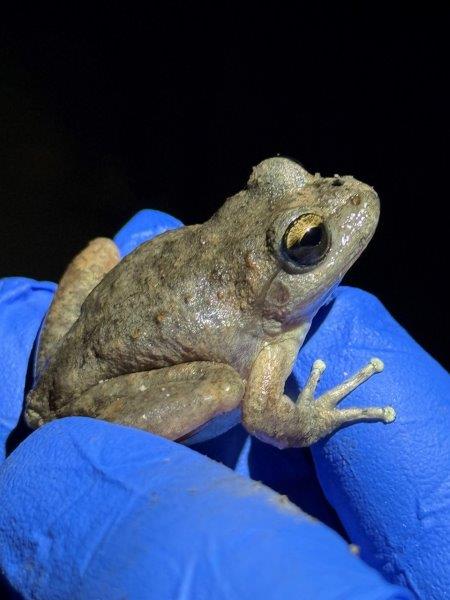
Image: One of the Booroolong Frogs found by the survey team earlier this year at Mount Lawson State Park.
Importantly, frogs were seen at different stages of life - from large adults to small juveniles, including at least one very young frog that had recently left the tadpole stage. This shows the frogs were still able to breed this season, despite the damage to their habitat.
The Walwa-Mount Lawson bushfire started in early January 2026 and quickly burned across 120,000 hectares of land before being contained.
Recovery work started quickly after the fires, with crews installing straw bales to slow water flow and reduce erosion.
Heavy rainfall in March overwhelmed some of these measures and washed more sediment into the creek. However, plants are now starting to grow back, helping to stabilize the banks and improve conditions.
However there are still many challenges ahead for the Booroolong Frogs.
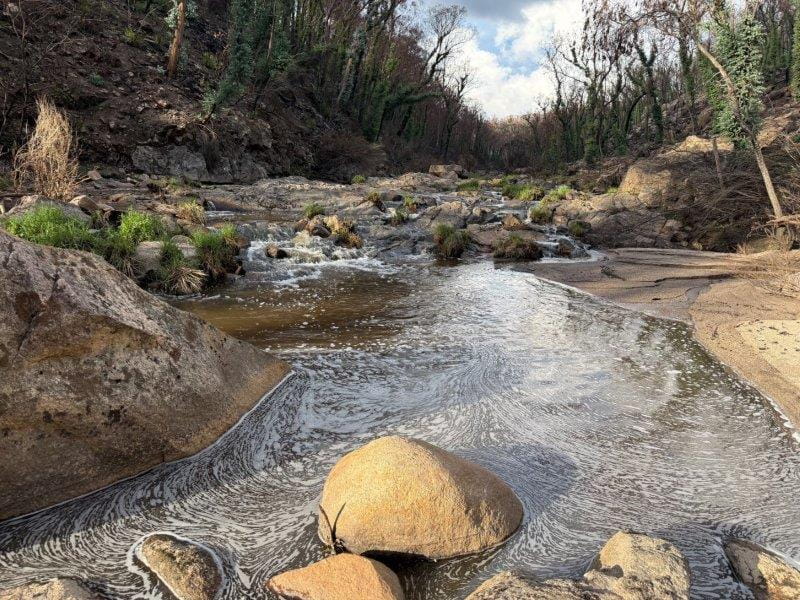
Image: Mount Lawson State Park and it's creeks were heavily impacted by bushfires in January 2026.
Sediment from flooding, along with the stress of fire and extreme weather, has likely made it harder for frogs to thrive. There are also ongoing risks from disease, especially chytrid fungus, and from weeds like blackberry.
Next steps include continued weed control and an ongoing monitoring program. Surveys during the next breeding season later in 2026 will be especially important to see how well the population is recovering.
Watson's Tree Frogs released back into East Gippsland
Over the past six months an army of endangered Watson's Tree Frogs have been released into East Gippsland, providing renewed hope for the species.
Between November 2025 – April 2026 the Watson's Tree Frog recovery program saw 200 froglets and 1,200 tadpoles released in parks across East Gippsland, including Errinundra National Park.
Since the rollout of the recovery program, the number of known sites where Watson's Tree Frogs occur in Victoria has more than tripled. The frogs are bred at Melbourne Zoo's Amphibian Bushfire Recovery Centre, where specialist keepers became the first to successfully raise and breed the species in 2025. Released frogs have been individually marked to monitor their survival and movement.
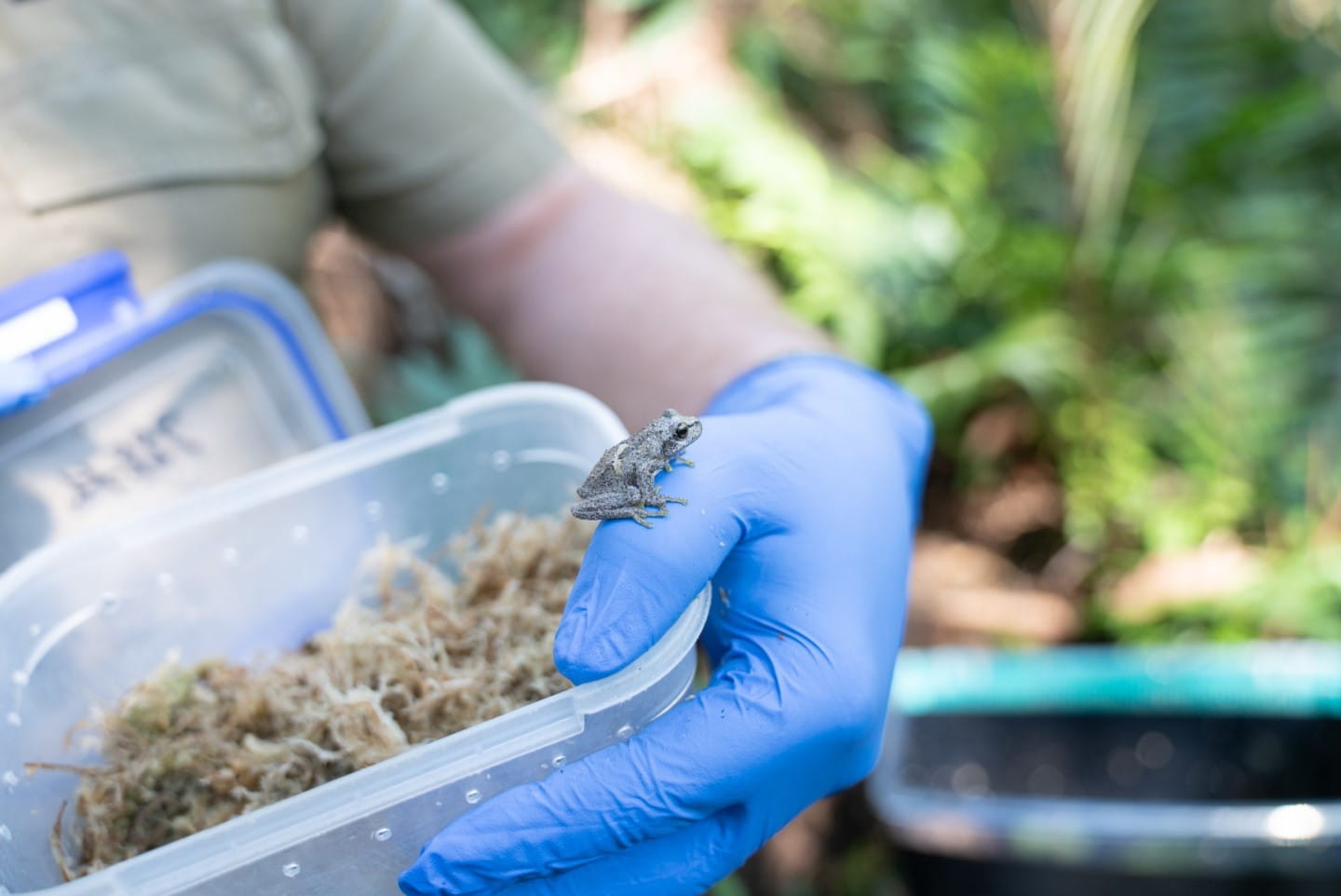
Images: Hundreds of tiny Watson's Tree Frogs and tadpoles have been released back into waterways in East Gippsland. Credit: Zoos Victoria.
The rare and elusive frog was not recorded in Victoria for 19 years, raising fears that it was locally extinct.
That changed in 2015, when a scientist conducting a glider survey in East Gippsland heard an unusual frog call.
The distinctive whistle, lower and slower than that of other frogs found in the area, prompted further surveys, leading to the species' rediscovery in Victoria.
This rediscovery sparked efforts to locate breeding sites. The species breeds in standing or slow-moving water, such as puddles, streamside pools, roadside ditches and water-filled log hollows.
These habitats are highly vulnerable to evaporation, meaning longer warm seasons and deforestation pose serious risks to the species' survival.
.jpg?rev=bf55d50a3e644dd3961a690dbd216682)
Image: The devastating 2019–2020 bushfires burned an estimated 80 to 85 percent of the Watson's Tree Frog habitat. Credit: Zoos Victoria.
In addition, chytrid fungus spread by humans and introduced animals such as deer and pigs remains an ongoing threat. This is a serious disease of frogs and has led to widespread declines and extinctions of frog populations all over the world.
The Watson's Tree Frog recovery program is a collaboration between Parks Victoria, Wild Research Pty Ltd, Zoos Victoria, the Victorian Department of Environment, Energy and Climate Action, Gippsland, and the Arthur Rylah Institute. It is supported by the Victorian Government's Nature Fund.
Listening for the elusive Southern Toadlet
You might never see a Southern Toadlet, but thanks to new technology, Parks Victoria is uncovering new insights into one of Victoria's most elusive frog species.
The Southern Toadlet is a small ground-dwelling frog found in southern Victoria. Unlike many frogs, it prefers to walk rather than hop and spends much of its time hidden beneath leaf litter, logs and other vegetation in damp forests, woodlands and grasslands.
Southern Toadlets need very specific conditions to breed which make them very susceptible to climate change. It doesn't spend much of its time submerged in deep water – instead it sits in little depressions that then fill with water after heavy rains to form puddles.
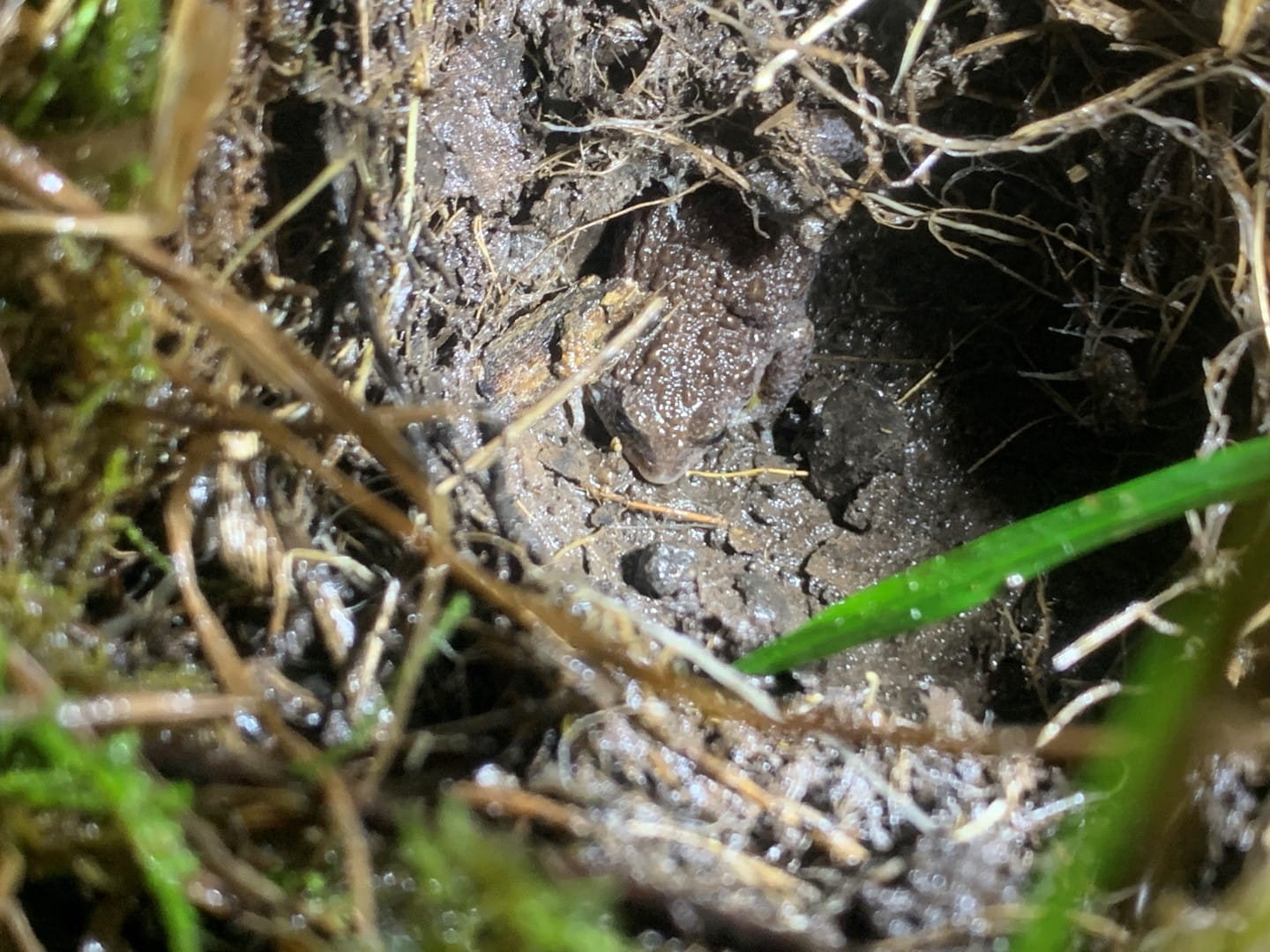
Image: A Southern Toadlet sitting on a nest in Warrandyte-Kinglake Nature Conservation Reserve.
Their tadpoles need to have a puddle that's full of water for 7 months to be able to become adult frogs.
However habitat loss, prolonged drought, weed invasion and changing environmental conditions have contributed to declines in many areas where the species was once common.
To help better understand where these elusive frogs still occur, and to monitor mating calls during breeding season (which runs from late summer to early winter), Parks Victoria has installed a network of audio recorders at sites around Melbourne's fringe.
The recorders capture sounds around the clock, allowing scientists to detect Southern Toadlets by their calls without needing to physically locate the well-camouflaged frogs.


