UN Secretary-General António Guterres is heading to Barbados to co-host a special summit on artificial intelligence (AI) safety on Monday, aimed at closing the gap between accelerating risks and many countries' capacity to deal with the pace of development.
At this year's high-level week of the UN General Assembly, 135 leaders brought up concerns over AI - up from just three in 2017 - Amandeep Singh Gill , the UN Special Envoy for Digital and Emerging Technologies, said on Friday.
"Monday's summit capitalises on that momentum," he said, pointing to a call by Norway and Finland for the control of frontier AI models, now signed by 32 States and the European Commission, and a call issued at a summit hosted by French President Emmanuel Macron, endorsed by 17 States and 10 AI developers.
Co-hosted with Barbadian Prime Minister Mia Mottley, the Bridgetown Special Summit on AI Safety will open discussion on the Secretary-General's proposal for a multilateral AI risk management framework, backed by independent and credible oversight.
"It's not a treaty, it's not regulation, but it is a framework which different countries can then use to build up their own national AI safety infrastructure," Mr. Gill said.
In his opening remarks, Mr. Guterres will underscore that AI's potential benefits are enormous - from strengthening health systems and accelerating scientific discovery to transforming education and improving hurricane forecasting - but that its risks are growing just as rapidly, his Spokesperson said on Friday, briefing reporters in New York.
The summit can help strengthen national approaches to AI safety, he will stress, while recognising that no single model can fit every country.
'Risks don't recognize borders'
The need for such infrastructure is often underappreciated, Mr. Gill stated. Many countries lack not only the computing power and talent to develop AI, but also the capacity to test models developed elsewhere and prepare for incidents such as cybersecurity breaches.
Citing the World Development Report 2026 , he said high-income countries have 500 incident response teams, while low-income countries have only six.
"These AI risks don't recognize borders," he said. Models may be developed in a couple of geographies, "but the risk can travel anywhere and the capacity is not there to deal with those risks."
Barbados-bound
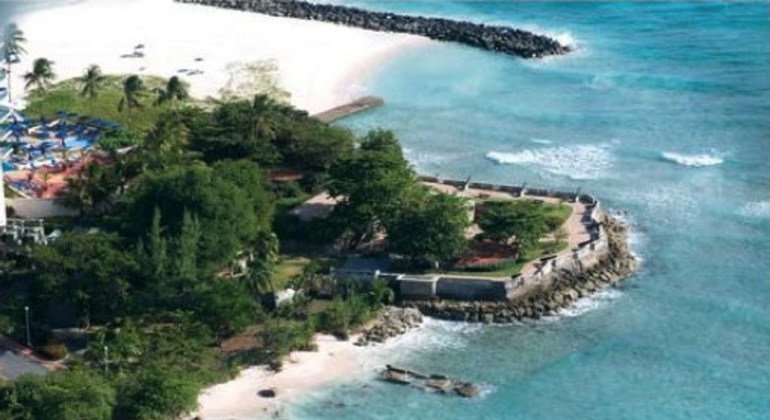
Some 150 participants are expected at the hybrid meeting, including ministers from Norway and Finland, AI industry leaders, heads of AI safety institutes and members of the UN Independent International Scientific Panel on AI. The United States will be represented by a senior diplomat, and Chinese experts are also expected.
Discussions will not cover military uses of AI. A second roundtable will focus on access, inclusion and linguistic diversity, as developing countries fear missing out on AI's benefits.
No negotiated outcome is planned, but calls to action and pledges are expected.
"We are in a good position, but action must catch up with the analysis," Mr. Gill said.