
Caribbean meteorological leaders met in Trinidad and Tobago to strengthen leadership, communication and crisis management, as services face rising climate risks and pressure to deliver faster, more reliable early warnings.
Caribbean countries face some of the world's most intense weather and climate hazards. From hurricanes and extreme rainfall to drought and coastal flooding, timely and reliable weather services are essential to protect lives and support national economies.
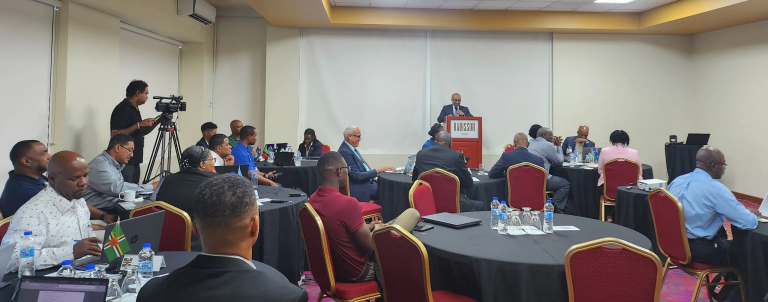
To strengthen these services, the Leadership and Management Capacity Development Workshop for Caribbean National Meteorological and Hydrological Services (NMHSs) was held in Port of Spain, Trinidad and Tobago, from 1 to 5 December 2025. Organized by the World Meteorological Organization (WMO) and the Caribbean Meteorological Organization (CMO), the workshop brought together 25 senior NMHS leaders across the region to strengthen leadership, strategic planning, crisis management and communication.
Responding to a high-risk environment
Caribbean NMHSs face a complex set of challenges. Climate change is increasing the intensity of extreme weather, while governments and the public expect faster and more accurate warnings. At the same time, many services operate with limited budgets, ageing infrastructure and shortages of trained staff.
There was strong agreement that NMHSs must evolve beyond traditional forecasting roles. They now play a strategic role in disaster risk reduction, climate adaptation and key economic sectors such as agriculture, tourism, aviation and fisheries. Strengthening institutional mandates, building political support and securing sustainable financing are therefore essential for their future.
Building leadership and institutional capacity
A central theme of the workshop was the growing importance of leadership and governance. NMHS directors increasingly need skills that extend beyond technical expertise. Strategic planning, negotiation, resource mobilization and engagement with national decision makers are now critical responsibilities.
Discussions highlighted that stronger governance structures and greater visibility of NMHSs within national policy processes are key to securing sustainable investment and long-term institutional development.
Communicating early warnings that save lives
Effective communication is a critical part of successful early warning systems. Examples from recent storms, including Hurricane Melissa (2025), showed how clear communication can save lives and highlight the importance of clear messaging, accessible visual tools and rapid responses to misinformation.
Participants stressed that NMHSs must remain the trusted and authoritative source of weather information, particularly during high-impact events when misinformation can spread quickly through social media.
Improving communication strategies and crisis messaging capabilities is therefore a priority for strengthening early warning systems across the region.
Investing in people, standards and innovation
Workforce development was also a key focus. The workshop explored the implementation of WMO competency frameworks to support continuous professional development, structured training programmes, mentorship and on-the-job assessments. These measures help address staffing gaps while maintaining operational excellence.
The discussions highlighted the importance of Quality Management Systems and compliance with international standards, particularly in aviation meteorology. Leadership commitment and sustainable funding are essential to maintain certification and ensure reliable services.
Emerging technologies such as artificial intelligence (AI) and automated observing systems offer new opportunities to enhance forecasting and early warning capabilities. These technologies must be adopted responsibly and supported by adequate training.
By investing in leadership, governance and institutional capacity, the workshop contributes to the WMO goal of strengthening national meteorological services. Stronger leadership within Caribbean NMHSs will support more effective services, improved early warnings and greater resilience for communities facing growing weather and climate risks.


