As fertility rates in the United States continue to drop, many are wondering whether chemicals from plastics, nonstick cookware, pesticides, and countless other everyday products may be a factor.
Now, with an award of up to $8 million from Advanced Research Projects Agency for Health (ARPA-H), researchers at Columbia University's Vagelos College of Physicians and Surgeons and Mailman School of Public Health have launched EDEN (Environmental DEtermiNants of reproduction), a national study using technology developed at Columbia with ARPA-H funding to determine the effects of these chemicals on fertility and reproductive outcomes, such as miscarriage.
"Nearly every adult carries measurable levels of hundreds of environmental chemicals, and patients undergoing fertility treatment are routinely advised to avoid them even though we don't know which ones, if any, matter," says Zev Williams, the Wendy D. Havens Associate Professor of Women's Health at Columbia University Vagelos College of Physicians and Surgeons and director of the Columbia University Fertility Center. "Our goal is to provide clear, evidence-based answers about whether and how these exposures affect fertility,"
"Our goal is to provide clear, evidence-based answers about whether and how these exposures affect fertility," Williams adds. "If they do, those answers can guide changes in individual choices, public policy, and manufacturing practices that improve people's chances of having a healthy baby."
Adaptable technology analyzes all chemical exposures
Studies in animals have found that exposure to high levels of PFAS (per- and polyfluoroalkyl substances), BPA (bisphenol), and phthalates may affect sperm quality and hormone levels. Yet whether any of these exposures-and at what levels and for how long-affect human reproduction remains unknown.
The EDEN study builds on the ARPA-H initiative called IndiPHARM, led by Columbia University Mailman School of Public Health, which uses high-resolution mass spectrometry and other technologies to measure hundreds of thousands of metabolites in the human body generated by environmental exposures to everything from prescription drugs to pesticides.
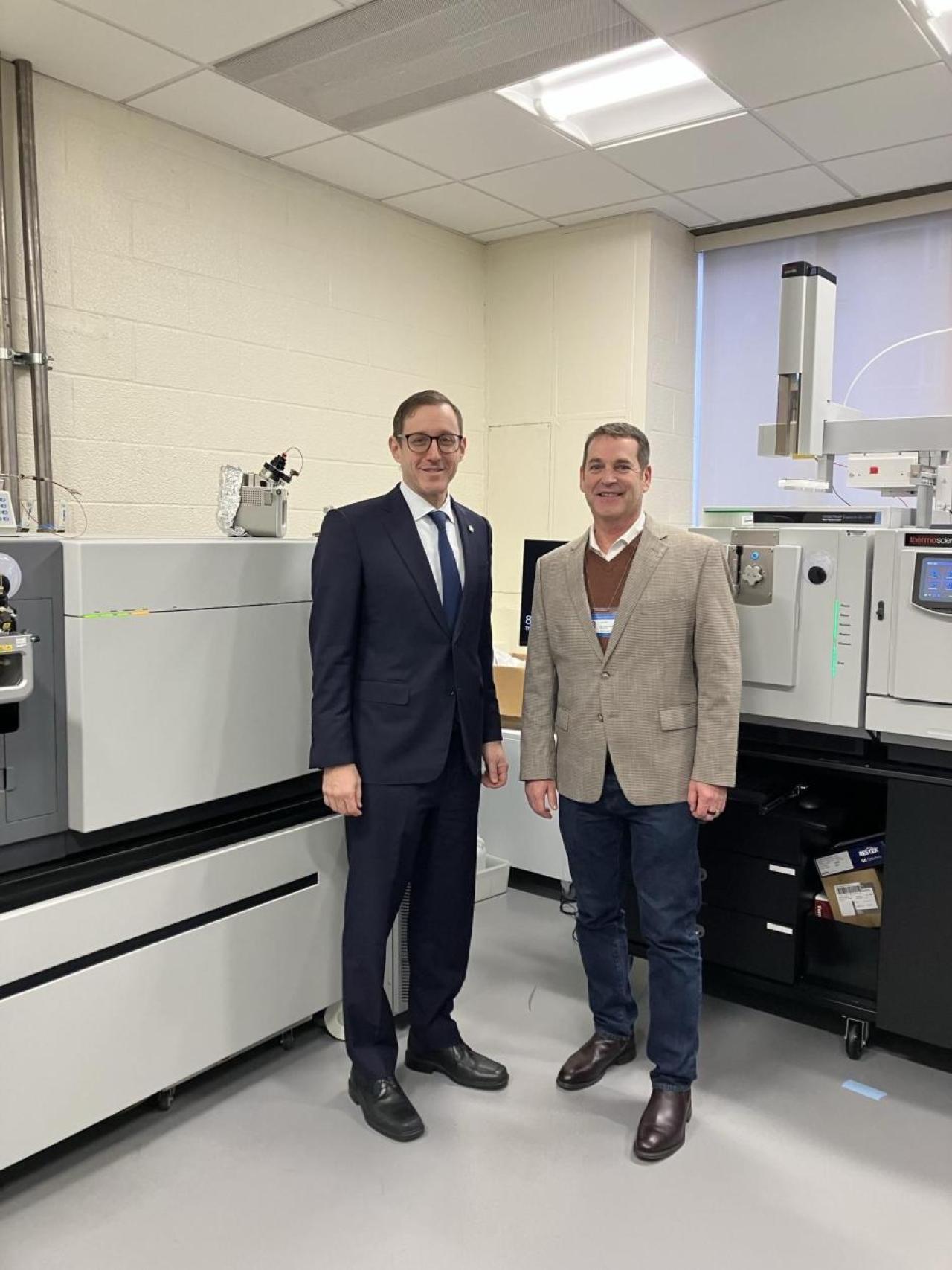
Zev Williams and Gary Miller
The technology platform will allow the EDEN researchers to look at all chemical exposures-including those not previously considered-and determine if any have an impact on fertility and reproductive outcomes.
"IndiPHARM was developed to measure these exposures and determine if a specific drug or drug combination is optimized for an individual patient's unique biology," says Gary Miller, a professor of environmental health sciences at Columbia University Mailman School of Public Health and principal investigator of IndiPHARM. "The platform is easily adaptable to help answer other important questions about environmental exposures."
The EDEN study will measure environmental compounds and metabolites in blood, follicular fluid, and semen samples that are collected during routine fertility care. Measurements will be compared to treatment outcomes, including egg and sperm quality, embryo development, and ability to become pregnant. Additional experiments using human organoids will help bolster the findings.
"Groundbreaking technology makes this breadth possible, and ARPA-H's commitment to ambitious, high-impact research lets us pursue these questions at a scale that would otherwise be out of reach," Williams says.
The study will expand to fertility clinics in rural, suburban, and urban regions across the United States and include a cohort of military veterans.
The findings will allow clinicians to provide individualized guidance for patients and provide evidence to support regulatory action if specific chemicals are shown to impair human reproduction.
"Regardless of the outcome, our findings will inform clinical practice and equip clinicians with evidence-based guidance for individuals and couples pursuing their reproductive goals," Williams says.