
Key points
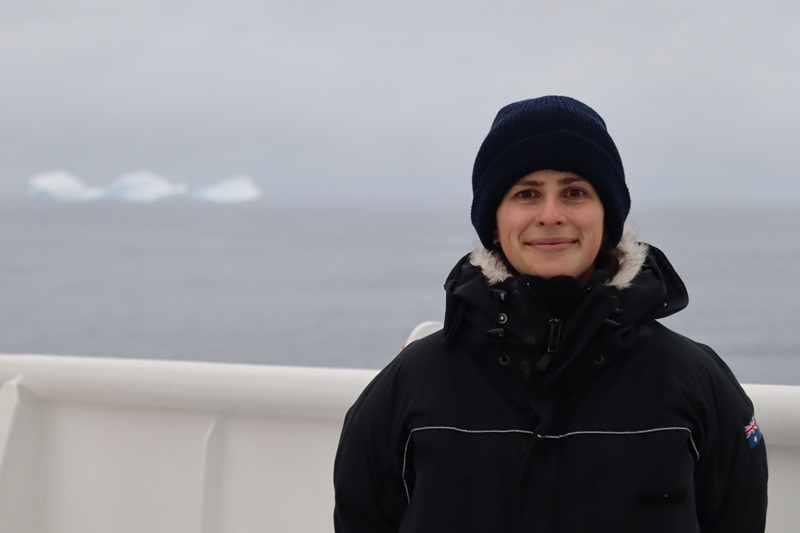
- Ella Pietraroia is a software engineer who supports the seagoing science onboard CSIRO research vessel (RV) Investigator.
- RV Investigator collects a vast array of scientific data on every voyage, which requires specialist support around the clock to integrate, process and prepare the data for end users.
- Ella's role has taken her on a dozen voyages from the tropics to the ice edge in Antarctica to explore our oceans and make amazing discoveries.
Ella Pietraroia works in the Data Acquisition and Processing (DAP) team on board CSIRO research vessel (RV) Investigator . Her job? Making sure every piece of scientific data collected at sea is accurate and safely stored.
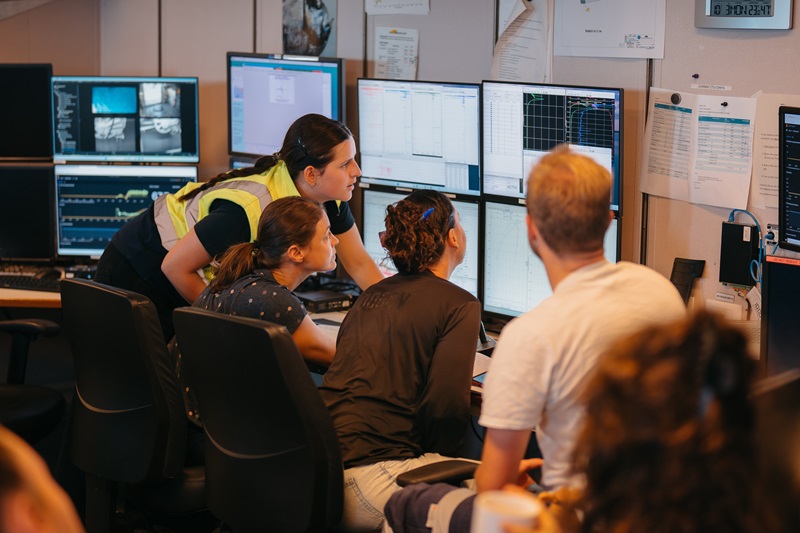
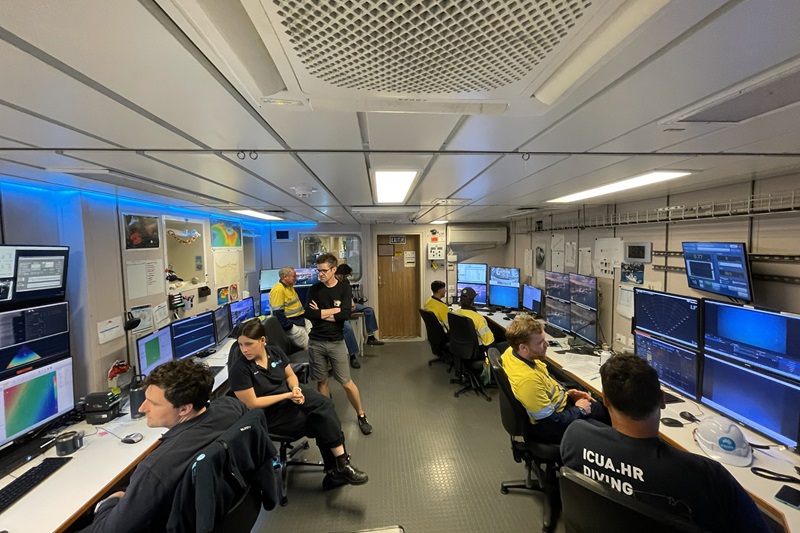
"My role is to look after all the data systems on the ship, as well as the IT systems that connect us to the outside world. Anything that involves collecting scientific data at sea comes through our DAP team," Ella said.
Ella is one of two IT specialists who work consecutive 12-hour shifts on each voyage – either 2 am to 2 pm or 2 pm to 2 am. This allows science operations to continue 24/7 while the ship is at sea.
This is not your typical IT job.
Turning ocean data into discovery
A large part of Ella's day involves supporting scientific instruments deployed from RV Investigator .
One example is the c onductivity, temperature and depth (CTD) instrument . Lowered thousands of meters into the ocean, this instrument collects seawater samples and measures ocean properties from the seafloor to the surface. These readings help scientists understand ocean currents, marine ecosystems and how the ocean responds to climate change.
Ella runs the software that records this data and checks for accuracy. If something looks off – say sensor readings are inconsistent – she's the first to investigate.
"If one sensor is reporting something different to another, I'm the first line of defence. I check whether there's an issue in the system and report it so it can be fixed as quickly as possible."
Once the voyage ends, Ella and the DAP team deliver quality-controlled data products through to the Information and Data Centre , which makes the data publicly available for researchers worldwide.
Ella's work often puts her at the centre of incredible discoveries.
Uncovering submerged landscapes and battle cruisers
During a recent transit voyage from Brisbane to Hobart , maritime archaeologists and researchers worked alongside Traditional Owners and Custodians of Sea Country to investigate the seafloor along the east coast.
"The research revealed submerged landscapes that would have been used by Indigenous peoples tens of thousands of years ago. It was wonderful to be a part of this work and learn from traditional knowledge holders who came on board," Ella said.
Furthermore, the science team surveyed several significant shipwrecks during the voyage including HMAS Australia I , a 17,000-tonne battle cruiser which was sunk off Sydney in 1924.
Researchers even identified several new shipwrecks, which maritime heritage bodies will now work with the CSIRO to investigate further .
Voyages across Australia and the Southern Ocean
Ella is currently on her 12th voyage aboard RV Investigator since joining CSIRO five years ago. By the end of the voyage, she will have spent more than 280 days in total at sea.
She's participated in research to study the East Australian Current , worked on the Great Barrier Reef and ventured across the Southern Ocean . She's even sailed to Antarctica – twice.
"One standout voyage was when we revisited the marine region off southeast Australia to repeat surveys first done 25 years ago . Scientists could see how ecosystems had changed, like fish moving south as waters warm and species rebounding thanks to protection in conservation areas," she said.
Her current voyage is a 56-day research voyage to Antarctica studying the Cook Ice Shelf marine region, an area that's poorly studied but highly vulnerable to climate change.
Finding your sea legs
Life on board RV Investigator is unlike most workplaces, with long stretches at sea and the same group of people sharing daily routines.
"It can be isolating. That's why it's important to form community with people on board and still try to contact home and talk to your family," Ella explained.
When people are off the clock, RV Investigator comes alive with table tennis tournaments, Mario Kart races and card games. Ella packs crochet, books and art supplies for long voyages.
"You can't just go to the shops if you get bored. It's good to have options." 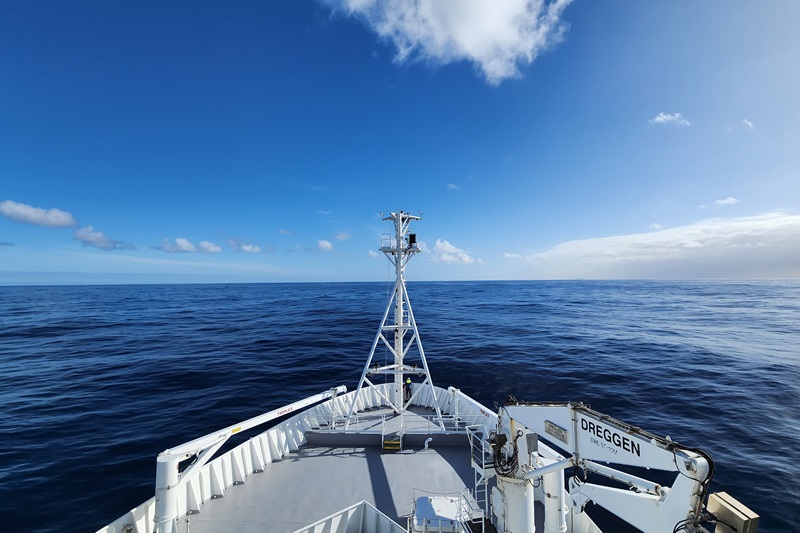
A role driven by impact
Ella studied engineering and computer science at university, always aiming to make a difference through her work .
"I really wanted to create impact through my work. Supporting scientists is a really great way to do that. I want to help people who are trying to help the world."
Ella's role – and the work of RV Investigator – enables research that informs climate science, marine conservation and heritage protection. Every voyage adds to a growing body of knowledge that benefits Australia and the world.
Ella and her team also help connect the world with the science at-sea by managing the vessel's livestream. This broadcasts real-time vision 24/7 from the ship to the Marine National Facility website for every voyage.


