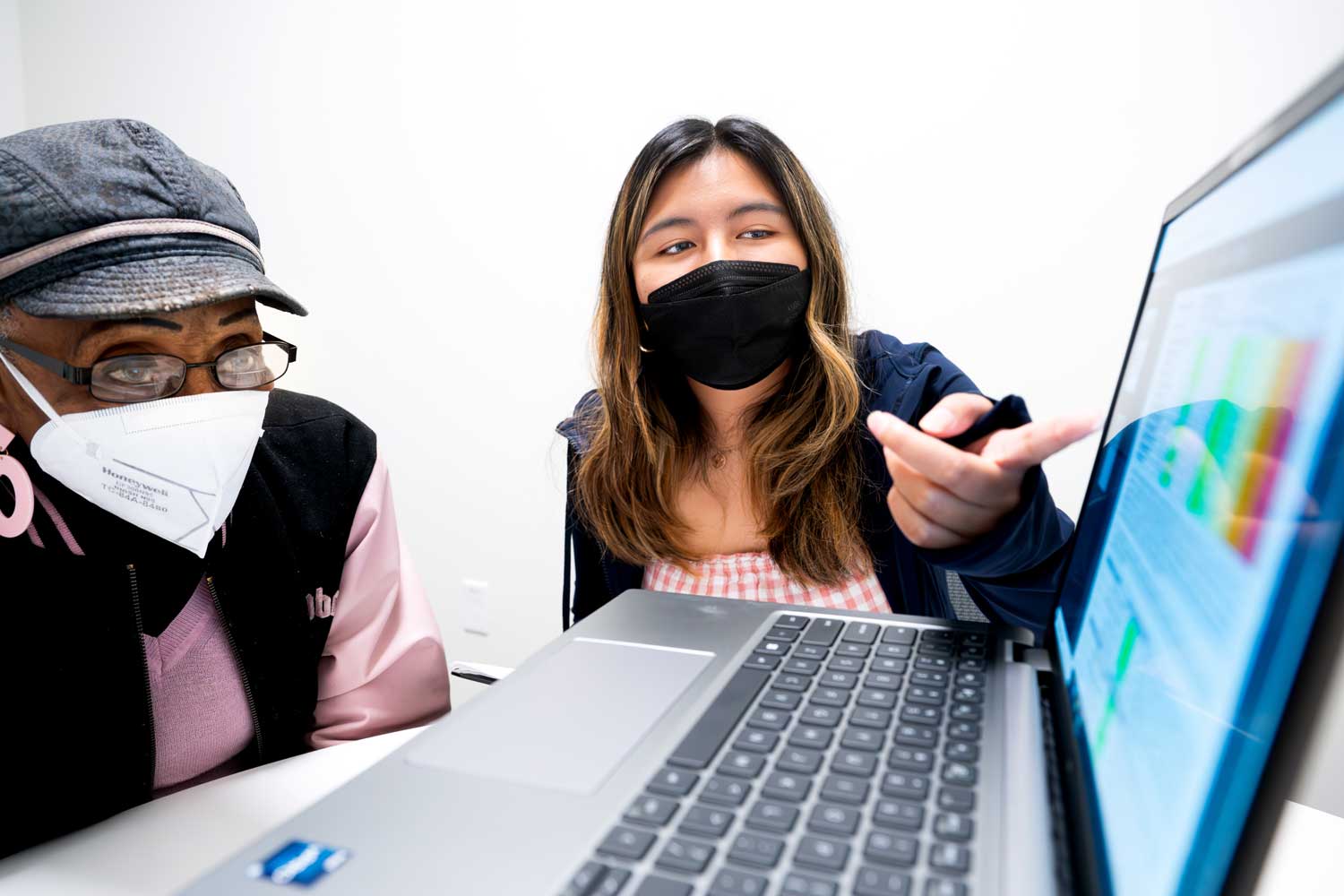
In the early months of the COVID-19 pandemic, UC San Francisco researchers were already seeing signs of lingering symptoms in some who had been infected. Importantly, this was when experts still viewed the illness as a transient respiratory virus and before long COVID even had a name, let alone a diagnosis.
Clinicians were hearing young, previously healthy people with no other medical problems talk about how they couldn't shake the virus. They had bone-crushing fatigue, respiratory issues that wouldn't go away, difficulty thinking, dizziness, and other problems that persisted well after the acute phase of the disease was over.
Many were in the prime of life but could no longer perform their jobs or function normally. Some had incapacitating symptoms and couldn't sit upright for long periods of time or needed assistive devices to help them get around. A significant number faced skepticism from health care providers, and even their families and friends. Their symptoms were dismissed as anxiety or otherwise not taken seriously. But, at UCSF, clinicians and researchers took action and did so at a speed unmatched by any other institution.
They were able to quickly tap into decades of expertise and infrastructure built to study another complex virus, HIV. They used that advantage to pivot to COVID-19, the disease caused by the SARS-CoV-2 virus, and what eventually came to be known as long COVID.
"HIV taught us how chronic viral infections can affect the body long after the initial illness, and how important it is to involve patients in that research," said Michael Peluso , MD, MHS, an infectious disease researcher and assistant professor of medicine at UCSF. "Applying those lessons to long COVID has helped us accelerate discovery and move closer to answers and treatments."
In March 2020, UCSF established a program that allowed them to follow patients over years. As part of the Long-term Impact of Infection with Novel Coronavirus program, or LIINC, researchers recruited more than 1,700 participants, collected over 100,000 biospecimens, and produced many of the first and most consequential studies about the mechanisms of the disease. Within LIINC, which is directed by Peluso, researchers also built one of the premier clinical trial programs for long COVID in the world.
"By following individuals over time and studying them deeply, we began to uncover the biological drivers of long COVID, identify who was most at risk, and use that knowledge to inform better diagnostics, treatments, and prevention strategies," Peluso said.
How HIV paved the way
Today, more than 20 million Americans have been diagnosed with long COVID. Yet still no diagnostic tests or therapeutics have been approved specifically for the debilitating condition, which is defined as persistent symptoms that include everything from shortness of breath to cognitive issues and cardiac problems that last more than three months after a COVID infection.
LIINC co-founder Steven Deeks, MD, started his career in the early 1990s at what is now the Priscilla Chan and Mark Zuckerberg San Francisco General Hospital and Trauma Center (ZSFG). That was just as AIDS was becoming the leading cause of death for American men between the ages of 25 and 44, but treatments were limited to single-drug therapies.
By 1996, combinations of anti-HIV drugs were introduced that suppressed the virus and dramatically improved the outlook for people living with HIV. "In the early era of HIV, we tried single-drug therapies, but nothing worked. Two drugs, that didn't really work. Three drugs - boom," Deeks said. "That's the way it worked for HIV, and that may be the way it works for long COVID. We're certainly setting up our program to begin to look at these combinations."
At the heart of the collaboration between ZSFG and UCSF on AIDS research was what became known as the San Francisco "model of care." This is the integrated, team-based approach to working with public health and community organizations that led to HIV testing, clinical trials to evaluate treatments, and compassionate care. This included academic institutions, public health, community advocates, political leaders, and the biotechnology industry.
The same has been true of long COVID, where partnerships are starting to produce answers that researchers have been searching for.
About a year after opening, LIINC launched the world's first long COVID tissue bank and discovered that pieces of the virus can linger in the tissue of patients for up to two years. LIINC shares blood and tissues with researchers around the world, is involved in dozens of collaborations to identify the abnormal biology driving the disease, and has conducted seven clinical trials to correct that biology.
"Our approach to clinical trials in long COVID is quite similar to our approach to cure HIV," Peluso explained. "We identify the pathways that we think are driving the problem. Then we take an experimental medicine approach where we use novel therapeutics to really target those pathways to see if we can alter that biology that we think is at the core of this disease."
The LIINC team was one of the few groups worldwide capable of shifting to study long COVID so quickly, according to Amy Proal, PhD, president of the PolyBio Research Foundation, a Massachusetts-based nonprofit that supports research into the root causes of chronic disease. Which is why PolyBio is LIINC's primary funder, she said.
"They already knew that the SARS-CoV-2 virus might persist because of their history with HIV," Proal said of UCSF's researchers. "The things that they chose to do right from the beginning, like collect tissue and do certain kinds of imaging, could be targeted and very specific to what a virus does in a chronic capacity."
That foresight allowed UCSF to immediately track long COVID patients overtime and led to a number of breakthrough findings.

No longer a mystery
While the biological mechanisms behind long COVID are still not fully understood, researchers say they've come a long way and are getting closer to finding treatments.
They've been able to detect immunologic differences between people with long COVID and without. They've discovered abnormal physiologic responses in cardiopulmonary and vascular function tests. They've also found inflammation in the tissues, as well as viral persistence in the gut, bone marrow, brain, and other deeper tissues.
... SARS-CoV-2 is able to persist for a long period of time in various tissues across the body.
Timothy Henrich, MD
"I don't think that it is fair in 2026 to say that this disease is a mystery," Peluso said. "I think we've made a lot of progress in understanding objectively what might be happening."
Still, much of the difficulty in understanding long COVID is because it's a complex syndrome with more than 200 documented symptoms affecting the respiratory, immune, nervous, cardiovascular, gastrointestinal, and other systems.
Timothy Henrich , MD, a professor of medicine in UCSF's Department of Experimental Medicine and a lead researcher at LIINC, runs a lab that expanded its focus from HIV to study the mechanisms by which viral infections lead to conditions like long COVID. Not only did Henrich's lab find viral persistence in the gut, bone marrow, brain, and other deeper tissues, they saw profound changes in immune responses and inflammation in these tissues at levels they didn't see in standard blood tests.
One of the main things we learned is that SARS-CoV-2 is able to persist for a long period of time in various tissues across the body," Henrich said. "This is really unusual and changed the paradigm of thinking about this as a chronic viral infection versus a transient, acute respiratory viral infection."
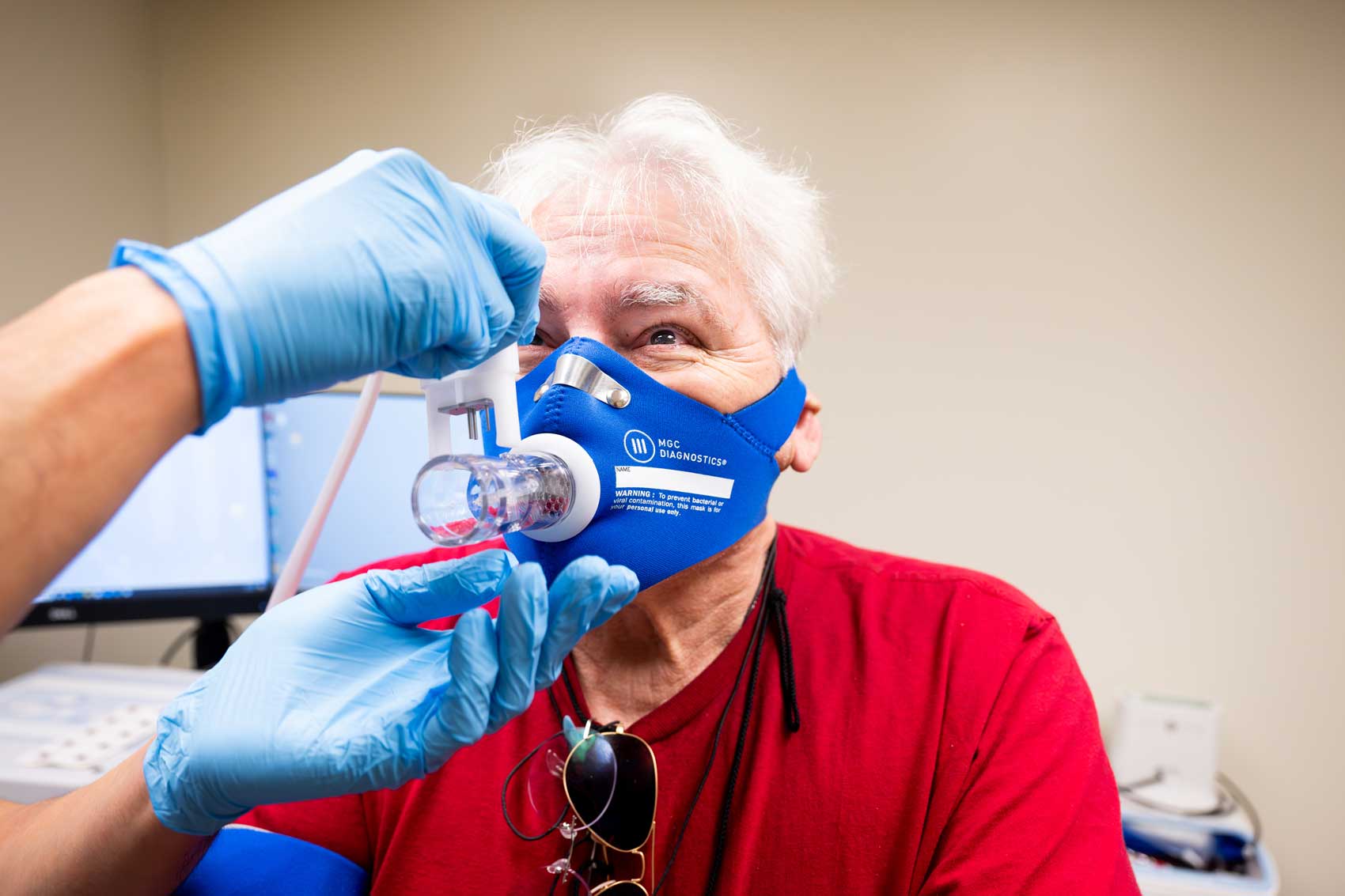
To get a clearer understanding, researchers used noninvasive PET scans and revealed that T-cells, part of the immune system, were remaining active for prolonged periods of time, likely contributing to ongoing inflammation, which the immune system uses to fight illness, and other symptoms.
A commitment to finding answers
These discoveries get scientists closer to solutions, but researchers say the work needs more federal funding and investments from the pharmaceutical industry and private donors.
At a roundtable with long COVID experts convened last fall by U.S. Health and Human Services Secretary Robert F. Kennedy Jr., Peluso stressed the need to scale up the number of clinical trials and to implement a diagnostics program to identify who is most likely to benefit from the interventions. He emphasized that this would require investment on a faster timeline than is typical of federal programs.
"We saw for HIV how important it was in the '90s to have pharmaceutical partners on board with developing drugs and investing tremendously ... in figuring out which treatments would work," Peluso told the panel. "We need that level of commitment for long COVID."
Peluso also emphasized the continued need to involve patients with the research. Hannah Davis, co-founder of the advocacy group, Patient-Led Research Collaborative, said UCSF's researchers not only had the ability to immediately recognize that SARS-CoV-2 was causing this disorder, but they listened to patients and sought their participation in finding answers.
Davis believes LIINC's work could eventually advance the understanding of other infection-associated chronic conditions, including myalgic encephalomyelitis/chronic fatigue syndrome (ME/CFS), and persistent Lyme disease.
"One day soon, we'll look back on LIINC as part of the groundswell that forever changed the understanding of conditions like long COVID," Davis said. "The competence and credibility they have brought to the field has been rivaled by very few, and I'm forever grateful to the prescience, humility, and bold dedication they have shown in approaching this condition."