
Dung beetles could provide scientists with a new way to uncover the animals living in Singapore's forests, including elusive species that are difficult to spot with conventional wildlife surveys. NTU researchers found that DNA preserved in the insects' guts can reveal the mammals, birds and other vertebrates whose waste they have fed on.
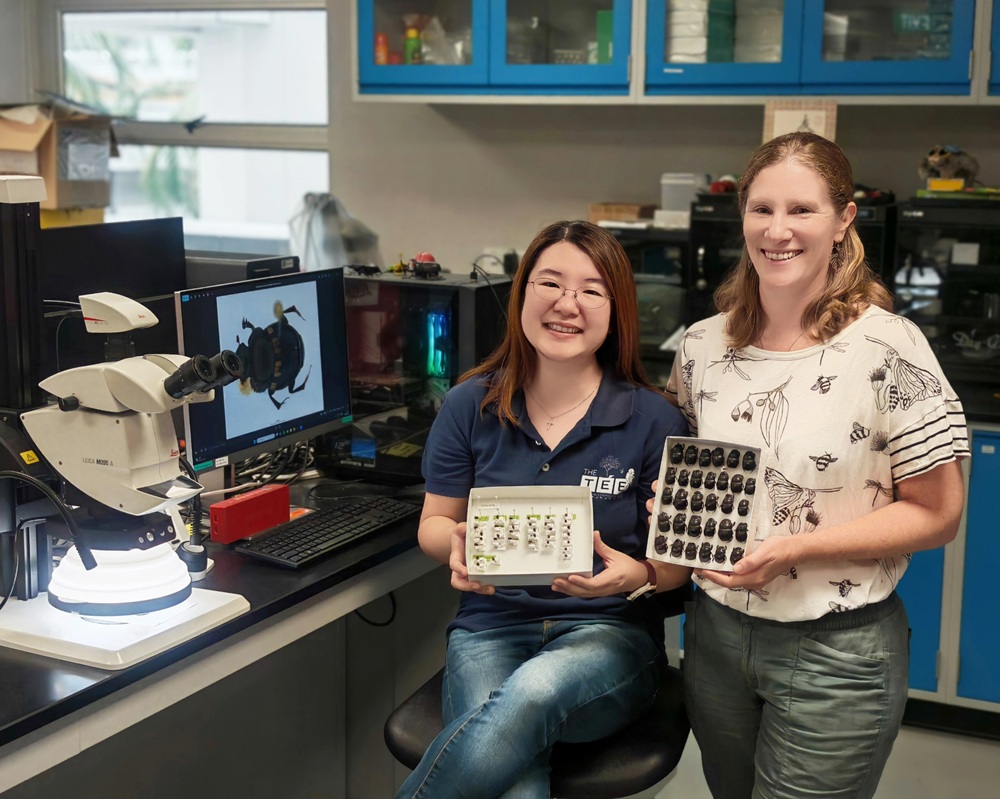
The team, led by Assoc Prof Eleanor Slade from NTU's Asian School of the Environment and research fellow Ong Xin Rui, studied dung beetles in the Central Catchment Nature Reserve. Between January and March 2023, they placed traps at 50 sites across the forest floor and canopy, collecting more than 540 beetles from 14 species.
Back in the laboratory, the researchers analysed the beetles' gut contents for traces of animal DNA. They detected 18 animal species, including the elusive sambar deer, Sunda pangolin and Sunda slow loris. DNA from the brahminy kite, squirrels and frogs, including the black-eyed litter frog, was also found. The findings were published in the scientific journal Molecular Ecology Resources.
The approach could complement camera traps commonly used to survey wildlife. Cameras placed on the forest floor may miss animals living higher in the canopy, while some closely related species can be difficult to distinguish from photographs alone. DNA carried by dung beetles could therefore provide another source of information about which animals are present in an area.
The research also goes beyond simply counting species. By identifying which animals the beetles had fed from, the scientists could begin mapping interactions between dung beetles and vertebrates across the forest. Assoc Prof Slade said understanding these ecological relationships could help researchers assess how resilient an ecosystem is when individual species disappear. Such information could also help evaluate forests being considered for development or monitor the recovery of degraded forests after conservation efforts.
The team is now exploring a less invasive way of gathering the same information without dissecting the beetles. Researchers plan to swab the insects' mouths and bodies for traces of wildlife DNA before releasing them. If successful, the method could add another tool for monitoring biodiversity and understanding the health of tropical forest ecosystems.


