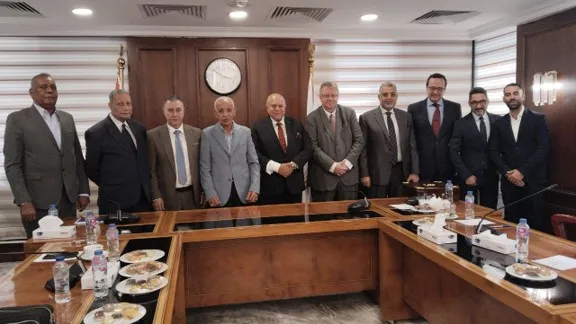
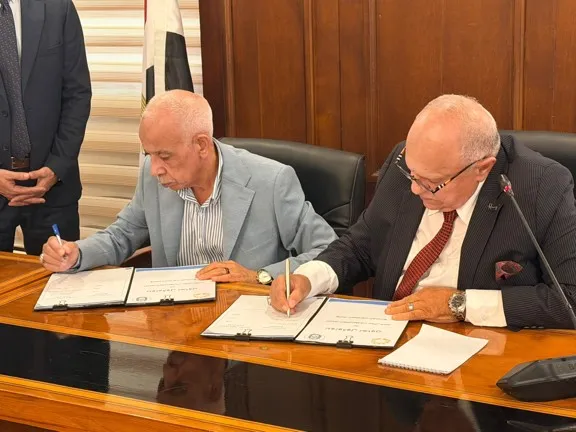
The ILO Bureau for Employers' Activities welcomes the historic cooperation protocol signed between the Egyptian Trade Union Federation (ETUF) and the Federation of Egyptian Industries (FEI). This landmark agreement establishes an advanced framework for structured social dialogue, bipartite cooperation, and joint institutional action between representatives of workers and enterprise in Egypt.
As Employer and Business Membership Organizations (EBMOs) navigate complex economic transitions, this agreement exemplifies the core principles championed by the ILO: proactive social dialogue and a shared commitment to productivity, decent work, and sustainable enterprise development.
A strategic alignment for economic resilience and productivity
The protocol translates the mutual understanding between Egypt's premier industrial employers' organization and the national workers' federation into an operational roadmap. The agreement places structured cooperation at the centre of labour-business relations, reinforcing the ILO principle that sustainable economic growth is supported by predictable frameworks, stable industrial relations and competitive enterprises.
© ILO
Core pillars of joint action
The cooperation framework focuses on four vital strategic pillars designed to future-proof the national industrial ecosystem:
- Skills Development and the Future of Work: Aligning vocational training and workforce qualification programs with the demands of digital transformation and emerging industrial requirements.
- Productivity and Work Environment: Promoting enterprise competitiveness, quality cultures, and optimal working conditions across industrial establishments.
- Occupational Safety and Health (OSH): Advancing preventative cultures and joint training campaigns to safeguard workers and enhance workplace safety standards.
- Institutionalized Social Dialogue: Operationalizing regular, structured consultations to address sector-wide challenges proactively through consensus and negotiation.
Robust implementation mechanisms
To ensure long-term impact and accountability, the protocol establishes a joint coordinating committee, annual work planning, and mandatory quarterly reviews to evaluate performance metrics and track measurable outcomes.
© ILO
Implications for employer organizations
For EBMOs globally, the FEI-ETUF protocol serves as a powerful model of modern advocacy and institutional maturity. It demonstrates that when business organizations engage through structured social dialogue and robust internal governance, they reinforce their legitimacy as indispensable architects of economic stability and national development.