
Summer is the season for flies, which belong to an insect group that scientists call Diptera. Many fly species are more active when the weather is warmer, and populations can boom thanks to the interplay of winter rains, warmer weather and abundant food sources.
Mosquitoes biting and bush flies buzzing around may be irritating, but there are thousands of fly species worth appreciating. CSIRO's entomology expert answers common questions about why flies matter — from their role in ecosystems to surprising facts about their diversity and importance. 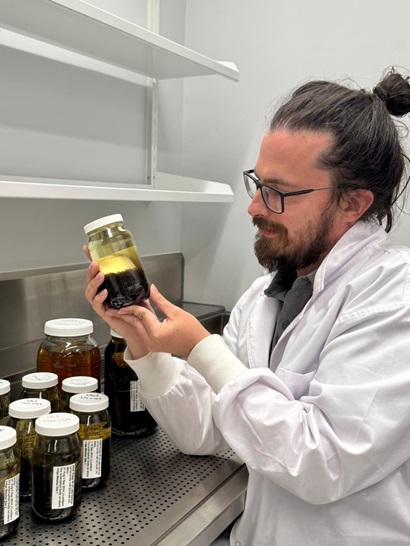
All quotes below are available for use by media. They can be attributed to Dr Keith Bayless, Research Scientist at CSIRO's Australian National Insect Collection.
Why hunt for rare flies?
People often hear about orchid hunters who are obsessed with searching for rare orchids. My work is similar, but with rare flies. I study and track species that are rarely seen in the wild.
One of the rarest is a species named Clisa australis. The species was named in the 1960s and then not recorded again for decades. It was originally found in caves where its larvae fed on bat poo. To locate it, I searched in similar habitats that were easier to access — such as pit toilets in national parks.
That search became the basis for a new children's book, The Very Stinky Fly Hunt by CSIRO science communicator Andrea Wild, which introduces five- to nine-year-olds to the science of fly diversity and the thrill of discovery.
How do rare flies help us understand pests?
A major goal in the hunt for Clisa australis is to learn more about its close relatives — the fruit flies (Tephritidae). Of the nearly 5,000 species of fruit flies, fewer than 100 are significant agricultural pests.
Clisa australis has similar egg-laying structures to fruit flies, but it doesn't feed on plants. Understanding these differences helps answer a bigger question: what makes certain species cause problems while most others are benign or beneficial?
To explore that, I'm building genetic trees of flies to map their relationships and gain a clearer picture of where flies come from and how they evolve. 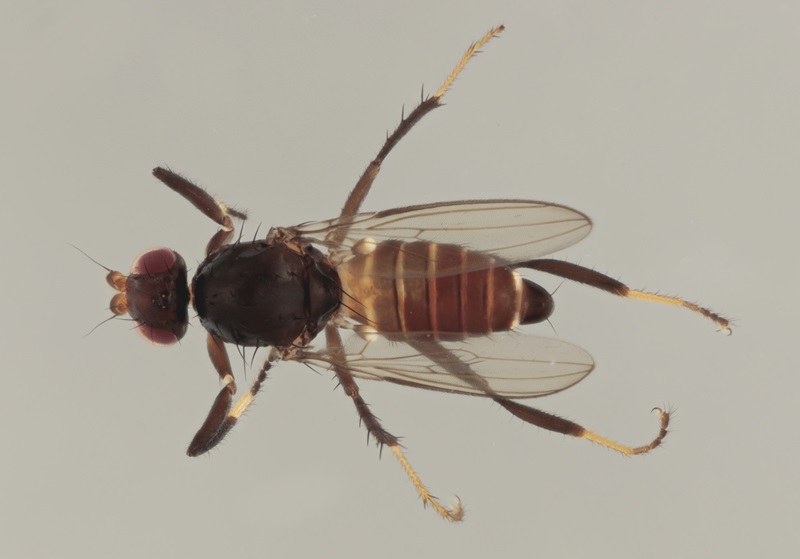
Why trap flies and other insects?
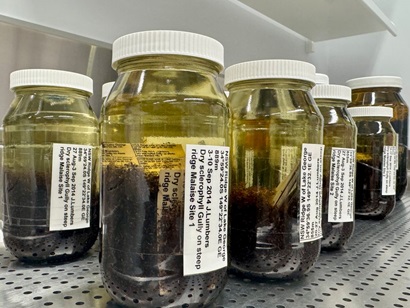
The first location where Clisa australis was rediscovered was remnant rainforest south of Sydney. A single specimen flew into my malaise trap — a tent-like trap that channels flying insects into a bottle of liquid preservative designed to protect delicate features like hair and wings. 
Malaise trapping is a quick and effective way to collect baseline data about insect communities. We can leave traps in poorly-known ecosystems year-round, collecting samples every few weeks to build a continuous data series.
These samples are now stored long-term in CSIRO's Australian National Insect Collection, where they help us find rare insects or even species that are new-to-science.
Importantly, malaise traps also allow us to measure change in insect populations across seasons, compare sites and assess recovery after events like bushfires.
How do flies survive in extreme environments?
The only insect native to Antarctica is a fly, Belgica antarctica, a flightless midge that lives among beds of moss and has special adaptations to survive the freezing conditions.
In Australia, some fly species are specialists too, such as those thriving in coastal habitats or alpine regions. These ecosystems are sensitive and often impacted by human activities. My goal is to build a comprehensive picture of the flies that live in these more extreme ecosystems and understand how they adapt.
Why do flies matter in nature?
Many adult flies are good pollinators. In fact, flies can be just as good as bees at pollination and are critically important pollination partners for some plants. The immature stages of different flies have diverse tastes. Almost any organic material — animal, plant, fungi or bacteria — is some fly's favourite food.
Flies also play a major role in recycling organic waste in soil and fresh water. Maggots feed on dead animals and plants, breaking down material and returning nutrients to the ecosystem. Species like soldier flies even help process kitchen scraps in your compost bin, turning waste back into soil.
Beyond ecology, flies have practical uses in medicine and forensics. Medical maggots assist in wound cleaning, and forensic entomology uses fly lifecycles to help determine time of death.


