

The Food and Drug Administration has approved ferumoxytol, known clinically as FERABRIGHT™, as a contrast agent physicians can use to detect and monitor tumor progression in patients with brain cancer.

Ferumoxytol is an iron-based substance that has been primarily used to treat anemia. Research into a novel use of the substance — to improve imaging of tumors — began in an Oregon Health & Science University laboratory nearly 30 years ago, with efforts led by Edward Neuwelt, M.D., a professor and lead researcher in OHSU's Department of Neurology and founder of OHSU's Neuro-Oncology Blood-Brain Barrier Program.
Now, the successful completion of the decades-long project means a new tool to battle brain cancer. Physicians can use this new imaging option to see an additional, multidimensional view of the cancerous area in the brain.
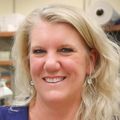
"Our hope as researchers is that the work we do in the lab can enable real-world advancements in clinical capabilities," said Lisa Muir, M.P.A: HA, senior research project manager in the Neuro-Oncology Blood-Brain Barrier Program. "This work — which has been decades in the making — will impact treatment for countless patients battling brain cancer. I am incredibly proud to be part of the amazing team, who through determination and commitment, was able to see this through to approval."
From laboratory to diagnostic tool
Magnetic resonance imaging, or MRI, is the primary clinical tool used to see the area around a patient's cancer, called the tumor environment. MRI helps physicians visualize and understand cancer growth and determine the appropriate treatment response and timing.
To see the tumor environment on an MRI, physicians must use a contrast agent, a medically approved substance that enhances the visualization of tissues, organs and physiological processes inside the body. Imaging agents work by altering the natural properties of tissues to make them more visible in scans.
Historically, most diagnostic technology has relied on gadolinium-based contrast agents; they cause the area where the tumor is located to light up on the MRI. However, these contrast agents offer a limited, one-dimensional view of the tumor environment, showing where the tumor is located but do not provide information on its biological nature.
Neuwelt began preclinical laboratory studies on ferumoxytol-enhanced MRI three decades ago; these eventually translated into several OHSU clinical trials. Researchers found that using ferumoxytol allows researchers and clinicians to measure blood volume in tumors, an important indicator of cancer growth, as well as track immune cells and visualize inflammation.
Across clinical trials, the ferumoxytol-enhanced MRI was shown to significantly improve visualization of both primary and secondary brain tumors compared with pre-contrast imaging. OHSU partnered with Azurity Pharmaceuticals to conduct a comprehensive series of independent, blinded, phase 3 re-read studies utilizing images, data, and clinical information, which came entirely from OHSU patients who participated in clinical trials over nearly two decades, to achieve the new FDA approval.

"With all brain cancers, but especially glioblastoma, the fastest growing and most aggressive form of brain cancer, it's crucial we approach treatment with as much efficiency and precision as possible," said Ramon Barajas, Jr., M.D., professor of diagnostic radiology in the OHSU School of Medicine.
"The FDA approval of ferumoxytol for imaging is an incredibly exciting advancement for the field of neuro-oncology because it offers a new approach to imaging assessment, which may ultimately lead to prolonging life and improving quality of life for our patients."
Translating research into real-world solutions
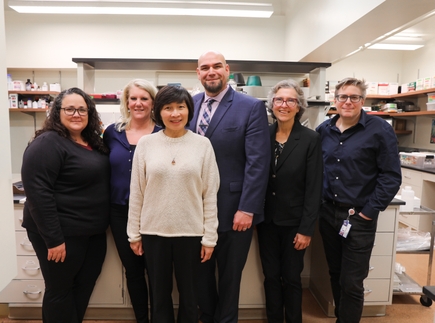
Approval through the FDA required a New Drug Application, known as an NDA, an intensive process that Neuwelt started in 2011. Over the last five years, a core team of researchers in Neuwelt's group — including Muir, Amy Huddleston, M.P.A: HA, Leslie Muldoon, Ph.D., Rochelle Fu, Ph.D., and Laszlo Szidonya, M.D., Ph.D. — worked to help bring the project across the finish line, including designing three new studies based on data from existing OHSU clinical trials; collecting and analyzing data in response to FDA requirements; and providing documentation throughout the FDA inspection and review process.

"OHSU is the birthplace of many innovative new ideas, but it's not easy bridging the gap between promising research and real-world applications," said Travis Cook, M.S., M.B.A., senior director of OHSU Technology Transfer. "It's not every day a research discovery makes it out of the lab, and further, has the potential to impact treatment decisions and disease outcomes for patients. We're thrilled to see that years of hard work has been brought to fruition."
Looking ahead, the research team plans to continue exploring various uses and potential impacts of ferumoxytol in combination both with other contrast agents and imaging techniques, such as PET/MRI and hypoxia imaging.
"Patients with brain cancer are often left feeling frustrated trying to understand their tumor's progression and what the right treatment is," Barajas said. "Now with a new path forward, we hope patients are provided some hope and comfort in this extremely difficult moment."
Disclosure Notice: Azurity Pharmaceuticals, Inc and OHSU undertake no obligations to update or revise any forward-looking statements contained in this release as a result of new information, future events, or evolving circumstances. All forward looking statements are subject to uncertainties; The result may vary materially. FOR US VIEWERSHIP ONLY.
(C)2025 OSHU. Ferabright is distributed by Azurity Pharmaceuticals, Inc. ALL RIGHTS RESERVED.


