
Children in Gaza are voicing their demands for the future through a UN-run initiative that seeks to amplify their voices and restore the "fundamentals of childhood".
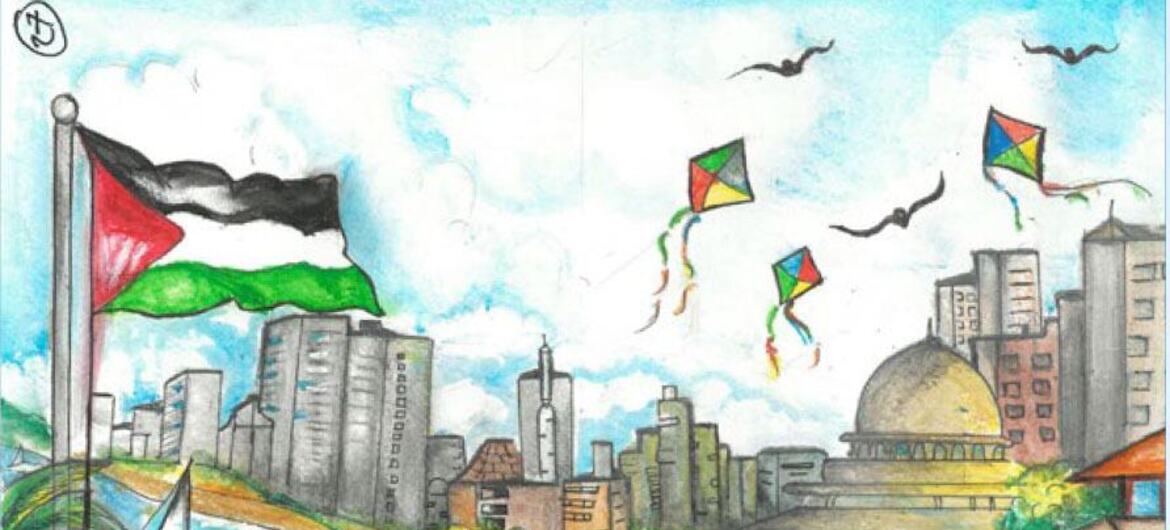
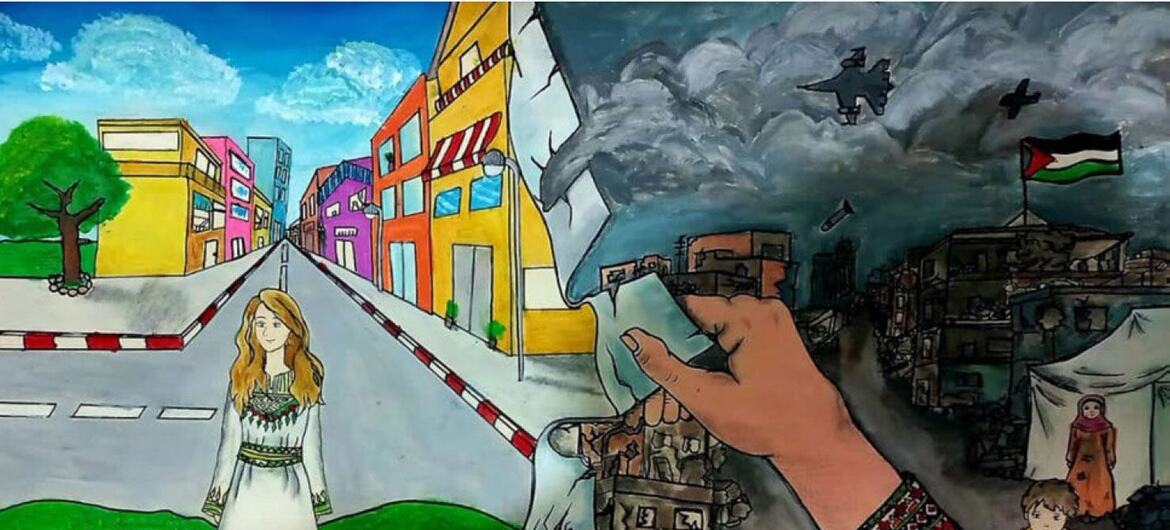
Through expressing their hopes for peace in art, poetry and models that they have made from rubble created by the war, thousands of young people across the enclave have taken part in The Gaza We Want initiative.
With support from the UN Children's Fund ( UNICEF ), the initiative has engaged children aged five to 18 to share their vision for rebuilding the territory that's been largely destroyed since war erupted between Hamas and Israel in October 2023.
The initiative helps "reinforce the importance of meaningful, ongoing child participation in decisions about Gaza's future," said Jonathan Crickx, UNICEF's head of communications in the Palestinian Occupied Territory, briefing journalists in Geneva on Tuesday.
Safety first
Over 11,000 children, including children with disabilities, have participated in the initiative which asked them to "imagine dignity" and share their ideas.
Children prioritised shelter and safety; real schools with roofs, walls and toilets; followed by hospitals and psychological support; and lastly places where they can play and "reclaim what war stole from them".
Mr. Crickx said that when thousands of children independently draw clean streets, classrooms and parks, "it is no coincidence. It is a direct appeal to the world."
These are not extraordinary demands. They are the fundamentals of childhood - Jonathan Crickx
"The children's deepest wish is simply the ability to sleep through the night, to walk to school without fear… I met too many children whose bodies had healed but whose fear had not." Mr Crickx said, echoing the call for mental health support alongside physical care.
'The clarity of children'
Mr Crickx described meeting 15-year-old Hala at a temporary learning centre in the central Gaza city of Deir Al-Balah.
Months without school had harmed her education but she dreams of a safe life, a safe home, her own bedroom and a good school, he said.
Despite the ceasefire - in place since last October - more than 135 children have reportedly been killed in Gaza. UNICEF says that listening to children must be the foundation of any credible reconstruction.
"It is difficult to ignore the clarity of children who have lived through such uncertainty. A recovery that ignores children's voices will fail them - and fail Gaza." The UNICEF's communications chief said.
"What the Gaza children describe is not abstract. It is the Gaza they want and have the right to grow up in."
Aid continues
Relief continues for children in Gaza as fresh bread, hot meals and digital cash assistance are provided to displaced families by the UN humanitarians.
The trucking of drinking water has been stepped up after a large water line that connects Gaza with Israel shutdown two weeks ago when two leaks were identified, the UN's humanitarian coordination office ( OCHA ) reported on Tuesday.
To restore sanitation levels, the UN and partners are moving quickly to rehabilitate pumping stations that were damaged or destroyed during the war. This is critical as sewage overflows can lead to water contamination and spread of waterborne diseases.
Although two new clinics for the screening of non-communicable diseases have become operational in North Gaza, there continues to be a critical shortage of medicine and laboratory supplies, particularly for cancer and heart diseases.


