
Key points
- Genomics delves into the genetic make-up of organisms, which helps us understand how they work.
- With new technologies and collaborative research, what used to take years can now be done in just weeks.
- Studying the genomes of diverse organisms brings insights for conservation, health, and biosecurity.
Every living organism has its own genetic 'blueprint': the source code for how it grows, functions and reproduces. This blueprint is known as a genome. When scientists sequence a genome, they identify and put in order the chemical building blocks - Adenine (A), Thymine (T), Cytosine (C) and Guanine (G) nucleotides - that make up an organism's DNA. 
By decoding and analysing this blueprint, scientists can answer crucial questions about a species. Questions like 'how are different species related?', 'what is their risk of inbreeding or disease?' and 'how adaptable are they to a changing environment?'. This information can be used to help monitor and restore biodiversity : for example, by detecting species in the environment or informing captive breeding programs .
Australia is home to hundreds of thousands of plant, animal and fungus species - the majority of which are found nowhere else in the world. With invasive species, climate change, pollution and habitat destruction threatening native flora and fauna, genomics can be a powerful scientific tool in efforts to halt and reverse biodiversity loss .
How do scientists sequence a genome?
The first step in sequencing a genome is to get high-quality DNA out of a specimen. Different organisms and tissues require different approaches to isolate the DNA. This can be tricky, as samples may be contaminated with bacteria, preserved in harsh chemicals like formaldehyde, or degraded by decomposition.
Scientists use a combination of detergents and salts to break up the cells, and some enzymes to crack out the DNA inside. They then purify the DNA by washing it in alcohol and, if the DNA concentration is low, make lots of copies so that it's easier to visualise and handle.
From there, scientists use leading-edge technologies to generate the raw data: millions of fragments of DNA. Principal Research Scientist and Co-Leader of CSIRO's Applied Genomics Initiative Dr Tom Walsh explained that modern sequencing methods generate huge amounts of data.
"Even small insects like grasshoppers can have huge genomes. For example, the locust has around 5 billion base pairs of As and Ts, Cs and Gs. That's five gigabytes of data. Sometimes assembling the genome requires many overlapping DNA fragments, which can generate even more data - up to a hundred-fold," he said.
"We run sophisticated algorithms and computational pipelines to deliver a complete genome," Dr Walsh said.
Piecing together the jigsaw puzzle
Sequencing a genome is a bit like putting together a jigsaw puzzle. It doesn't take long to tip out the box and reveal the pieces (the raw data) - the challenge lies in working out how the pieces fit together to form a complete picture.
Researchers can assemble some genomes in as little as a weekend. But when they are breaking new ground by sequencing a very complex genome that hasn't been studied much before, it can take months or more.
Once the genome is assembled, the next step is to annotate it. This is the process of locating, identifying and labelling different genes in the DNA sequence.
"Annotation is what actually enables you to understand the organism," Dr Walsh said. 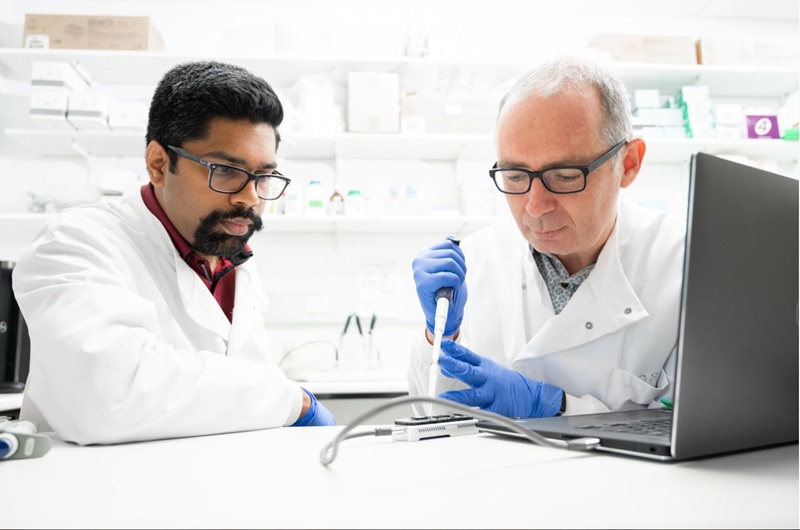
Having a picture on the front of the box makes it much easier to do the puzzle. Likewise, if scientists have a good idea of what the genome looks like - thanks to the reference genome from the same species, or a closely related one - it gives them a basis to compare the genetic makeup of individuals within and between species.
"Publishing high-quality, annotated genomes and sharing them with other researchers is ultimately what delivers insights that can be used to protect biodiversity through conservation and biosecurity," he said.
Advances in computational power and genomics techniques and technologies have opened the door to much faster, more efficient research. For example, highly accurate 'long-read' sequencing uses fewer, bigger chunks of information to assemble data more quickly and easily: like making a jigsaw out of only 100 pieces instead of 1,000.
Dr Walsh recalls that one of the earliest genomes CSIRO sequenced was the Cotton Bollworm.
"It took nearly 10 years and $1 million to accomplish what can now be done in a couple of weeks, for about a thousandth of the cost," said Dr Walsh.
Step by step: sequencing Australia's biodiversity
Innovations in genomics have made it possible for scientists to undertake projects of greater scale and complexity than ever before. Last year, the Australian Reference Genome Atlas (ARGA) launched Genome Tracker - a dashboard which indexes published genomes from across a range of databases.
Dr Kathryn Hall, who led the project, said it will help the research community track its progress toward the goal of sequencing Australia's biodiversity.
"Only two per cent of Australia's known and catalogued species have had their genome sequenced at least once," Dr Hall said.
"Genome Tracker clearly shows which parts of the family tree of life have strong representation, and which are under-sequenced or entirely missing.
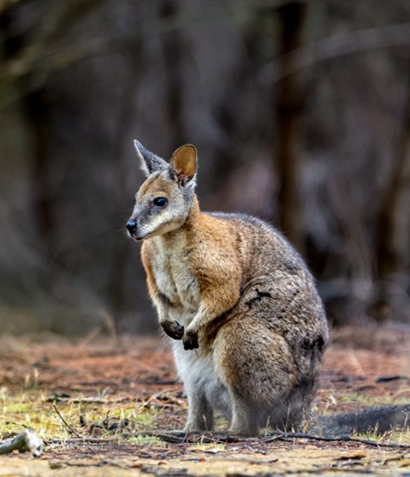
"For example, we have genomes for around 16 per cent of Australia's mammals. If we look closer, we can see that we know quite a bit about kangaroos, koalas and echidnas, but we know very little about bats and rats, which are actually most of the mammal species' diversity."
Without ARGA and Genome Tracker, a researcher might need to spend weeks looking up references for species across different genomics databases.
"High-quality genomics data is painstakingly created - it can serve so much more value to researchers in the future if it is searchable, accessible and reusable," Dr Hall said.
Cracking open the archives
Step-change innovations in genomics have also enabled scientists to delve further back into the source code of life than ever before. Research Scientist Dr Erin Hahn works at the Australian National Wildlife Collection , part of the National Research Collections Australia hosted at the state-of-the-art Diversity facility in Canberra.
Home to 15 million specimens dating back 150 years, the collections are nature's time machine. Unlocking the DNA of these specimens allows scientists to travel back in time, discovering how Australian species have evolved in response to ongoing environmental changes like pollution, urbanisation and climate change.
"We have invented techniques to extract centuries-old genomic data from specimens preserved in formalin, which was previously thought impossible," Dr Hahn said.
"We have successfully applied these new methods to very old (117 years) and very small (~2 mm) museum specimens," she said.
"Formalin crosslinks DNA to proteins, which preserves details about which genes were switched on when the organism was alive. This means we can not only read the DNA but watch how gene expression has changed through time and space, which reveals how species have responded to the very rapid environmental change over the last century."
"This information will inform environmental management practices and protect our global biodiversity resources into the future," she said.
From the wild to the lab - and back again
The applications for genomics research are vast and still expanding. Every genome sequenced helps to answer a unique research question. As Dr Kathryn Hall explained, examining the past through resources like the National Research Collections can help predict the future.
"One thing we can already do is to compare genomes to see how organisms evolved, correlating what we know of the environment at the time to changes in the organisms we're studying," Dr Hall said. 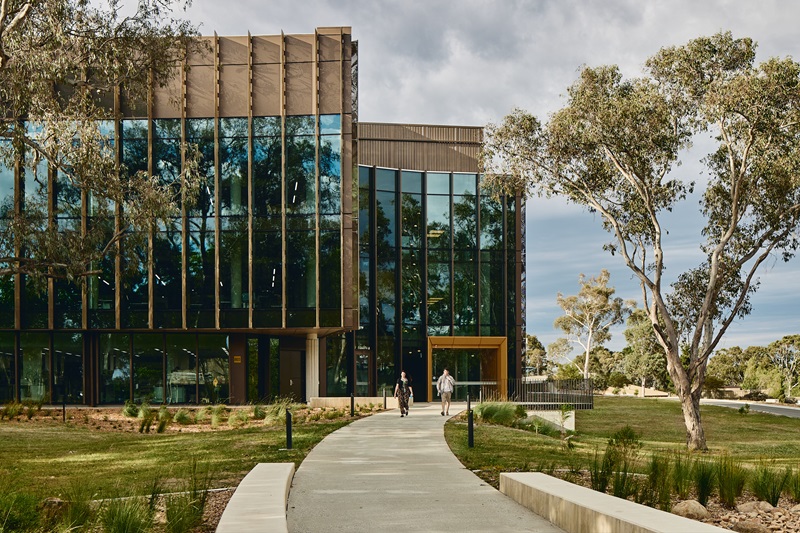
"This is really useful for predicting how animals and plants and other species might adapt in the future.
"For example, looking at the Myrtaceae - or Myrtle - lineage, we can see that the rate and extent of species diversification declined as the climate became more arid."
This is just the tip of the iceberg. Genomes can help scientists find new ways to control invasive species - the number one threat to Australia's biodiversity. For example, they can reveal which genes determine insecticide resistance in lice and flies.
Genomes can even help unlock breakthroughs through biodiscovery: the search for novel compounds in nature. Through the Australian Venom Innovation and Discovery Initiative , scientists are examining how animal venoms evolved, to eventually unlock new medicines and insecticides.
Research using genomes can provide insights into the resilience, adaptability and population health of threatened and endangered species like the Spotted Handfish and the Night Parrot , by seeing if the small remaining populations are at risk of inbreeding. 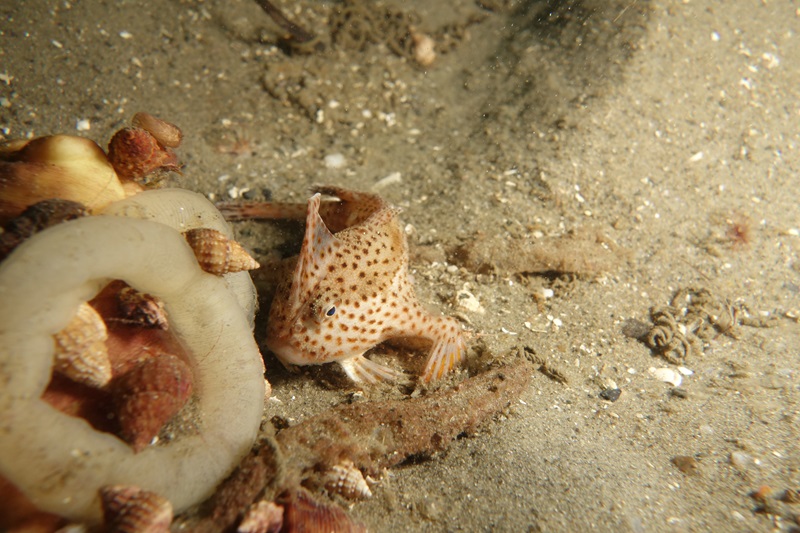
Genomics underpins non-invasive environmental monitoring through eDNA. DNA sequences detected in soil, water or air samples can be matched to reference genomes, to identify the species present in the area without direct observation or disturbance.
Genomes also form the basis for ecotoxological models - a tool for scientists to understand what levels of chemical pollution impact the health of native species like freshwater turtles .
By sharing information and collaborating with universities, governments and research organisations in Australia and around the world, CSIRO's genomics research is positioned to make a powerful positive impact, protecting biodiversity into the future.
"The genome itself is just the beginning," said Dr Walsh.
"Each one is the start of an impact journey."


