
Atmospheric scientist Gregory R. Carmichael reflects on four decades of advances in air quality research and the growing role of artificial intelligence.
Gregory R. Carmichael is a leading atmospheric scientist and Karl Kammermeyer Professor of Chemical and Biochemical Engineering at the University of Iowa. Over four decades, he has become a recognized authority on air quality, atmospheric chemistry and climate, particularly through his pioneering work on chemical transport models that track how pollutants move and transform across the globe.
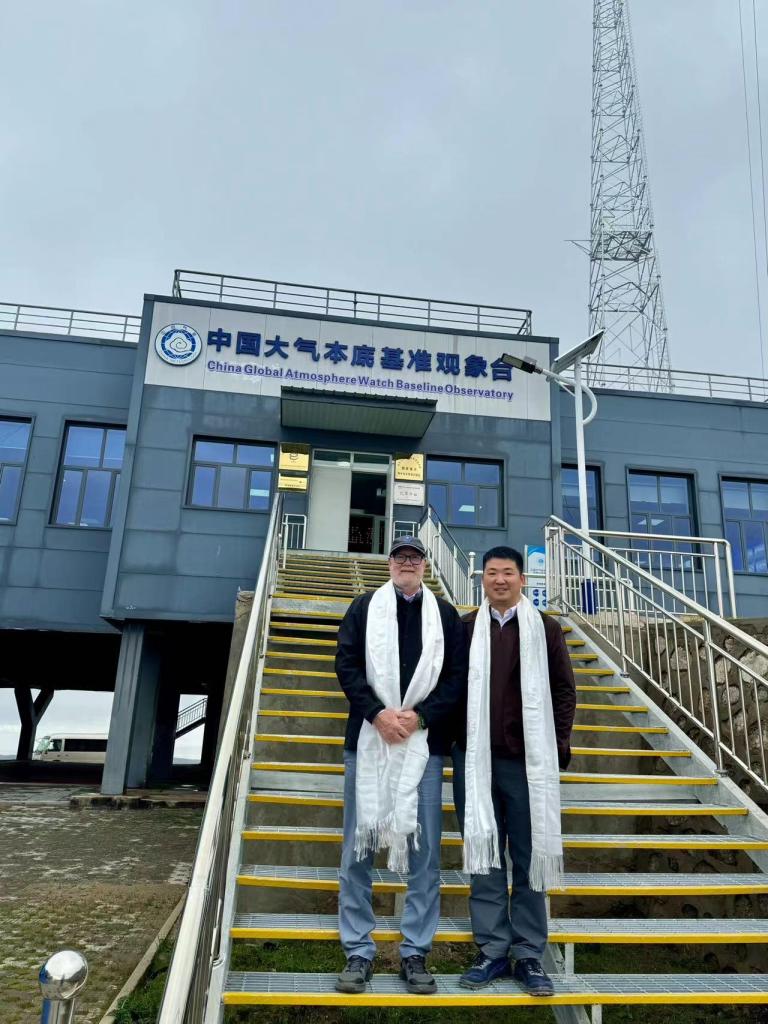
As chair of the Scientific Steering Committee for the Environmental Pollution and Atmospheric Composition, he plays a central role in the World Meteorological Organization (WMO) Global Atmosphere Watch (GAW) programme, which coordinates global observations of atmospheric composition for air pollution forecasting, climate research and environmental policies.
During the GAW Symposium held in Geneva 13-17 April 2026, Prof. Carmichael spoke to us about scientific change, artificial intelligence and the future of atmospheric science.
I graduated high school in 1970 when awareness of environmental problems was growing. I thought most environmental problems are chemical, so I'll become a chemical engineer and design products with less environmental impact. I was maybe a bit naïve [laughs].
In 1970, we knew that humanity, by the way we live our lives, could have local impacts. If you think of the 50s and 60s, the urban environments and the growing smog and air pollution, when we defined the problem, local air pollution was the issue, and a lot of it was coming from our industrial stacks. The solution was dilution, so we built very tall stacks.
But then people started noticing that far away from any sources, the number of fish in lakes was decreasing, and some trees were starting to have problems. We found out the cause was acid rain and pollutants could have impacts far away. Defining the problem correctly is therefore very important. Because if we define it narrowly, we come up with a local solution that does not address the root cause.
I think of these models as libraries of our understanding. We put together our fundamental knowledge from laboratory work, from field experiments, from theoretical constructs and add it into a numerical framework in the model.
We then exercise the model by exploring questions like how can we better understand the whole cycle of ozone production? Because models can help us confirm theoretical understanding or discover new pathways because we now have all these pieces together in one place.
The same models are essential for air quality management. They represent reality as we know it, and they show the explicit links between what's being emitted and where the pollution forms.
We've also started using them in forecast mode. An air quality forecast provides an early warning, and what I find very interesting is that, unlike a weather forecast, we can take action to prevent it from happening. If I forecast that in three days I'm going to have a very strong pollution event for example, with enough lead time, they can shut down factories or restrict car traffic to manage these events.
I think it's been a constant. The field started with observations: first an instrument that could measure, followed by steady improvements in accuracy and in the range of what could be measured.
But we still didn't have enough observations everywhere, so a conceptual model was needed to understand why the measurements behaved as they did. It was the development of computer technology which made it possible to put the model within a more systematic framework and ask more realistic questions. As we got more measurements, we had a better understanding and as the computers got more powerful, we were able to build more realistic models.
Five years ago, when we wrote our last strategic plan for the GAW programme, AI was there, but it seemed so far away that we didn't pay much attention to it. Today, its capabilities have expanded so much it's touching everything, from how we take measurements to how we analyse data and build models.
From the GAW programme perspective, this creates a clear opportunity. We coordinate high-quality data at a global scale which is going to be increasingly valuable for training AI models. In that sense, we can contribute at the front end of the system while also benefiting from the improved models that result.
GAW has brought together a systematic, long-term commitment to measuring atmospheric composition. These records are extremely valuable. GAW set the standards very early on. I attended many of the workshops that focused on how to take measurements, and on understanding that other groups may take measurements, but if we're really going to put knowledge together, we need to know that when we combine them, we have equivalent confidence in those observations. GAW put into place the guidelines for quality assurance and quality control that enable us to combine data.
And it has influenced measurements well beyond GAW. High-quality data networks are essentially following GAW standards. That's the GAW foundation: a long-term, open, trusted source of information on atmospheric composition.
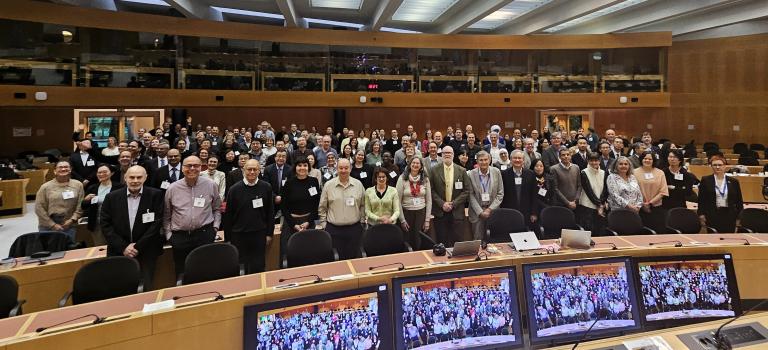
It's a reminder of how large, how diverse, how committed the community is. The first day, there was so much energy. It was like the best of a family reunion. Everybody wanted to be there.
I think that's important, because most of this work is outside of the meteorological services. These are not people whose jobs are specifically focused on GAW. For most, working for GAW is voluntary. They may be taking measurements as part of their job, but in terms of working together, serving on committees, that's voluntary. So to see that enthusiasm is important. It also reminds us that, as we think about the future and budgets, there is still a need for human interaction, and that's something we can't lose.


