
Nina Beguš remembers being at an event 10 years ago where a group of engineers showcased new robots that could recognize human emotions and offer basic compliments. It was years before AI chatbots would become fixtures of daily online life. But Beguš, who was beginning her Ph.D. in comparative literature, could already envision what was coming.
She remembers people at her table peppering her with questions about history and fiction and what it all meant for their work developing increasingly capable AI systems.
"I saw how hungry they were for this knowledge that we had in the humanities," Beguš said. "They kept asking me, 'How do we address this ethical question? How do we solve this problem?' And I realized the humanities have a lot to offer."

Now a researcher and lecturer at UC Berkeley's Center for Science, Technology, Medicine & Society, Beguš is making the case for a new way of teaching and thinking about AI.
For too long, she said, disciplines like literature, film, history and art have been overlooked when people think about AI systems and a world that's increasingly built around them. What's lost is understanding how today's chatbots were inspired by stories told for centuries - even millennia.
Without that understanding of how culture shaped the creation of tools like ChatGPT, we fail to see how they are shaping our society and ourselves.
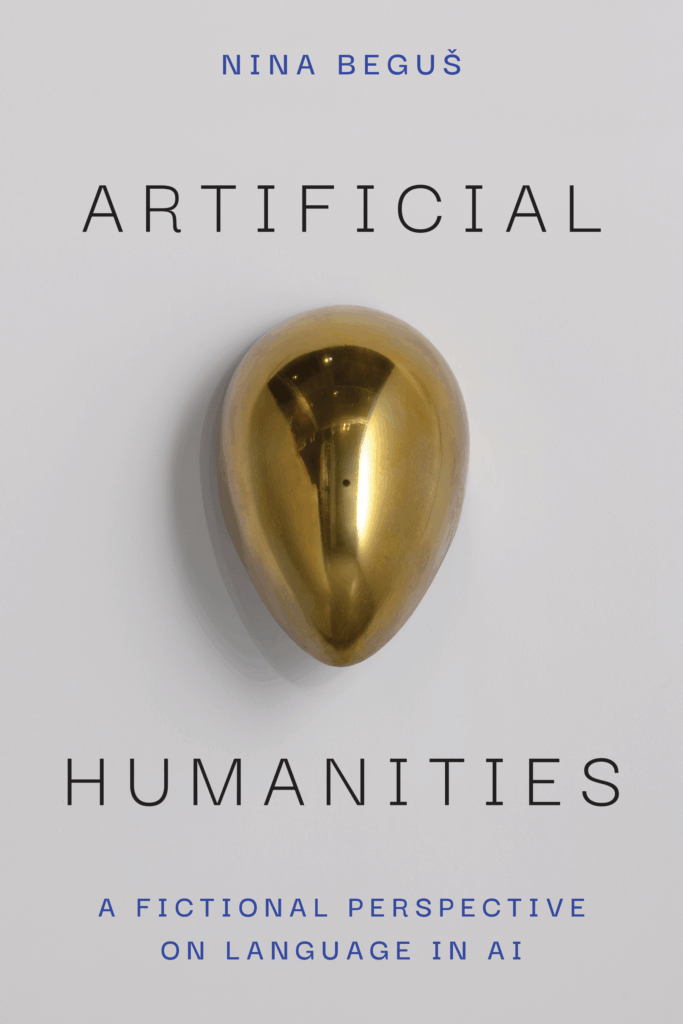
Her new book, Artificial Humanities, seeks to overcome that.
Interrogating questions about creativity, language and the relationship between humans and machines, Beguš explores how gendered virtual assistants or romanticized social robots affect us. She offers tools for understanding new technologies and invites readers to see how studying the humanities can lead to a more thoughtful future for AI.
"We cannot understand and interpret AI without understanding and interpreting humans," she writes.
Chatbots and other AI systems are becoming increasingly - sometimes frighteningly - good at portraying parts of human behavior. Users create alternative worlds and companions for themselves on platforms like Character.ai and Replika. Chatbots have dramatically improved at mimicking human speech, raising alarms about how people may be turning to them for emotional support. OpenAI recently announced it would allow users to create AI-generated erotica.
We cannot understand and interpret AI without understanding and interpreting humans.
Nina Beguš
It can all feel disorienting. But Beguš says centuries of work in the humanities can add depth to the moment. The humanities can also provide a lens to imagine the future and help us realize that a human obsession with creating sentient machines is a tale as old as time - and a cautionary one at that.
In the ancient Greek tale known as the Pygmalion myth, a man crafts a statue of a woman and falls in love with it. Mythology also tells of craftsmen like Daedalus, who made living bronze statues, and the god Hephaestus, who created Talos, an automaton that protected Crete from invaders. Recent films like Ex Machina and Her explore relationships between human protagonists and their AI creations, echoing stories from thousands of years ago.
Those representations provide cautionary tales that we'd be wise to learn from, Beguš said. After all, it's rare for such depictions to end without a fight for human survival.
"It was so obvious that the technologists were just cherry-picking some ideas from fiction, not really taking the whole fictional account into account," Beguš said, referring to the ultimate fate and downfall of protagonists and society. "They would just look at the positive things and disregard the rest."
That's why there needs to be more opportunity for tech titans to collaborate with humanists, Beguš said. While writing her book, she consulted with AI companies and saw how they are - or are not - learning from literature and the arts.
"People have realized that yes, the humanities have a lot to add, and we need to build these spaces for collaboration with humanists," Beguš said. "It's fascinating how powerful these stories are, and they stay relevant to this day."


