
Scientists at UConn are on the forefront of the second quantum revolution

Close-up of a quantum computer's metallic components with connectors and wires against a dark background.
Harnessing Quantum Power to Shape the Future
Can we leverage the tiniest particles in the universe to solve the world's biggest challenges?
At one time, artificial intelligence, video calls, and even automobiles lived in the realm of science fiction - yet with bold vision and innovation, the world's greatest minds made these inventions real. Today, the word "quantum" may evoke images of the future, but at UConn, quantum is already here.
Scientists at UConn are on the forefront of the second quantum revolution, uncovering how to leverage the science of quantum physics to create new technologies in computing, sensing, communication, and simulation to solve the most complex problems facing our society.
Quantum physics (also known as mechanics) describes the smallest, most fundamental things in our universe, such as subatomic particles. Researchers theorize that particles in the quantum world act differently than in classical physics. Instead of binary yes/no answers, there are many possibilities of how particles will react when faced with barriers and other variables.
"In the quantum world, rules on what is possible are drastically different from our everyday expectations," explains UConn theoretical physics professor Alexander Balatsky.
UConn's work in this space goes back decades, and dozens of researchers across the University are advancing quantum technology to open the doors to personalized medicine and imaging, ultra-precise navigation, unbreakable data security, and more.
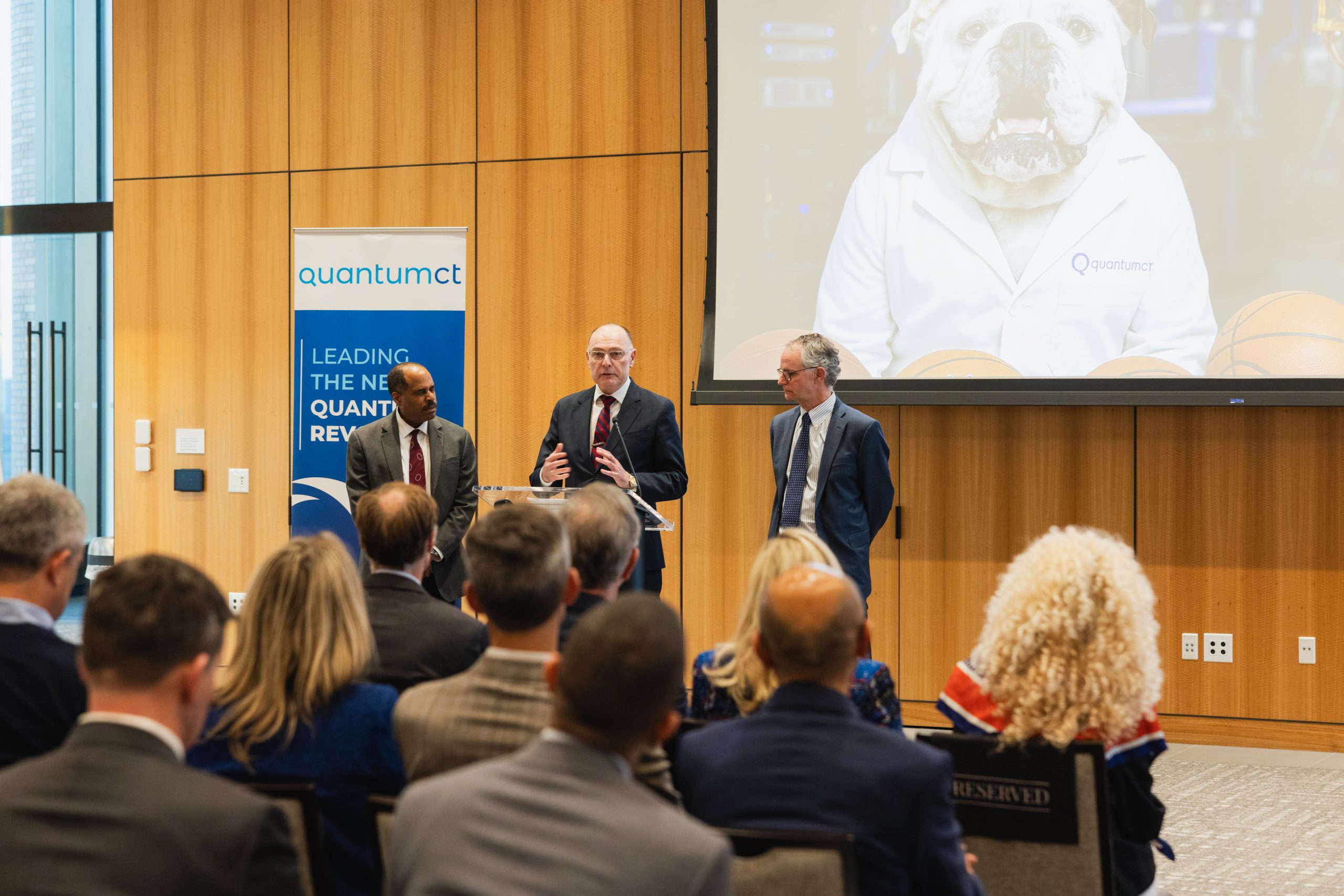
UConn, Yale, and state leaders believe that Connecticut is perfectly situated to emerge as a national powerhouse in quantum technology and industry implementation. That confidence comes with a heavy investment and potentially game-changing dividends.

An international leader in electron microscopy and scientific instrumentation plans to launch a cutting-edge research center at the UConn Tech Park, positioning Connecticut to become a hub for the global semiconductor industry with on-site manufacturing, technology innovation, and workforce development.
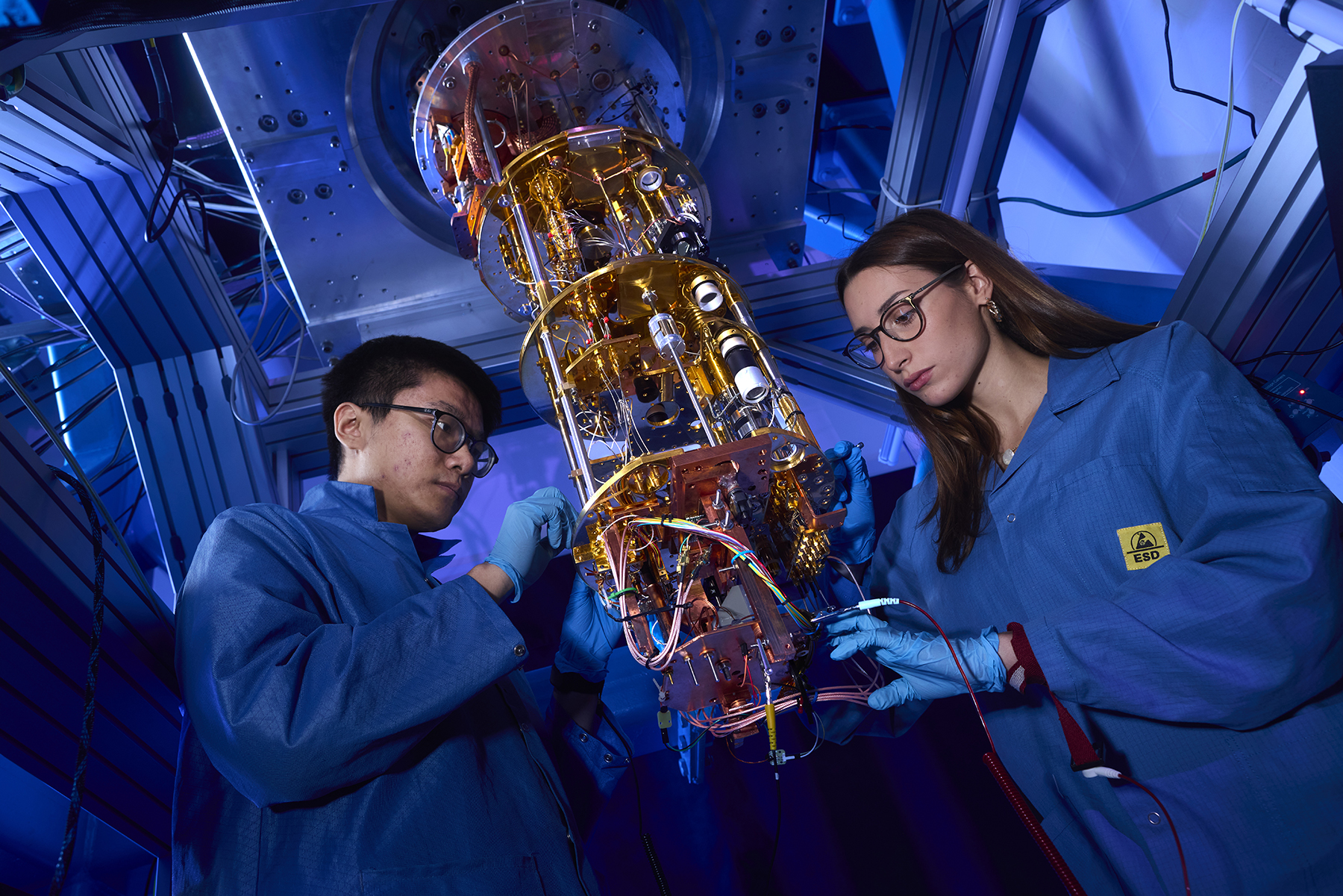
While "quantum" has become a buzzword representing cutting-edge and new technology, UConn has been active in related research stretching back decades. More than 80 faculty researchers across 13 different University departments have been formally brought together as the UConn Quantum Alliance to advance interdisciplinary work in areas including computing and cybersecurity, pharmaceutical and biotechnology, aerospace and defense, fintech, and energy security.

In an era of rising climate threats, aging infrastructure, and increasingly complex transportation systems, UConn's Monika Filipovska is leading a bold and timely research initiative that could revolutionize how cities prepare for and respond to disruptions.
Supported by a new grant from the National Science Foundation (NSF), her work seeks to harness the power of quantum computing to build more reliable, resilient transportation networks - the essential systems that move people, goods, and services every day.

The State of Connecticut is tapping UConn and Yale University's quantum expertise to propel economic development in New Haven through significant infrastructure investments in emerging technologies. A $50.5 million investment includes $10 million for QuantumCT, an initiative launched in 2022 by UConn and Yale and supported by state, industry, education, and municipal organizations statewide. QuantumCT aims to elevate Connecticut as the nation's leading accelerator of quantum technology and applications.
The UConn and Yale University-led "NSF Engine: Advancing Quantum Technologies (QuantumCT)" proposal is a finalist for a significant National Science Foundation (NSF) grant. Administered through the multibillion-dollar Regional Innovations Engines Program, the grant has the potential to transform the state's economy and capacity for technological advancement.
QuantumCT exemplifies UConn's commitment to the transformative capability of quantum science. The initiative includes dozens of partners across Connecticut, with the goal of making the state the nation's lead quantum accelerator.
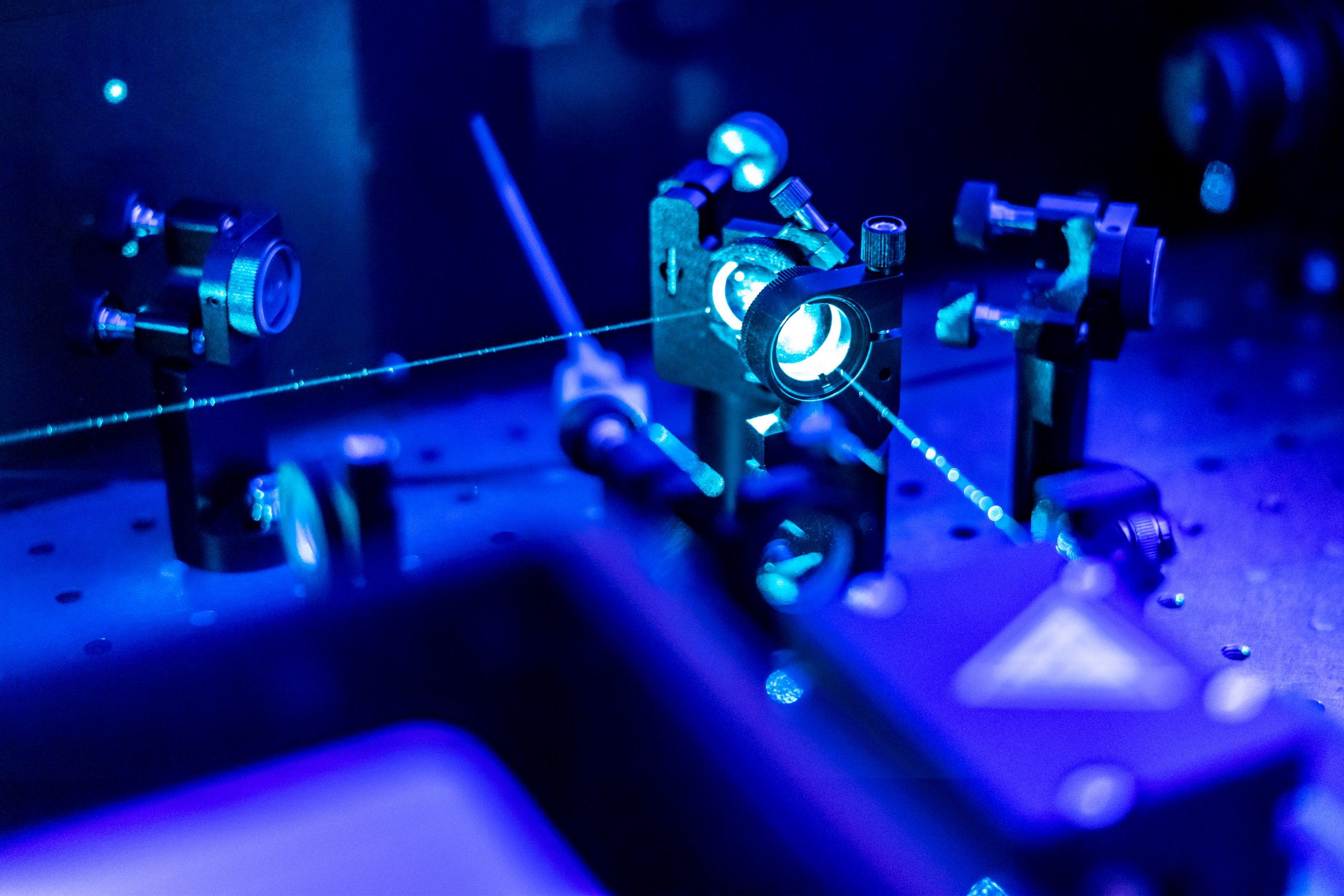
As home to six quantum-related start-ups, UConn's Technology Incubation Program (TIP) is a microcosm of the diverse technological possibilities of quantum. Access Quantum, for example, uses quantum principles to develop alloys and materials with more desirable properties, particularly those used in the aerospace industry where extreme environments demand new and better fatigue-resistant materials.

UConn scientists and engineers are poised to contribute important research to a project designed to remove the microscopic defects that hinder development of quantum technology.
In April, the Air Force Office of Scientific Research (AFOSR) awarded Rigetti Computing and its research partners a $5.48 million grant to further develop chip fabrication technology. The project seeks to address the defects in superconducting qubits - the basic units of quantum information - through the development of state-of-the-art materials.
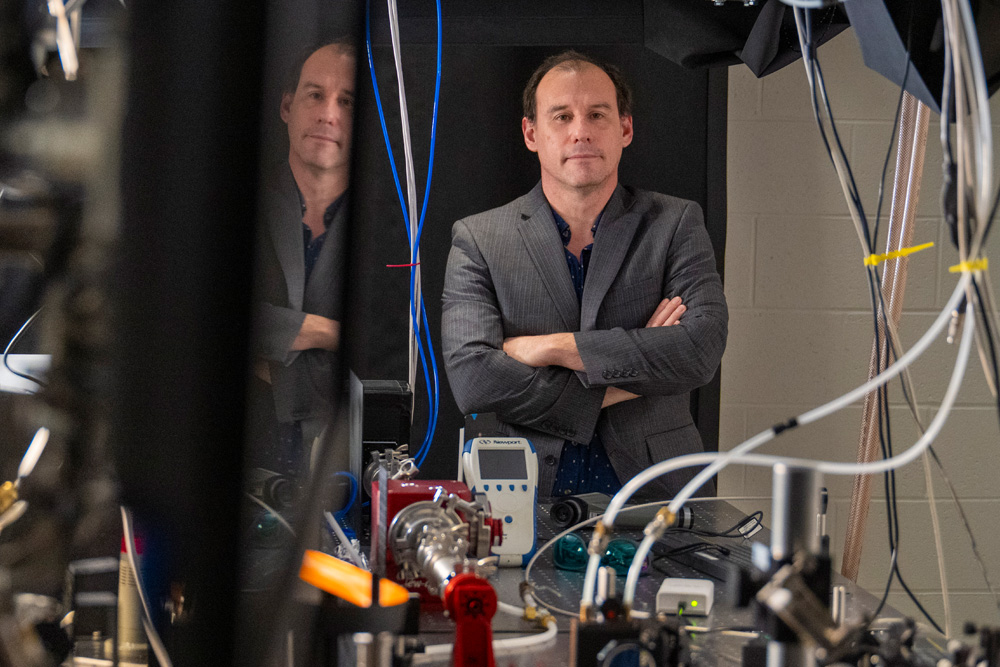
From studying the mysterious fabric of our universe to advancing quantum computing to enabling communication over vast distances, ultrafast laser technologies drive advancements across many fields and applications. New research is taking lasers - and UConn - further.
UConn Department of Physics researchers have broken new ground by achieving higher peak power and average power in optical pulses than ever before with a novel class of lasers.

A multi-institutional team of American Scientists led by UConn chemistry assistant professor J. Nathan "Nate" Hohman traveled to Tokyo in 2022 to take a spin on a high-powered X-ray laser. They hoped to use the machine's unique capabilities to study new materials whose molecular structure had never been understood before. High-profile projects like this are nothing new to Hohman, whose research has been sponsored by the U.S. Department of Energy for its potential to unlock new, better sources of energy. The semiconductors Hohman studies are integral to developing quantum technology.

UConn physicists have partnered with Google Quantum AI and Nordic Institute for Theoretical Physics (NORDITA) quantum experts on a groundbreaking paper on the effects of gravitation on quantum information systems. The researchers demonstrated that classical gravitation has a non-trivial influence on computing hardware. They investigated the interaction of qubits - basic units of quantum information - with a classical gravitational field.
The work quantifies the effect that gravitation has on quantum information systems, such as the qubits of a quantum computer. The team envisions special-purpose qubit chip designs whose optimized layouts dramatically enhance gravitational sensing capabilities, an advance that could ultimately enable GPS-free navigation.

The two-day Quantum Computing Workshop hosted at UConn Health in Farmington trained members of the public - including industry leaders, engineering organizations, faculty, and state government - on quantum computing fundamentals, algorithms, security impacts, communications and applications. "Our faculty leaders are laying the foundation of quantum research," said UConn College of Engineering Dean JC Zhao. "Through their expertise and mastery, this event will equip participants with the knowledge to harness quantum mechanics for solving complex engineering challenges and driving innovation."

Nine grants awarded by QuantumCT to Connecticut-based research groups seek to use quantum technology to solve challenges faced by Connecticut industries including aerospace, biotech, and life sciences, such as the need to develop algorithms that simulate molecular drug actions in the body, or to invent exquisitely accurate but hardy sensors that work in extreme environments with little power.
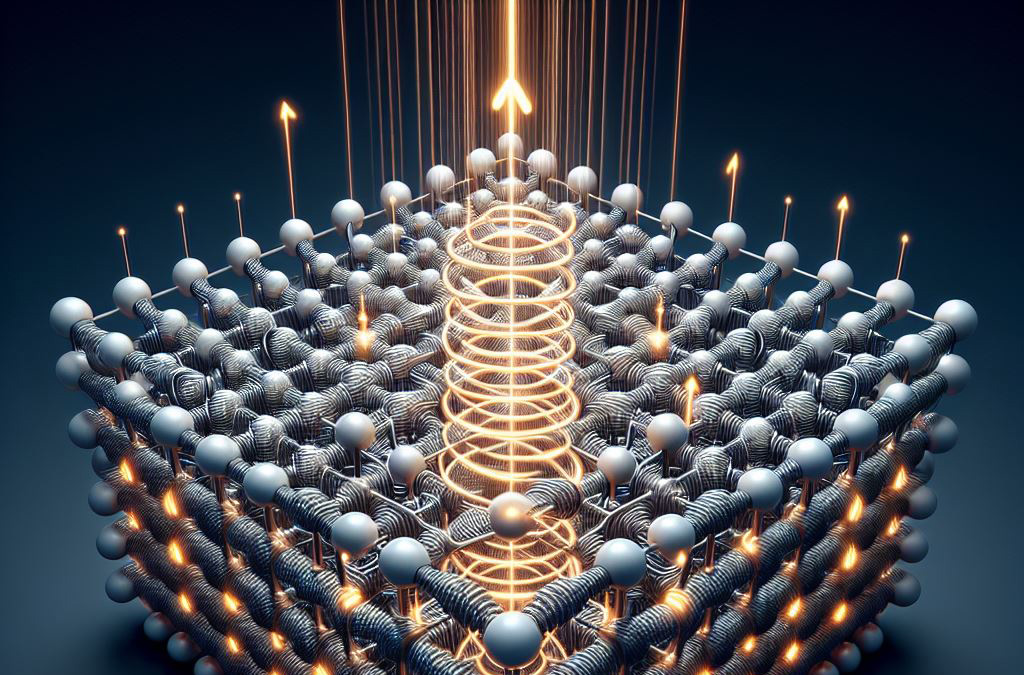
From faster computers to more efficient energy use, a new quantum study with roots at UConn can potentially revolutionize technology.
So far, researchers have only been able to induce quantum behaviors like magnetism and superconductivity at extremely low temperatures in controlled lab environments. This limits the potential of quantum research to certain conditions.
Now, there has been a breakthrough. In 2016, UConn Physics professor and Institute for Materials Science researcher Alexander Balatsky worked with collaborators to develop a theory. The team of researchers from UConn, NORDITA, and SU are the first in the world to induce quantum behavior at room temperature, making a non-magnetic material magnetic using laser light.
Big ideas come from out of the blue.
Behind every breakthrough, there's a story of creativity and commitment. One where individuals come together, fueled by a shared vision and sustained by imagination and persistence.


