
As Canada experiences record snowfall, new research from the University of Waterloo suggests that tiny amounts of industrial pollution trapped in snow can change how sunlight reaches the ground below and significantly alter fragile environments.
The culprit is black carbon, a sooty form of pollution produced when fossil fuels burn incompletely. It can come from vehicle exhaust, industrial emissions and other combustion sources. While black carbon is already known to contribute to warming, the Waterloo research highlights another, less visible effect: how it alters the "light environment" under snow in ways that affect plant growth.
Even at the height of winter, some sunlight is transmitted through snow and reaches soil, seeds and vegetation beneath. Snow doesn't let all light through equally. As it propagates certain wavelengths of light and absorbs others that are vital for biological processes, like seed germination, cold activation tolerance and chlorophyll production, it can affect the development of vegetation that's just below the snow. Conversely, snow reflects light at specific wavelengths that can actually disrupt plant dormancy and stimulate stem growth, influencing how higher plants develop.
"Our research indicates that black carbon can have a significant effect on vegetation growth patterns even when there are only a few parts per billion in snow," said Dr. Gladimir Baranoski, a professor of computer science at the University of Waterloo. "It can alter which wavelengths of light make it through snow, throwing off finely tuned natural cycles."
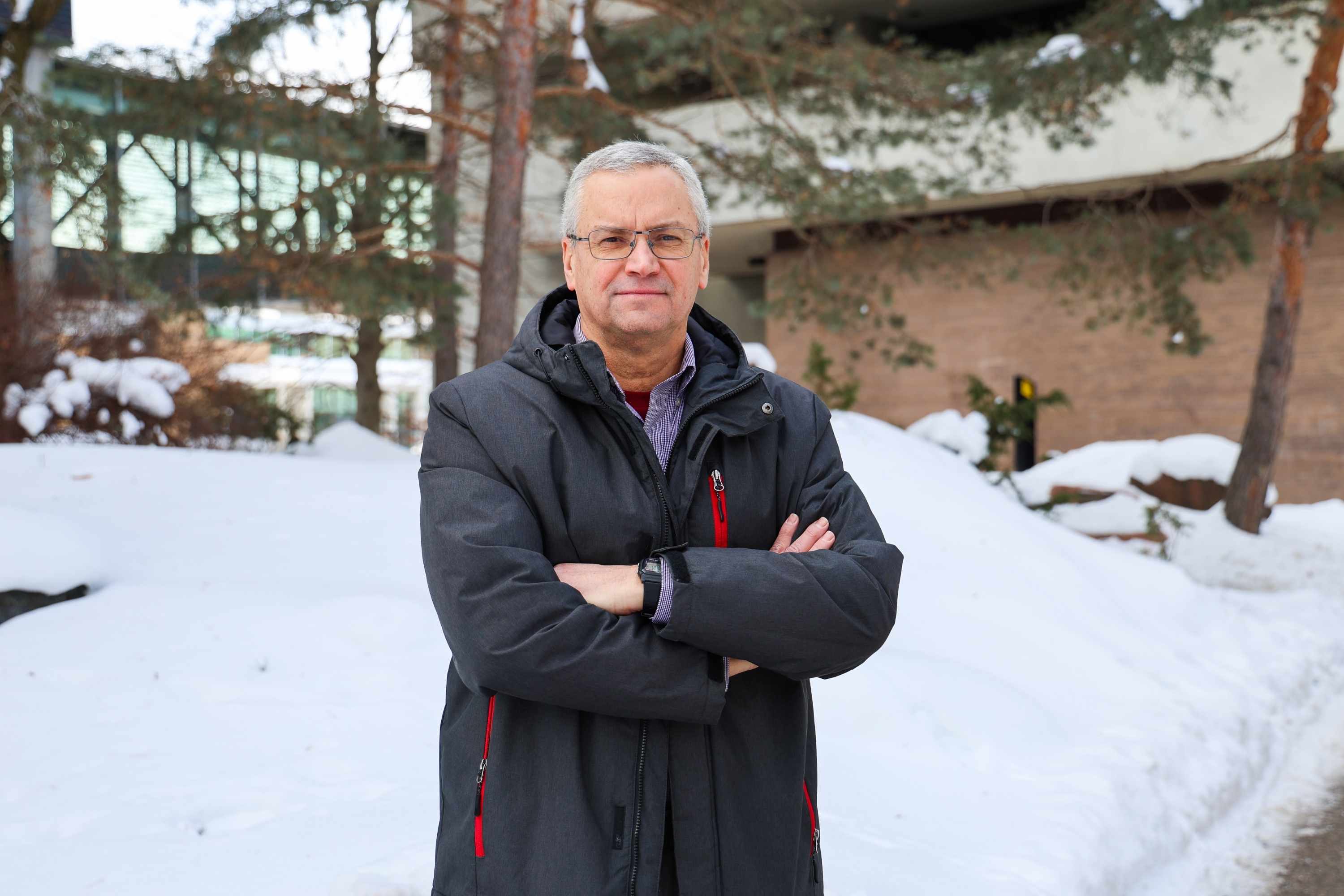
Dr. Gladimir Baranoski, a professor of computer science at the University of Waterloo. (Elisabetta Paiano/University of Waterloo)
The researchers used computer simulations to examine how different amounts of black carbon change the light that snow reflects into the atmosphere and transmits down to the ground. Their results show distinct changes at specific wavelengths, changes that align with "greening," a phenomenon observed in some high-latitude and high-altitude regions where vegetation appears to be expanding or emerging earlier than expected.
In places that normally remain snow-covered well into the season, plants may begin growing sooner, or different types of vegetation may gain an advantage. The team says their findings are consistent with reports of forested areas expanding in some northern landscapes, while some low-lying plants may struggle to develop under altered conditions.
Those shifts matter because northern and alpine ecosystems are finely tuned to short growing seasons and predictable snow cover. If plants start growing earlier, or if certain species begin to outcompete others, the effects can ripple outward, influencing biodiversity, habitat and how much carbon the landscape stores or releases.
The work builds on a detailed model of how light interacts with snow, developed by Baranoski and Dr. Petri Varsa, a recent PhD graduate in computer science. Using field measurements collected by scientists worldwide, the team has built a versatile model that can be adjusted to predict changes in the light emitted by snow, a major driver of climate change.
This research reflects the University of Waterloo's Sustainable Futures work-bringing together experts across disciplines to better understand climate-driven environmental change and develop evidence that supports resilient ecosystems and communities.
While this research focused on black carbon, the next step is to investigate brown carbon, a pollutant produced by burning organic matter, such as during forest fires.
The team's research is discussed in two papers, "Black carbon impacts on snow and vegetation interactions affecting environmental feedback loops and climate change" and "Aggregate effects of density and black carbon content variations on the hyperspectral reflectance of snow under natural conditions," both found in the 2025 Proceedings of SPIE: The International Society for Optical Engineering.


