
A comprehensive analysis of 173,303 genomes from Pakistan, published today in Nature, is upending how scientists understand human genetics and drug development.
By identifying 34,000 people who are "human knockouts," with complete loss of function of at least one gene, the study reveals variation in the human genome needed to shape new treatments for human diseases while also illuminating why drugs developed in mice often fail in humans.
Crucially, the study reveals that genes considered 'essential' to life and intolerant to changes, based on mouse models, are actually variable in humans-a finding with profound implications for pharmaceutical development.
The genomes also contain information needed to uncover the functions of two thirds of human genes that remain a mystery even 25 years after the completion of the Human Genome Project.
The Pakistan Genome Resource is the largest genetic study to date of a South Asian population, which includes approximately 2 billion people in total.
"South Asians have been severely underrepresented in genome studies-comprising just 2% of global genomic databases despite representing 25% of the world's population,"says study leader Danish Saleheen, professor of medical sciences and director of global genomics at Columbia University Vagelos College of Physicians and Surgeons. "But the distinctive characteristics of South Asian genomes, shaped by population history and cultural practices like consanguineous marriage, can power global medical breakthroughs that benefit patients everywhere."
Human genetics underlies modern drug discovery
The study of human genes has transformed modern drug discovery. For instance, the discovery that PCSK9 regulates cholesterol levels led to a new class of cholesterol-lowering drugs now worth billions of dollars annually.

Danish Saleheen
These gene discoveries are often first made in mice, with researchers knocking out or deleting specific genes to study how the deletions impact health and contribute to disease.
Yet translation of such findings to humans has been difficult, "because mouse genes often have different functions than their human counterparts," Saleheen says. "What we would prefer to do is identify people who are born without working copies of these genes and see if that has an effect on their health."
These "human knockouts," however, are rare in genome databases like the UK Biobank and the NIH's All of Us, which predominantly contain genomes of people with European ancestry.
"Consequently, many experimental drugs that seem promising in mice fail in clinical trials," Saleheen says. "That costs billions of dollars in losses every year."
The power of Pakistani genomes
The collection of 173,000 genomes from people throughout Pakistan, many of whom are closely related, will help solve this problem.
About one person out of every five in the Pakistan Genome Resource is a "human knockout," missing at least one gene. For comparison, only about one in 14 people in largely European ancestry databases are complete gene knockouts. This means the Pakistan Genome Resource is 3.5 times more efficient at identifying human genetic knockouts than European ancestry databases.
"We simply can't obtain answers to many questions with the more limited European-centric databases," Saleheen says.
The study has identified knockouts of nearly 6,500 genes-about one third of all protein-coding genes-in 34,000 individuals.
Already the database has shown that the RXFP1 gene, implicated in heart disease and other conditions in mice, works differently in humans, which explains why drugs developed to target the gene failed in clinical trials. It has also shown that people without functional CIDEB genes are protected from liver disease, suggesting the chronic CIDEB inhibitors could be a potentially safe treatment to prevent fatty liver disease.
Analysis of human knockouts not only reveals the potential of specific drugs but can also answer questions about safety.
"What's unique about our Pakistan study is we can go back to participants and conduct comprehensive medical exams to see what kind of effects the gene deletion may have on the individual," Salaheen says.
And because many generations often live together, the researchers can also examine family members who may have partial or full function of a given gene. "We can study people with all the three genotypes who have the same diet, the same environmental exposures, so we're able to quantify the effect of that genotype in much more detail. That isn't possible in any other study in the world," Saleheen adds.
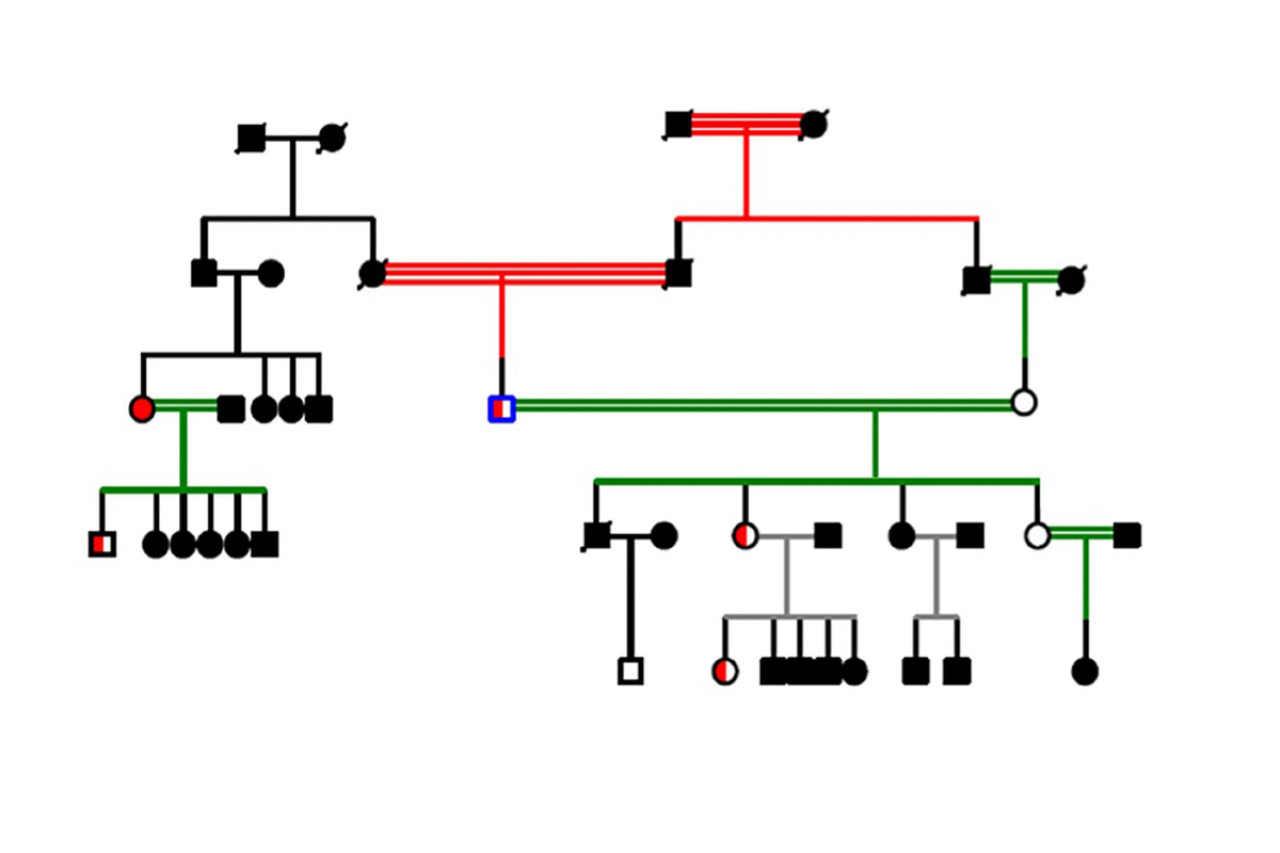
In the Pakistan Genome Resource, the ability to comprehensively examine individuals and other close family members gives researchers much more detail about the effect of specific genes that is not possible in other studies.
That ability to comprehensively examine individuals and other close family members has revealed several safety signals. For instance, the study found that inhibiting a pain receptor targeted for the treatment of migraine pain will not cause serious side effects, but LRRK2 inhibitors in development for Parkinson's disease may increase the risk of kidney disease, suggesting that kidney function should be monitored in patients taking the drugs.
"The pharmaceutical industry has been facing the issue of side effects for several decades," says Saleheen. "Our database could prevent companies from spending millions of dollars on drug candidates doomed to fail or give them confidence to move ahead."
The study also reveals that South Asian populations carry genetic ancestry components shared with both European and African populations, suggesting that insights gained from the Pakistan Genome Resource have broad applicability across multiple human populations. This genetic overlap means that treatments validated in Pakistani populations are likely to benefit diverse ancestry groups globally.
Why are Pakistani genomes so rich for geneticists?
Saleheen realized that South Asian genomes had the power to unlock human genetics; two decades ago, he began to build the Pakistan Genome Resource at the Center for Non-Communicable Diseases in Pakistan.
Since the 1960s, when studies of American Amish populations provided a wealth of data on inherited conditions, researchers have known that populations with a high rate of marriages between first cousins are uniquely suited to genetic discovery. When children are born to two parents who are closely related to each other, they are more likely to inherit the same genetic mutations from each parent, including mutations that inactivate the gene.
In Pakistan, marriages between first cousins have been common for hundreds of years, and about one-third of individuals in the Pakistani Genomic Resource are from first-cousin marriages.
"Together with the large population of South Asians, this makes the Pakistan Genome Resource uniquely positioned to accelerate our understanding of human genetics, biology, and drug discovery," Saleheen says. "Further sequencing of this population should continue to yield new insights for years to come."


