
Ahead of the release of the latest UK migration figures on 26 November, Dr Ben Brindle , Senior Researcher at the Migration Observatory , based at the University of Oxford's Centre on Migration, Policy and Society (COMPAS), explains why net migration is expected to fall to its lowest level this century outside of the pandemic, and what this decline could mean for the UK economy and labour market.

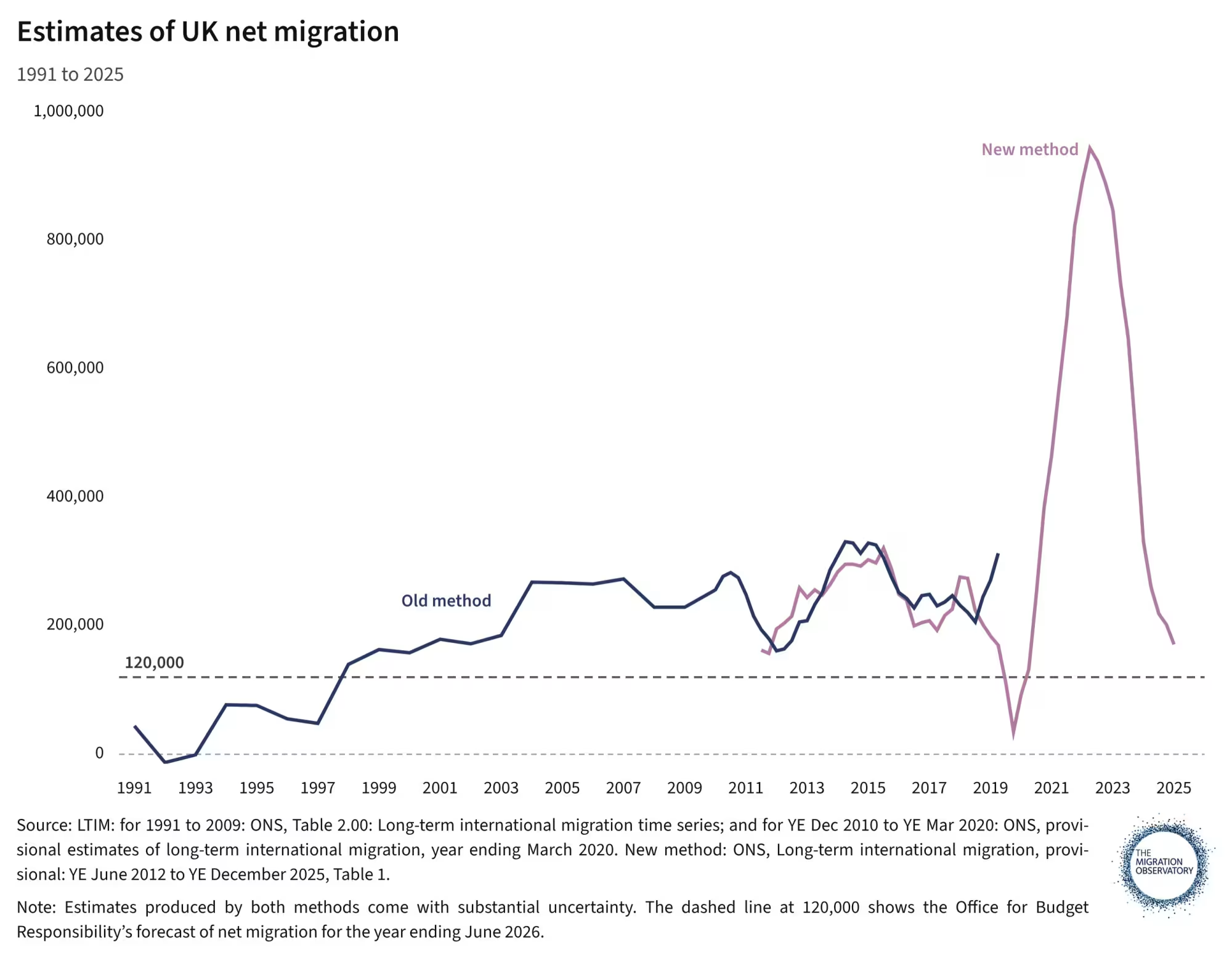
After reaching a record high of 944,000 in 2023, net migration - the number of people moving to the UK minus those leaving - has fallen rapidly, standing at 171,000 in 2025. Much of this decline followed restrictions introduced by the former Conservative government, which had previously liberalised the immigration system under Boris Johnson. These changes included visa restrictions on the family members of care workers and most international students, as well as increased scrutiny of applications to sponsor migrant care workers, following reports of widespread exploitation in the sector. Further restrictions followed under the current government.
Tomorrow's figures from the Office for National Statistics (ONS), covering the year ending June 2026, are widely expected to show net migration falling further still. Modelling from the Office for Budget Responsibility, for example, suggests that tomorrow's net migration will be 120,000, the lowest figure since 1997, excluding the pandemic.
We already have some indication of what might happen because Home Office visa statistics run ahead of the net migration estimates. The new figures will see January to June 2025 drop out of the 12-month period and January to June 2026 take its place. Comparing these two periods, visa grants to international students fell by 39,200 (-38%), while grants to Skilled Workers (including health and care) and their dependants fell by 26,300 (also -38%).
These declines follow further restrictions announced by Labour. In July 2025, the government closed the care worker route to overseas workers and ended visa access for middle-skilled jobs not related to the Industrial Strategy , such as butchers and chefs. It also announced tougher compliance requirements for universities sponsoring international students - including stricter rules on the proportion of students who take up their places and whose visa applications are refused - with universities that fail to meet these requirements at risk of losing their sponsor licence. Although these requirements only came into force in June 2026, universities may have become more cautious about international recruitment in anticipation of the changes, potentially contributing to the fall in student visa grants.
But arrivals are only half of the equation. Net migration also depends on emigration, which remains relatively high as people who arrived during the post-pandemic immigration boom leave the UK, particularly international students and their family members. Then there are British citizens. The ONS recently changed how it estimates British migration, and further revisions may be needed, making it harder to predict exactly what level net migration will fall to.

"What does falling net migration mean for the economy? On its own, not very much, because the economic impacts depend more on who comes (or does not come) to the UK than on how many. However, the decline has not been evenly spread-it's been driven by groups that generally make positive or broadly neutral contributions to public finances, such as migrant workers in care or middle-skill jobs."
What does falling net migration mean for the economy? On its own, not very much, because the economic impacts depend more on who comes (or does not come) to the UK than on how many. However, the decline has not been evenly spread-it's been driven by groups that generally make positive or broadly neutral contributions to public finances, such as migrant workers in care or middle-skill jobs. Until recently, asylum-related migration had remained relatively stable, increasing its share of overall immigration. Since refugees tend to have lower employment rates and often need more support from the state, this made the composition of recent migration less favourable for the public finances. However, asylum applications have also fallen over the past year, which could begin to reverse this trend.
There may also be impacts on the labour market, at least in the short term. Many migrants who arrive on non-work visas, such as the partners of work migrants, find employment in the UK, so fewer arrivals of any kind - not just work migrants - means fewer people available to work. However, employers have other ways to respond to shortages, including training more UK workers, improving pay and working conditions to make roles more attractive, and automating tasks. Academic research shows that the labour market is usually quick to respond to changes in the availability of workers due to higher or lower migration.
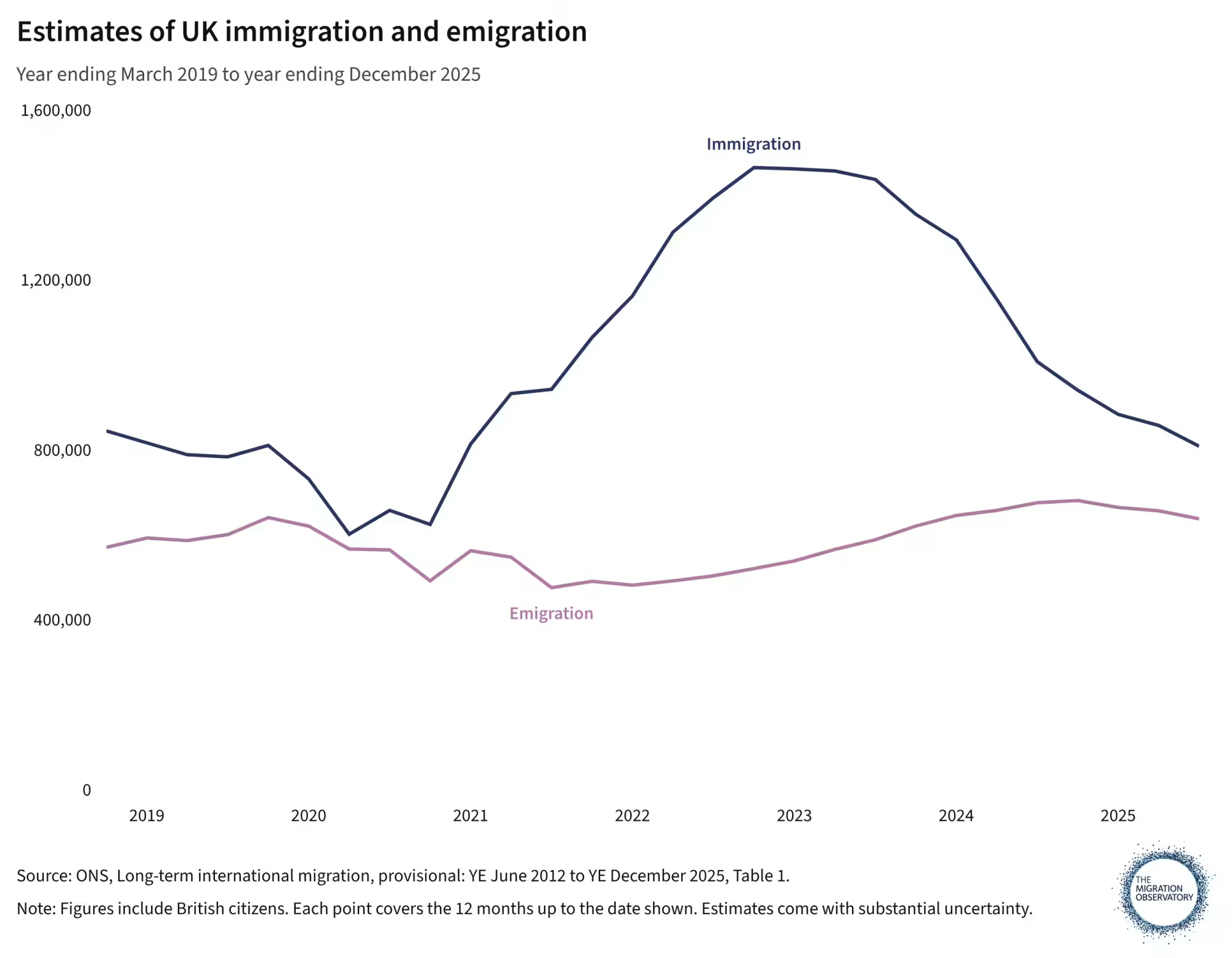
Looking further ahead, low levels of net migration will not necessarily represent a new normal. Net migration is falling because the UK is currently experiencing a combination of falling immigration and relatively high emigration. The latter is due to the unusually high immigration seen earlier in the decade-many migrants come to the UK for a few years, and these people are now leaving the UK, putting temporary downward pressure on net migration. But as fewer migrants arrive, fewer will leave in the years ahead. As a result, net migration is likely to rise again, even if immigration remains at its current level.


