
How AI-powered solutions could make research infrastructures more sustainable
The EU-funded iRIS project aims to develop technologies and solutions that extend beyond research infrastructures and bring significant potential benefits to society
Written by:
Daniela Antonio
-
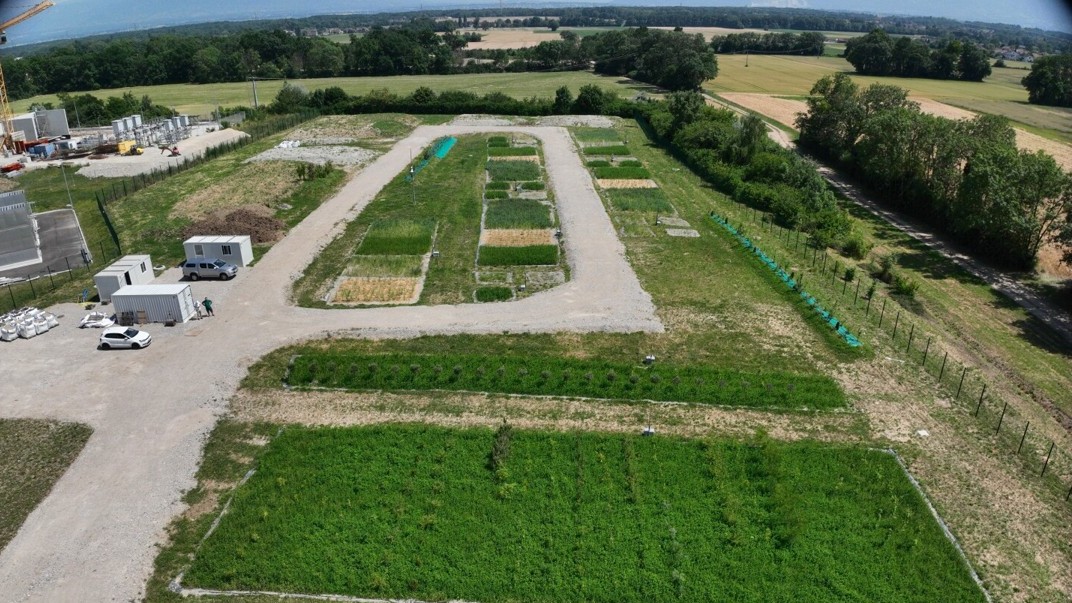
An an open-air field observatory operated by the OpenSkyLab (OSL) collaboration, a research and development initiative dedicated to transforming excavated geological materials into functional soils. (Image: CERN)
Large-scale research infrastructures enable discoveries that would be impossible for institutes, laboratories or countries to achieve alone. Their scale and complexity make them powerful engines of collaboration and innovation, while also posing environmental challenges. The new intelligent Research Infrastructure Sustainability (iRIS) project, whose EU-funded phase started earlier this month at CERN, will explore how technologies based on artificial intelligence can make European research infrastructures more resilient, environmentally sustainable and competitive, from their design and construction to their operation.
"By bringing together experts from diverse disciplines to address sustainability challenges such as energy and water use, the reduction of construction and demolition waste, soil restoration and energy efficiency, we can develop technologies and solutions that extend far beyond research infrastructures, with significant potential benefits for society," said iRIS Coordinator Johannes Gutleber.
The iRIS project will use particle accelerators and gravitational wave observatories as testbeds for these innovative solutions, because they face many of the same sustainability challenges as society. Large research facilities require land, involve underground construction, consume significant amounts of electricity and cooling water, and must balance environmental concerns with operational needs over many decades. Similar challenges arise with railway and metro systems, tunnels, power plants, factories, data centres, retail and commercial buildings, and urban areas. Finding common solutions will contribute to Europe's green transition and long-term resilience.
Under CERN's coordination, iRIS builds on work already under way at facilities and experiments such as the High-Luminosity LHC, the FAIR accelerator at GSI in Germany and the SPIRAL2 accelerator at Ganil in France. The project has also been formally endorsed by the two global research communities built around the Future Circular Collider and the Einstein Telescope.
iRIS will test technologies to improve energy efficiency using a novel load-monitoring system; to enable the reuse of construction and demolition materials through real-time processing; and to develop techniques to support soil restoration. It will also develop sustainability assessment methods, using shared data and reusable models to support decision making throughout the design to operations lifecycle.
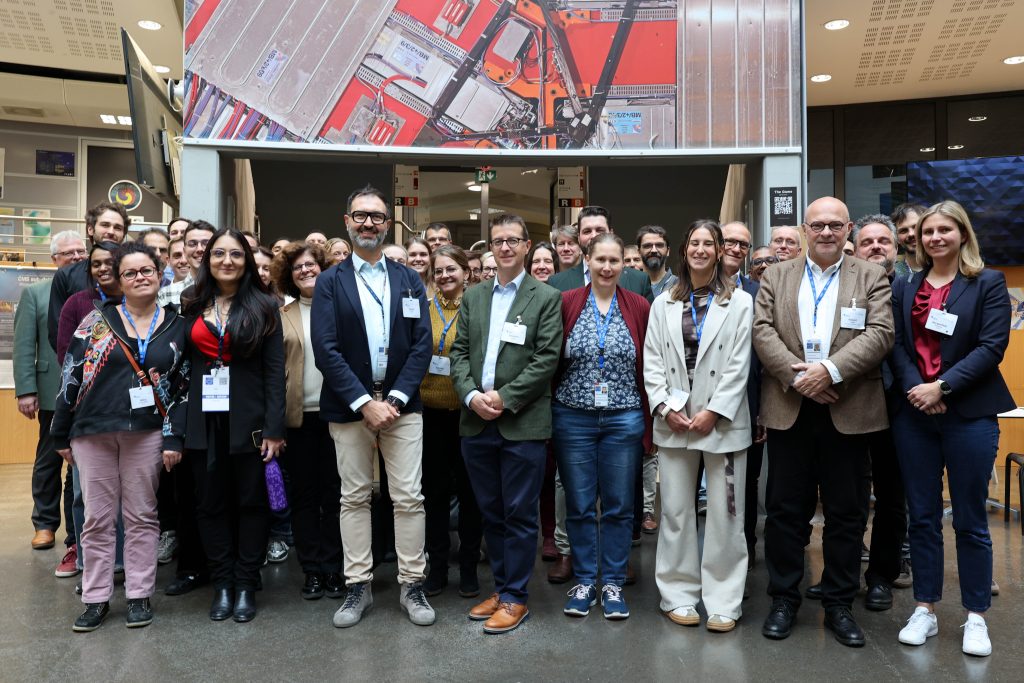
The iRIS consortium comprises 24 partner organisations from Europe and Japan, including research infrastructures, research facilities, universities, industry partners and the European Commission's Joint Research Centre (JRC). Over its four-year duration, it will receive 5 million EUR in EU funding.


