
Listen to this audio excerpt from Daniel Stubbs, NASA aerospace engineer:
0:00 / 0:00
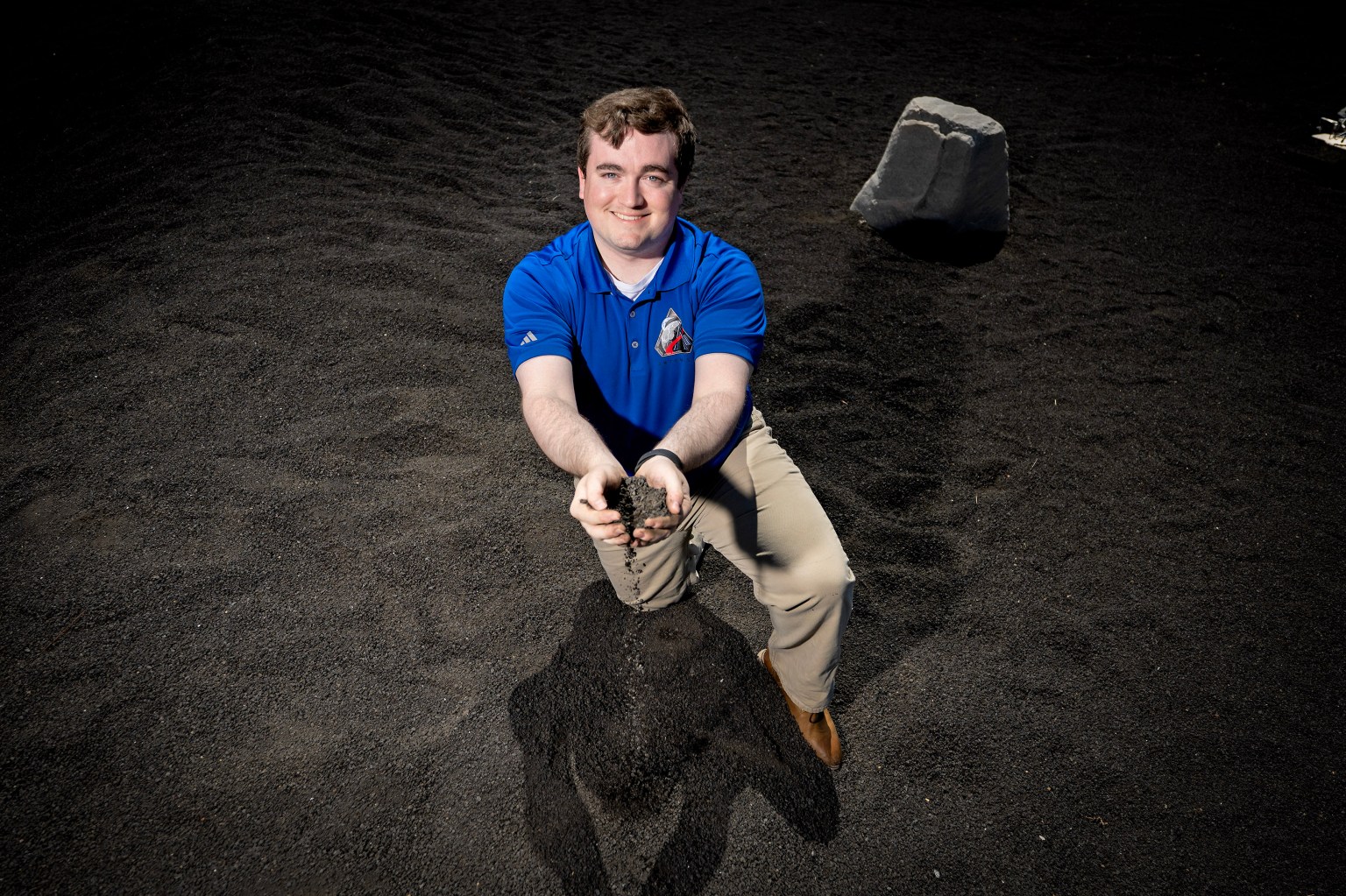
If you've driven through a cloud of dust and dirt that temporarily obscured your view, you've gotten a partial picture of a potential problem that NASA's human landing systems for Artemis will face when they land on the Moon. Daniel Stubbs, an aerospace engineer with the Plume and Aero Environments team in the Spacecraft and Vehicle Systems office at NASA's Marshall Space Flight Center in Huntsville, Alabama, studies and models the interaction between plumes of rocket exhaust and the regolith on the surface of the Moon, paving the way for crew safety and Artemis mission success.
Stubbs, a native of Trussville, Alabama, who earned a bachelor's, master's, and doctoral degree in aerospace engineering from Auburn University in Alabama, decided early in his college career he wanted to work for NASA, but he didn't see a clear path at the time to reach his goal. In graduate school, he had the opportunity to work on plume-surface interaction modeling as part of a NASA Early Stage Innovations grant. Now, Stubbs is continuing some of the work he first started as a graduate student.
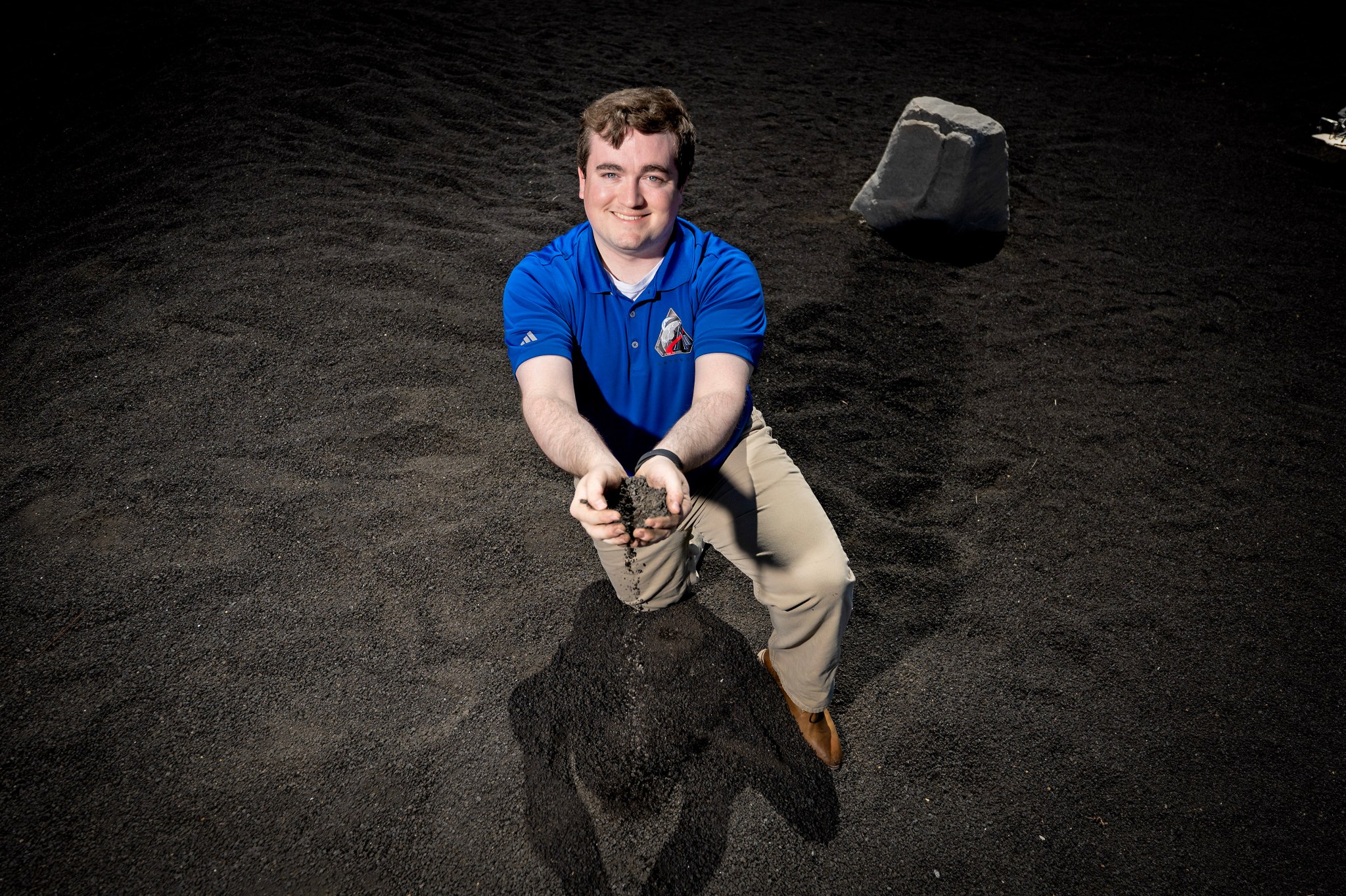
NASA's Apollo missions uncovered the risks lunar regolith presents to astronauts, spacecraft, spacesuits, and other assets on the Moon's surface. Lunar regolith consists of meteoroids and micrometeoroids that, over millennia, have been ground up into razor-sharp, abrasive particles. Future lunar explorers and their landers, rovers, and vehicles will face similar challenges. Landers in development are larger, heavier, and incorporate more rocket engines than the Lunar Module that landed astronauts on the Moon during the Apollo missions of the 1960s and 1970s. And, unlike Apollo Lunar Modules that left descent stages on the Moon, the new lunar landers will take off directly from the surface using the same engines, thrusters, and other systems that they used for the initial landing. Accurate prediction of the plume-surface interaction between the systems and the lunar regolith during landing will help ensure the lander hardware can survive that environment, and that it is ready to take off to meet Orion and astronauts in lunar orbit to return safely home to Earth.


