
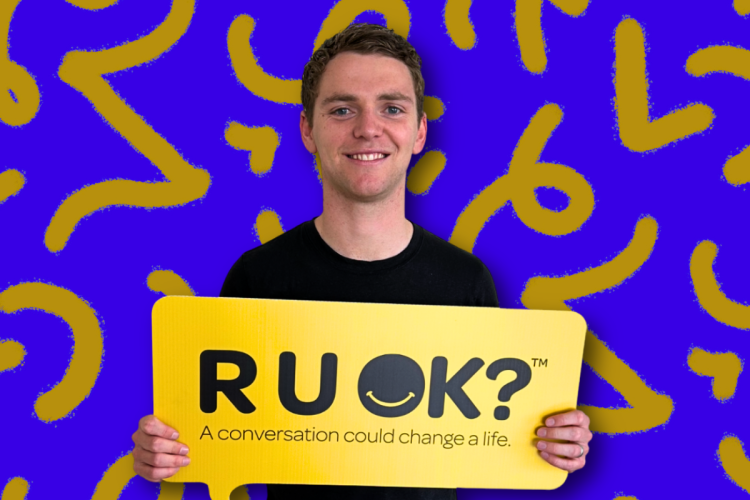
"Someone might normally come into work quite bubbly and talk about their weekend, then suddenly they're keeping to themselves," says Adelaide R U OK? Community Ambassador (external site) Jake Bateman.
"Or they normally turn up clean-shaven and well dressed, and all of a sudden the shirt's untucked, the hair's scruffed up and that care factor has dwindled. It comes down to knowing the people in your life. You're going to know if something doesn't feel quite right."
R U OK?Day (external site) , Australia's national day of action for suicide prevention, is on Thursday 10 September, and this year's message is 'Ask R U OK? Any Day' – a reminder to trust that instinct and start a conversation whenever something feels off.
That simplicity is what Jake likes most about the campaign.
"You don't need to be a counsellor. You don't need to be a psychologist. You can literally go up to one of your mates, one of your colleagues, and say, 'Hey, you look a little bit worn out. Are you doing OK?'."
"Just starting that conversation can make a huge difference in someone's life."
You don't need to be at breaking point

Jake first connected with R U OK (external site) ? in 2018, when a football competition he was involved with in Canberra held a themed round. He was working in sports administration and umpiring at the time.
"I would never say I was at a level where I was living with depression, or that I was really down in the dumps or really sad," he says.
"I was just tired and burnt out.
"I was struggling, but I wasn't what would be the public perception of someone who needs help."
The suicide prevention charity helps friends, family and colleagues spot changes, start conversations and connect someone with support (external site) before they reach crisis point.
One in four Australians (external site) say they might still hesitate to ask even when they think someone is struggling. But nine in 10 people who have been asked say it made them feel grateful, cared about and supported.
"People still do get caught up in, 'Yes, it's tough. Yes, what I'm going through is hard, but people are going through worse things'," Jake says.
"The thing keeping you up at night might seem small to somebody else. But for the person experiencing it, it is what's keeping them up at night."
The nine you nailed
Jake spent years umpiring Australian rules football, in both community-based and state league competitions.
"There's a lot of stereotypes around umpires – 'Oh, they're getting booed, they're getting abused'," he says. "It's quite funny – out on the oval, you can't actually really hear it. You've got an earpiece in, you're talking."
"I think where a lot of that pressure comes from is really that self-inflicted pressure. We expect a certain level of performance out of ourselves. It must be perfect. It must be right.
"That one decision you get wrong – you forget about the nine others that you absolutely nailed.
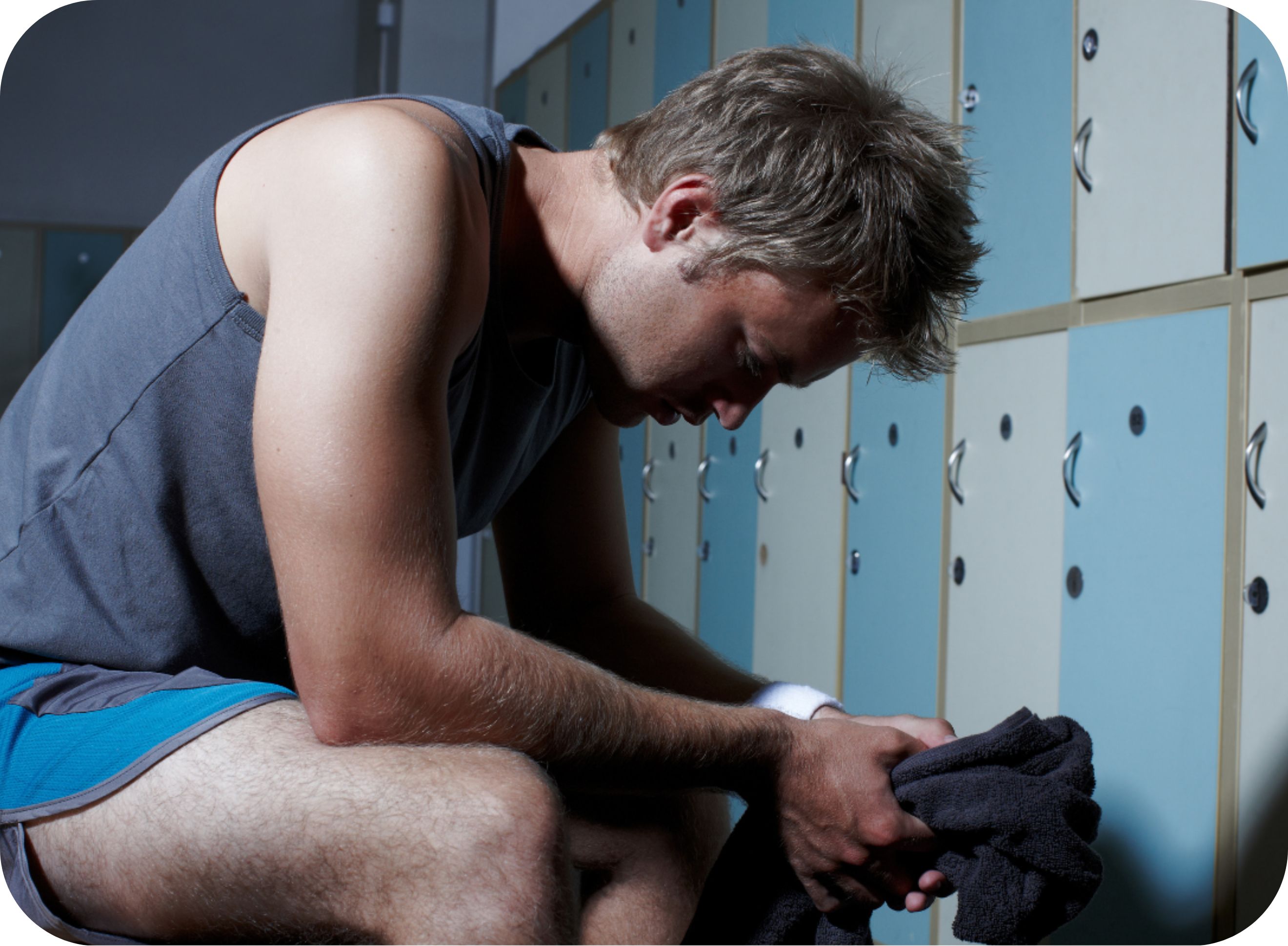
"In a sporting setting, athletes don't want to share that they're struggling because they're scared they might get dropped, or there'll be concerns about their reliability."
Someone can have the dream job or a spot in the team and still be struggling.
"The one thing we all do have in common is we are human. We are all going through our own stuff."
What's the worst that could happen?
Look for a change in what someone is saying or doing, or what's going on in their life.
If your gut keeps telling you something is off, Jake says to ask.
"The worst outcome is that they say nothing's going on, and you've just wasted yours and their time," he says.
"That is actually the best possible outcome because it means that they are OK."
What happens after you ask?
R U OK? uses a four-step conversation guide called ALEC (external site) : Ask, Listen, Encourage action and Check in.
"I'm not a professional. I might not be able to fix the problem, but I can help you get the support you need," Jake says.
That could mean helping someone talk to a person they trust, book a GP appointment or find another support service that suits them.
Choose somewhere private and allow enough time. Jake also likes to make sure there's water and a box of tissues nearby.
"There's nothing more embarrassing than when you're opening up to someone and you get a bit upset, and you've got snot running out of your nose and you're just a mess," he says.
"Something as simple as being able to reach for a tissue and have that level of dignity – it really does offer that level of safety."
If they insist they're fine and your gut says otherwise, don't badger them.
"Maybe they're just not quite ready to share that with you," Jake says. "All we can really do is say, 'Look, I am here. I care about you. If and when you're ready, please don't hesitate to give me a call'."
Then put a reminder in your calendar and check in again later.
Starting the conversation at work
About a year ago, Jake gave an R U OK? presentation to workers on a major Adelaide infrastructure project. Afterwards, one man told him he had been struggling in his personal life after a relationship breakdown.
"He was a big six-foot-two, muscly guy," Jake says.
"As a result of that message, he became more comfortable talking about what was going on, and more comfortable with, 'Maybe I can go and get professional help if I need it'."
Jake now works in employment and training in Adelaide, helping people build their skills and move into work.
"There's still very much a fear and anxiety around saying, 'I'm struggling', because they're scared it might impact their employment or progression opportunities.
"I can go up to a colleague and, as a person who cares, say, 'I've noticed you're going through some stuff. Do you want to go grab a coffee?'"
You can join the R U OK? campaign any time
R U OK? has free workplace guides (external site) , a Workplace Champions (external site) program and volunteer Community Ambassador presentations available.
"We don't all just have mental health problems on 10 September when it's R U OK? Day," Jake says. "It's across the whole year.
"We all do the nice morning tea and the yellow muffins and the yellow balloons, and it all looks fantastic. And it is – it's a great way to champion it.
"But it's year-round, and I think it's important to keep that conversation going."
Free conversation guides and workplace resources are available from R U OK? (external site) .
If you or someone you know is struggling, support is available:
- Lifeline (external site) – call 13 11 14 (external site) or use online chat, 24/7
- Beyond Blue (external site) – call 1300 22 4636 (external site) or use online chat
- SA Health's mental health services register (external site) – find South Australian mental health services and support
If someone is in immediate danger, call Triple Zero (external site) (000).
This story originally appeared on The Post - a media partnership between the Government of South Australia and Solstice Media to inform young South Australians about the policies that underpin issues affecting their lives.


