
Researchers from King's with the Mayor's Office for Policing and Crime (MOPAC) have led the analysis of the largest-ever research on police use of Stop and Search.
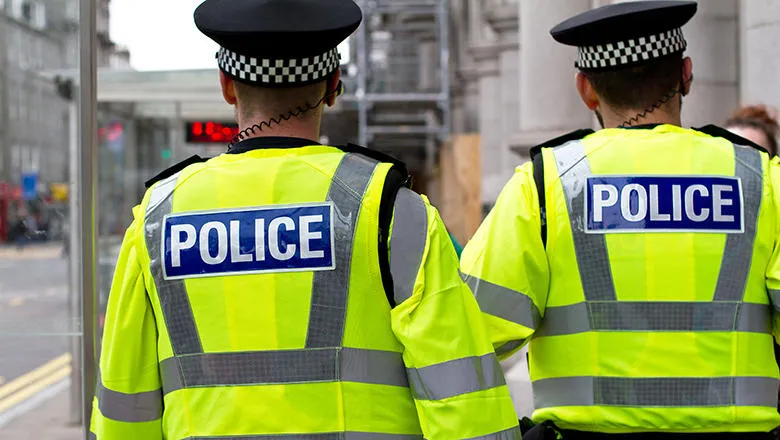
Using new technology and innovative data science techniques developed by scientists at King's, 150,000 Stop and Search interactions were analysed.
There was disproportionality in the rate at which Black Londoners were stopped and searched - and that the grounds used to justify stops and searches of Black Londoners were vaguer than those used for White Londoners.
The analysis also identified 24 wards in London where the level of disproportionality was most acute, where a Black Londoner could be up to 48 times more likely to be stopped and searched than a White Londoner.
Dr Yijing Li, Senior Lecturer in Urban Informatics at King's College London, said: "Our modelling revealed clear evidence of unexplained disproportionality in how stop and search powers are used across London. These data-driven insights provide a robust evidence base to support fairer, more effective policing in London, and aim to help rebuild trust between communities and law enforcement."
The Faculty of Natural, Mathematical & Engineering Sciences team then explored the nature and geography of disproportionality. Past research, based on census data, did not reflect other socio-economic factors that could make a person, community or area more susceptible to crime. King's developed a model that looked at those wider societal disproportionalities - such as deprivation and poorer health - incorporating them into their analysis.
The Mayor wants the Met to now act on the report's findings and go further and faster to improve the quality of stop and searches and improve community confidence throughout London.
The Mayor of London, Sadiq Khan, said: "Stop and Search is a vital policing tool. Done well, it stops those intent on causing harm and fear in our communities and takes dangerous weapons and drugs off our streets and ultimately saves lives.
"But when done badly and unfairly, it harms community confidence and trust and damages the partnership and community relationships so important to policing by consent and keeping Londoners safe.
"This major new research shows significant and unacceptable levels of disproportionality that we must act on. That's why along with the other steps to support and hold the Met to account, I am introducing a mandatory annual report of how Stop and Search is being used in London. The use of Stop and Search must be more transparent and accountable to deliver a safer and fairer London for all."
"We have to get the use of this power right in London, as lives and community confidence depend on it."
The Mayor of London, Sadiq Khan
Since 2016, important improvements in the accountability and conduct of stops and searches have been made, including the rollout of body-worn cameras for police officers, community-led police training and stronger oversight of the use of police powers to name. The proportion of stops and searches resulting in a positive outcome has increased during this period.
The Met last year fulfilled a key recommendation from Baroness Casey's Independent Review and delivered a new Stop and Search Charter which was produced with Londoners and designed to make Stop and Search more transparent, accountable, and effective.
Dr Matt Bland, Chief Operating Officer of the Society of Evidence Based Policing, said: "This is an important example of what can be achieved when policing works closely with academia and communities to examine its own practices using robust data. Stop and search remains an important operational tool, but its legitimacy depends on building evidence about its effectiveness and consequences. Doing that is not easy and sometimes involves answering difficult questions and sharing the results whatever they may be. We will be working with the Metropolitan Police Service and partners to showcase the detail of this work and help spread the lessons across policing. This work is an exemplar of the kind of transparent, data-driven innovation and exactly how law enforcement agencies can continue to improve both effectiveness and public confidence."


