Until this study, no research had directly tested how manganese affects nitrogen cycling under agronomically relevant conditions
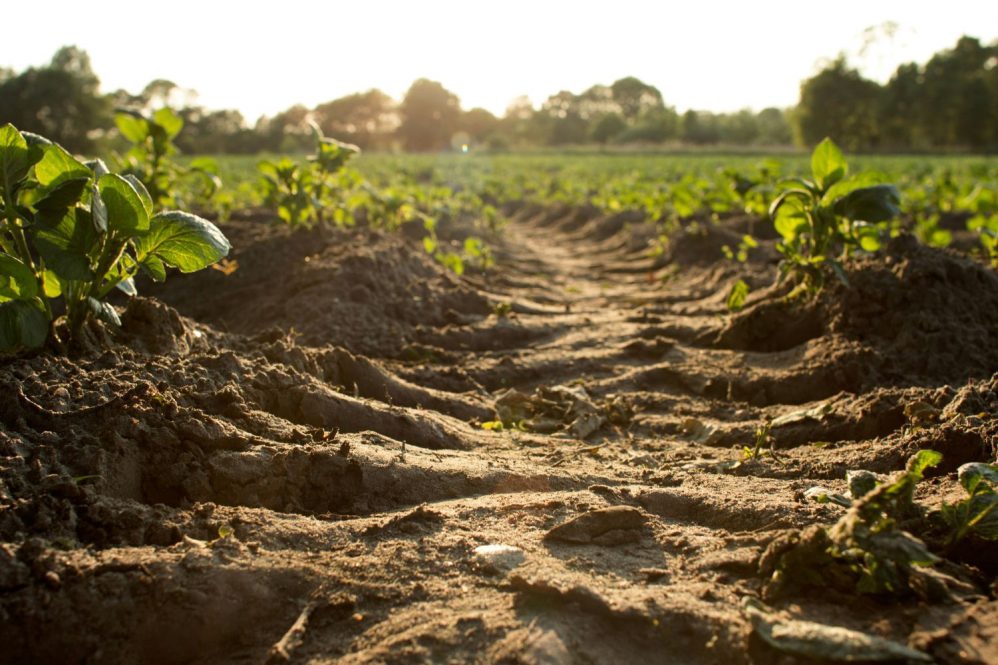
Photo by Dylan de Jonge on Unsplash
Nitrogen pollution is a serious concern for the agriculture industry.
Agricultural fertilizers contain nitrogen, an essential nutrient for plant health. However, these fertilizers also produce nitrogen runoff which occurs when excess nitrogen seeps into the surrounding environment, like waterways. This causes toxic algal blooms which disrupt aquatic ecosystems and pollute drinking water. Further, nitrogen from agricultural processes can pollute the air in the form of nitrous oxide (N2O), a greenhouse gas 300 times more potent than carbon dioxide.
Avishesh Neupane, assistant extension professor of soil science in the College of Agriculture, Health and Natural Resources, conducted a laboratory experiment to see if adding the chemical element manganese to soil could help reduce nitrogen runoff in agricultural soil.
He published these results in Applied Soil Ecology.
Until this study, no research had directly tested how manganese affects nitrogen cycling under agronomically relevant conditions.
Neupane, who also serves as director of the George Leigh Minor Center for Plant and Soil Health at UConn, worked with his team to compare soil that had been treated with nitrogen fertilizer for the past 27 years and soil that had had no nitrogen input in that period. They tested three different levels of manganese: 0, 50, and 250 milligrams per kilogram of soil.
They observed that adding manganese lowered plant-available nitrogen in the soil, specifically ammonium (NH₄⁺) and nitrate (NO₃⁻). With less of these readily usable nitrogen forms present, nitrous oxide (N₂O) emissions dropped significantly, and nitrate levels also declined, reducing the risk of nitrate leaching into waterways.
"What we found was the addition of manganese can potentially control N2O emissions, which is a very potent greenhouse pollutant," Neupane says. "It also lowered the nitrate concentration in soil which can leech as a pollutant."
Specifically, there was a 42% reduction in N2O emissions with 250 milligrams per kilogram of manganese, and 32% with 50 milligrams per kilogram of manganese after 51 days.
Manganese is an essential micronutrient for crops, meaning it is sometimes added as a fertilizer when it is deficient in the soil. Too much manganese, however, can harm plants so it's important to find a balance, Neupane says. Further studies are needed to determine the ideal amount of manganese to add to achieve reductions in nitrogen pollution without impeding plant growth.
Neupane also found that the addition of manganese reduced the expression of the amoA gene, which converts ammonia to nitrate, by 2.5 times.
"There are many genes that we need to study to see the whole manganese/nitrogen cycling, but we only studied this gene," Neupane says.
While this was only a laboratory study, the results are promising. Neupane's collaborators at the University of Tennessee are now working on a field experiment to better understand how these findings can be applied in the real world.
"This is only a preliminary finding," Neupane says. "It is interesting science. If we do more field experiments, then maybe we can use manganese as a tool to control N2O emissions and nitrate loss as a water pollutant."
This work relates to CAHNR's Strategic Vision area focused on Ensuring a Vibrant and Sustainable Agricultural Industry and Food Supply.