
7 January 2026
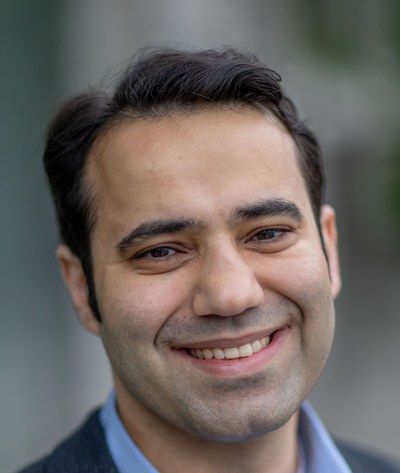
Prof. Dr Michael Saliba has been elected as a new member of the German Academy of Science and Engineering (acatech). He was elected by the academy's members and has accepted the appointment. The official induction ceremony will take place in October this year. With this election, acatech recognises Saliba's outstanding scientific achievements in the field of photovoltaics and materials science.
acatech is funded by the federal and state governments and serves as the voice of the engineering and technical sciences in Germany and internationally. The academy advises policymakers and society on future-oriented, technology-related issues, including sustainable energy supply, digitalisation and industrial transformation. Membership is honorary and is regarded as a special distinction for scientific excellence.
Research into the next generation of solar cells
Michael Saliba conducts research at the Institute of Photovoltaics at the University of Stuttgart and works at the Institute of Energy Materials and Devices - Photovoltaics (IMD-3) at Forschungszentrum Jülich. His research focuses on novel solar cells based on so-called perovskite materials. These semiconductors can be produced cost-effectively while achieving very high efficiencies. A central aim of his work is to improve their long-term stability so that they can reliably generate electricity for decades.
Another key focus is on tandem solar cells, in which perovskites are combined with conventional silicon cells. By "stacking" different materials in this way, a broader spectrum of sunlight can be utilised, enabling efficiency levels that would be physically unattainable with silicon alone. In addition, Saliba is developing new material concepts in which multiple chemical elements are deliberately combined to stabilise the crystal structure of perovskites at the atomic level.
From basic research to application
Beyond photovoltaics, the physicist is exploring applications in optoelectronics, including highly efficient LEDs, lasers and novel sensors. A further emphasis of his work lies in transferring laboratory results into real-world applications - ranging from flexible solar cells that can be applied to surfaces like "solar paint" to the use of these technologies in space applications.
International visibility and high citation impact
The international visibility of Saliba's research is also reflected in bibliometric distinctions: he has been listed as a Highly Cited Researcher for eight consecutive years. This designation is awarded to scientists whose publications are cited particularly frequently worldwide and who are therefore among the most influential researchers in their respective fields.
Saliba has received numerous additional honours, including the Heinz Maier-Leibnitz Prize from the German Research Foundation (DFG), the EU-40 Materials Award from the European Materials Research Society, and the High Impact Award from the Helmholtz Association. He previously served as a member of the Presidium of the Young Academy and as Chair of the Global Young Academy.
Contribution to sustainable energy supply
Michael Saliba's research aims to combine fundamental materials science with industrial applications, thereby contributing to a sustainable and affordable global energy supply. His election to the German Academy of Science and Engineering underscores the relevance of this work far beyond the scientific community.


