
As the Middle East crisis continues the humanitarian fallout is worsening, with aid route disruptions and food and fuel price hikes wrecking the lives and the rights of the most vulnerable people worldwide, UN agencies warned on Friday.
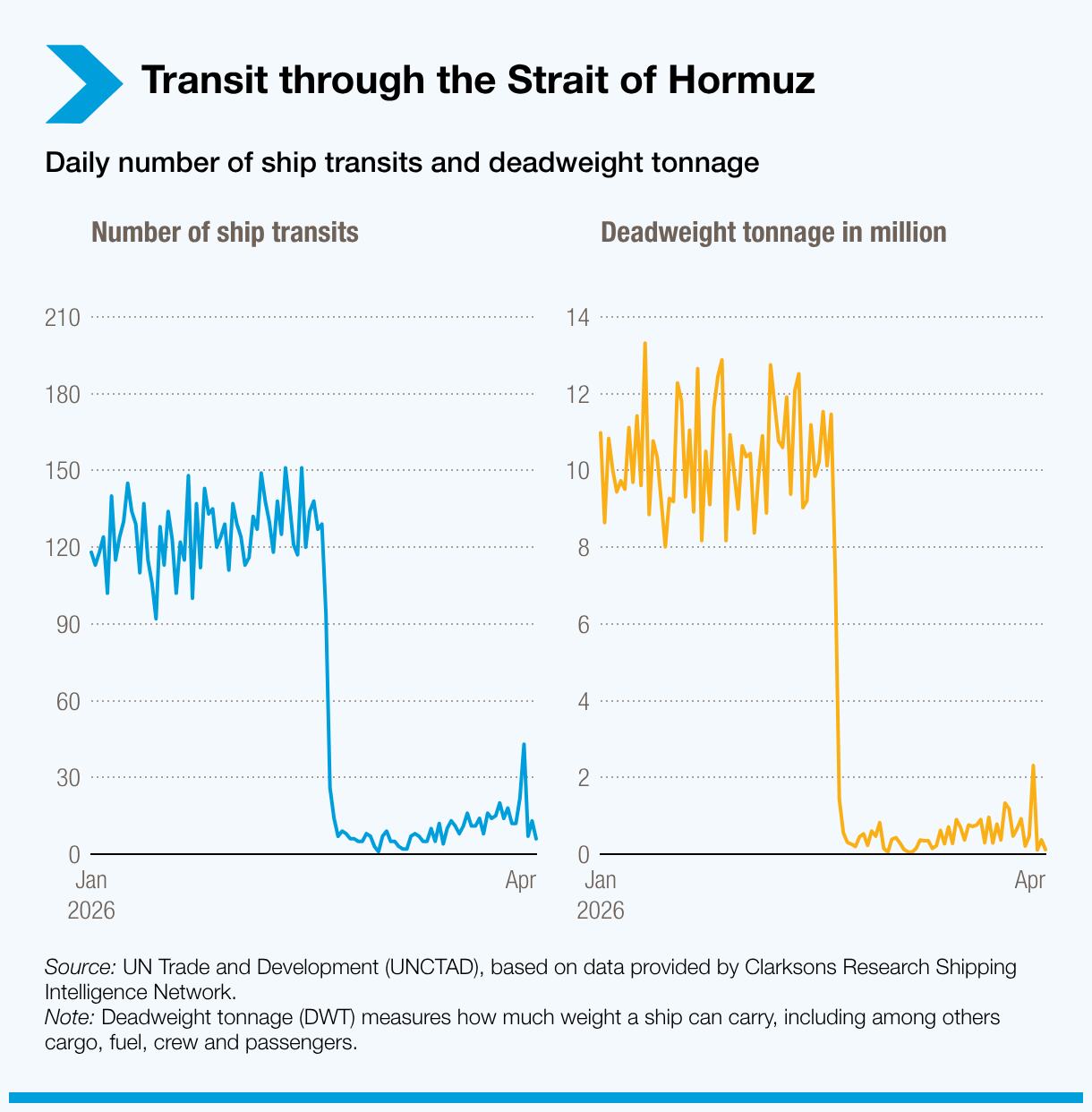
Heightened insecurity and instability around key Gulf routes, including the Strait of Hormuz, are driving up prices of basic goods and delaying the delivery of critical supplies, UN refugee agency ( UNHCR ) spokesperson Carlotta Wolf told reporters in Geneva.
"Rising transport, food and fuel costs disproportionately affect people who are already living in emergencies, including millions of refugees and displaced people who are among the hardest hit, while also reducing the ability of aid agencies to deliver timely assistance," she said.
Aid supplies rerouted
UNHCR has been forced to adapt to the situation by rerouting sea cargo and increasingly relying on alternative land corridors, Ms. Wolf explained, leading to longer transport times and generating additional costs.
Freight rates from countries where relief items are sourced have risen by nearly 18 per cent since the start of the crisis, while the capacity of UNHCR's global transport providers has dropped from 97 to 77 per cent since the start of 2026.
"For some shipments, costs have more than doubled, such as transport costs for relief items from UNHCR global stockpiles in Dubai to our Sudan and Chad operations," Ms. Wolf said.
The UNHCR spokesperson expressed particular concern about the situation for Africa, home to many overlapping, "often tragically neglected" displacement crises.
In Kenya, where one of UNHCR's global stockpiles is located, the increase in fuel prices has affected the availability of trucks for containers of emergency supplies destined to major aid operations in Ethiopia, DR Congo and South Sudan.
Late delivery
This means that "people in dire need are receiving things later than what's needed," Ms. Wolf said.
She further stressed that UNHCR operations globally are only 23 per cent funded out of the required total of $8.5 billion.
"Each and every dollar that is spent additionally on transportation is a dollar less that we can provide to people forced to flee...The impact for the people that we serve is already there," she said.
Restrictions on free passage of fertilizer through the Strait of Hormuz are also driving food prices up, and inflation is on the rise, meaning that people who are already struggling to survive in emergency contexts are able to afford even less basic goods, the UNHCR spokesperson insisted.
UN Secretary-General António Guterres warned on Thursday that the crisis in the Strait of Hormuz could push tens of millions into poverty, worsen global hunger and have prolonged negative effects on the global economy.
Fuel shortages choke communities
UN human rights office ( OHCHR ) spokesperson Jeremy Laurence underscored the devastating and immediate human rights impact of the situation, and specifically of the lack of fuel.
"A small farmer in Africa or Asia or Latin America can't operate his machinery on his small plot of land" which serves to sustain his extended family, he said. Generators which run on diesel fuel are put out of commission, while school buses cannot operate and children are deprived of an education.
"It always impacts the most vulnerable first," he concluded.


