
Since Tuesday, United Nations peacekeepers have detected no airstrikes or new missile fire in southern Lebanon. The lull remains fragile, however, as Israeli drones continue to fly over the area and military operations continue on the ground.
Meanwhile, in the Gaza Strip, UN humanitarian operations are continuing despite growing shortages, worsened by Israeli restrictions on imports of materials needed for emergency shelters.
Further east, in the Strait of Hormuz, some 11,000 seafarers are still waiting to be evacuated from the Persian Gulf after disruptions caused by the war launched in late February by the United States and Israel against Iran.
The evacuation operation initiated by the International Maritime Organization (IMO) was suspended on Thursday following a new attack on a vessel in the Gulf of Oman.
Three separate crises, now linked by the same uncertainty: the outcome of peace negotiations between Washington and Tehran.
The signing last week of a Memorandum of Understanding providing for an end to hostilities between the two countries and the reopening of the Strait of Hormuz led to an initial round of talks, which concluded on Monday in Switzerland.
Since then, conflicting statements from the two capitals about the state of the discussions have fuelled uncertainty.
In Lebanon, a ceasefire under close watch
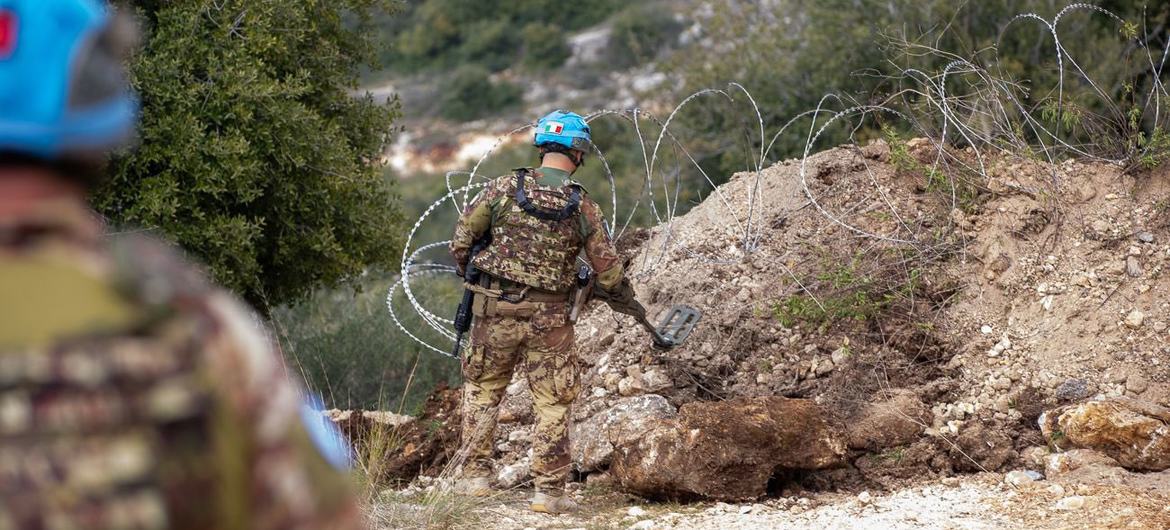
According to the United Nations Interim Force in Lebanon ( UNIFIL ), the ceasefire that took effect on 19 June continues to be respected "overall". UN observers have reported neither new missile launches nor airstrikes since the two projectiles detected on Tuesday.
The calm remains relative. UNIFIL continues to observe violations of Lebanese airspace by Israeli drones, as well as armoured movements, military engineering works and logistical operations by the Israeli army within its area of operations.
On Wednesday, UN peacekeepers also observed three Israeli tanks opening heavy machine-gun fire and firing six 40mm grenades near the coastal road at Al Bayyadah. Two Israeli patrol boats were also spotted in Lebanese territorial waters off Naqoura, where the mission's headquarters are located.
The strikes appear to have stopped. The military posture, however, remains largely in place.
In Gaza, an emergency that shows no signs of easing
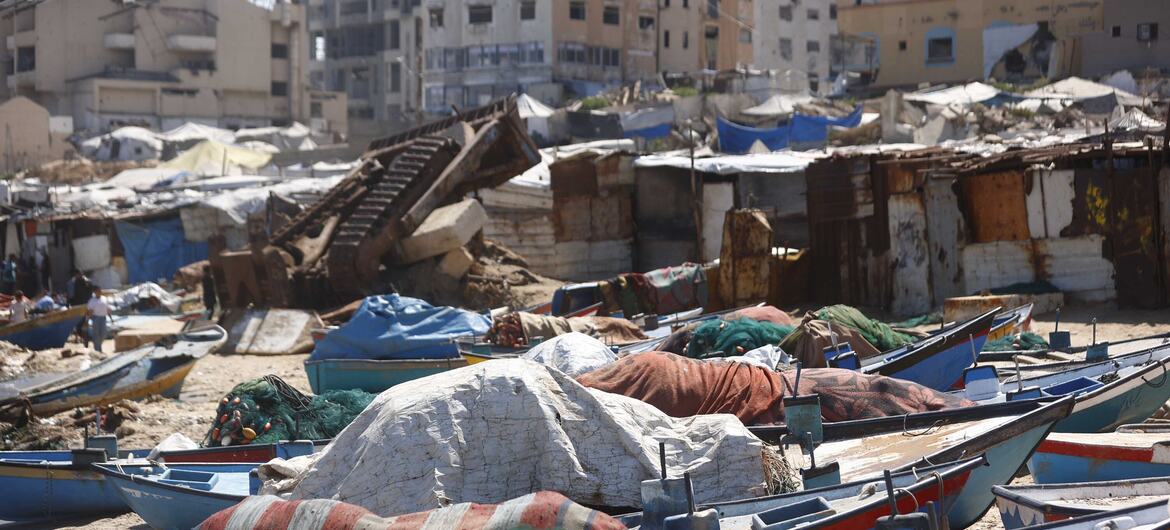
In the Gaza Strip, United Nations humanitarian agencies describe a crisis that continues to worsen.
The Kerem Shalom crossing remains the only operational entry point for cargo destined for humanitarian organizations. Each day, UN teams collect food, hygiene kits and medical equipment there before transporting them into the enclave.
Last week, health partners provided nearly 240,000 medical consultations across 194 health points. Acute respiratory infections, skin diseases and acute diarrhoea remain the most common illnesses.
But aid operations are facing growing obstacles. Shortages of fuel, generator oil, spare parts, medicines and medical supplies are making it increasingly difficult to maintain health services.
The situation is equally concerning with regard to emergency shelters, despite more than 4,000 households receiving tents, tarpaulins, bedding or financial assistance last week.
"That's due to severe shortages in shelter materials, linked to import restrictions, limited access to some areas, funding gaps and other challenges," UN spokesperson Stéphane Dujarric explained .
In the Strait of Hormuz, seafarers still waiting
This regional uncertainty is also at the heart of the Day of the Seafarer , marked on Thursday under the auspices of the International Maritime Organization (IMO).
The agency warned that rising geopolitical tensions - from the Strait of Hormuz to the Red Sea, as well as in the Black Sea and the Sea of Azov - are exposing crews to growing risks even as they maintain the flow of global trade.
After announcing the launch of an evacuation operation for ships and crews stranded in the Persian Gulf, the IMO said it had temporarily suspended its implementation.
According to IMO Secretary-General Arsenio Dominguez, several vessels have already been successfully evacuated. But an attack on a ship in the Gulf of Oman, after it passed through the Strait of Hormuz, prompted the organization to halt the operation in order to verify that "the necessary safety guarantees" remain in place for vessels on its evacuation list, as well as for all ships operating in the region.
The objective, Mr. Dominguez stressed, is to prevent stranded seafarers from "becoming collateral victims of this geopolitical conflict". The vessel targeted was not part of the IMO-coordinated operation.
In a message marking the Day, UN Secretary-General António Guterres highlighted the human cost of these crises.
"When nations clash, seafarers are often caught in the crossfire. Recent events in the Strait of Hormuz have seen tens of thousands of seafarers stranded while working far from home to ensure the supply of fuel and food to the entire world," he said. "Seafarers must never be victims or pawns of geopolitical conflicts."
From Lebanon to Gaza and the Strait of Hormuz, the fronts have frozen without the region truly emerging from war. The suspension of the IMO evacuation operation is a reminder of how a single incident could still jeopardize the fragile progress made since negotiations between Washington and Tehran began.


