
A citizen science initiative is partnering with Himalayan monasteries to host weather stations, improving climate observations in some of the world's least monitored mountain regions.
The Himalayan region, known as the "Third Pole", is warming nearly twice as fast as the global average, threatening water security, livelihoods, ecosystems and increasing disaster risk. Yet high-altitude areas remain poorly monitored because weather stations are mostly located at lower elevations and often fail due to harsh conditions and limited maintenance capacity.
Without reliable long-term observations at high elevations, it is difficult to understand changes in snow and ice dynamics, accurately model hydrological responses, predict floods, droughts and cryosphere-related hazards or design effective climate adaptation strategies.
High-altitude Monasteries for Data Acquisition, Tracking and Awareness (HiM-DATA) responds to this challenge through an open-access, community-owned citizen science initiative that partners with Himalayan monasteries to host and support Automated Weather Stations (AWS). By building on the long-term presence, local stewardship and accessibility of monasteries in mountain regions, the initiative aims to improve the continuity of high-altitude observations in places where conventional monitoring systems are often difficult to sustain.
Bringing climate observation to the high Himalayas
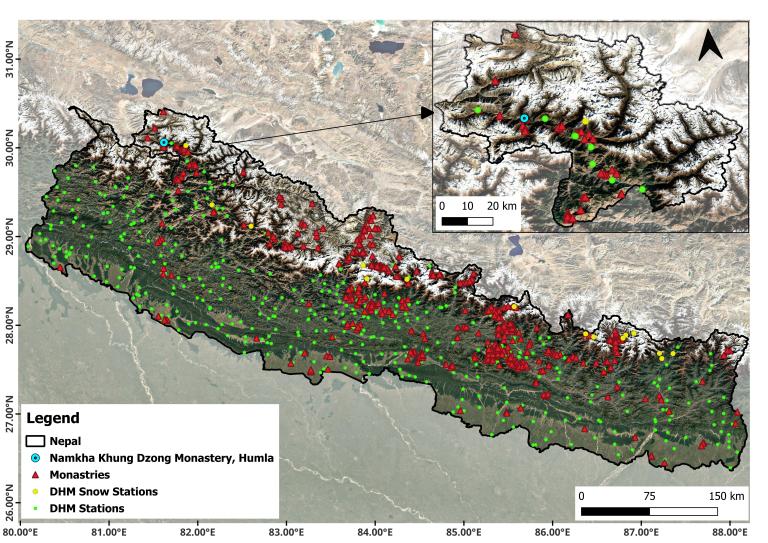
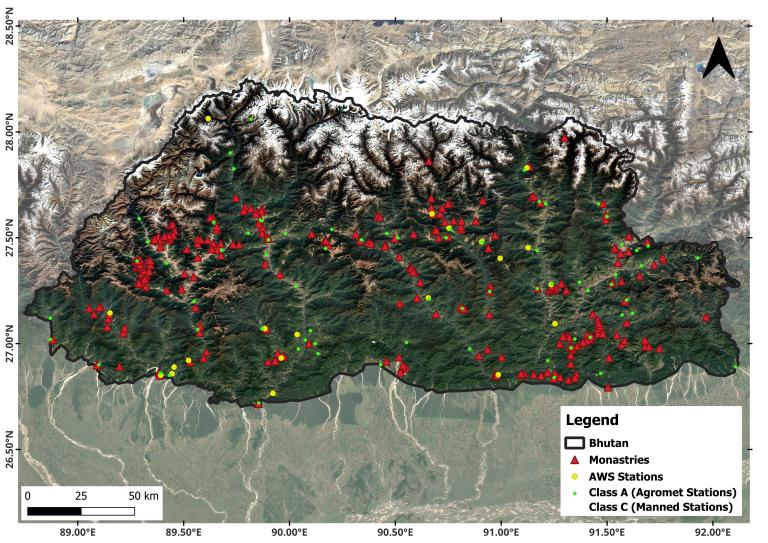
To address the lack of reliable high-altitude climate observations in the Himalayas, Small Earth Nepal (SEN), together with climatologists and volunteers, mapped existing national meteorological networks across Nepal and Bhutan alongside the locations of Buddhist monasteries. Monasteries are predominantly located in far flung mountain areas, precisely where weather and hydrological monitoring stations are absent.
Building on this overlap, the HiM-DATA initiative works with monasteries to host AWS in some of the world's most challenging environments to monitor. Unlike isolated infrastructure, monasteries provide a year-round presence, trusted local stewardship and existing community networks, helping support the long-term maintenance of monitoring systems in harsh mountain conditions.
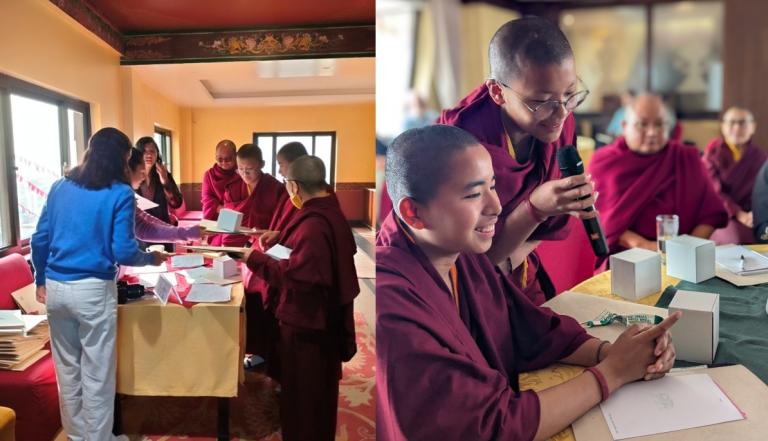
SEN has worked closely with monastic leaders, municipalities and local communities to identify and secure sites for the first deployment phase. Local governments have endorsed the integration of the collected data into regional disaster risk reduction and climate adaptation planning, while agreements with monastery schools are helping to strengthen long-term environmental observation and climate stewardship.
Supporting communities and climate services
Alongside the monitoring network, the initiative is developing low-cost hydrometeorological sensors for extreme mountain conditions and introducing satellite communication systems to ensure real-time data transmission where cellular networks are unreliable. The observations will support weather forecasting, local climate monitoring, early warning systems and rescue operations in mountain regions.
Beyond data collection, HiM-DATA also aims to strengthen climate awareness within mountain communities. Educational programmes are being developed for monastery schools to help younger generations engage directly with environmental monitoring and climate science.
"People often ask us about the weather before they begin their journey into the mountains. Sometimes we don't have reliable information to share. We believe initiatives like HiM-DATA can fill this gap, helping both local communities and visitors stay informed and better prepared", said Akshya Dorjee Ling of Karma Lekshey Ling Monastery.
From Himalayan monasteries to global climate observation
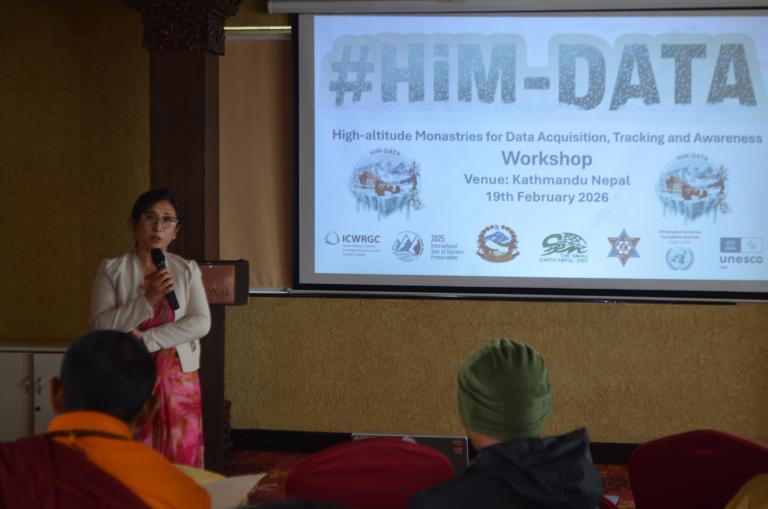
What began in Himalayan monasteries is now drawing broader international attention as a new approach to high-altitude climate observation. The HiM-DATA initiative is part of the Global Precipitation EXperiment (GPEX) under the World Climate Research Programme (WCRP), which brings together scientific communities and regional partners to work on strengthening precipitation observations, field campaigns, modelling, and community-based approaches across different regions of the world.
Presented at the GPEX Multistakeholder Workshop in Kyoto, the initiative is helping connect community-based observations with the wider international precipitation science community while also contributing to GPEX activities on knowledge sharing, training and mountain-region observation challenges.
Looking ahead, HiM-DATA aims to expand monastery-based monitoring stations across the Himalayas while strengthening links with meteorological institutions, local communities and climate initiatives. By combining local stewardship with open environmental observations, the initiative offers a practical approach to improving climate monitoring in the mountain regions. In places where weather observations were once limited, a new mountain climate observation network is beginning to emerge, linking the Himalayas to the broader future of precipitation and climate science.


