
On Friday 2 October, Leiden University welcomed the Dutch Parliament's Committee for Digital Affairs. The MPs visited Leiden to discuss the opportunities, challenges and societal implications of quantum technology.
The committee members specifically requested a meeting with Julia Cramer, Assistant Professor at the Leiden Institute of Physics. Her research focuses on 'Quantum & Society': the societal integration of quantum technology. Jasper Knoester, Dean of the Faculty of Science, welcomed the MPs on behalf of Leiden University.
Cramer invited the MPs to discuss questions such as:
🔹 What do we see as promising applications of quantum technology?
🔹 What societal and ethical questions does the technology raise?
🔹 How do the Netherlands and Europe position themselves in the international quantum race?
🔹 What do universities need to turn research into start-ups, spin-offs and new applications?

The MPs during their visit in Leiden 
Opening by Jasper Knoester, dean of our Faculty of Science 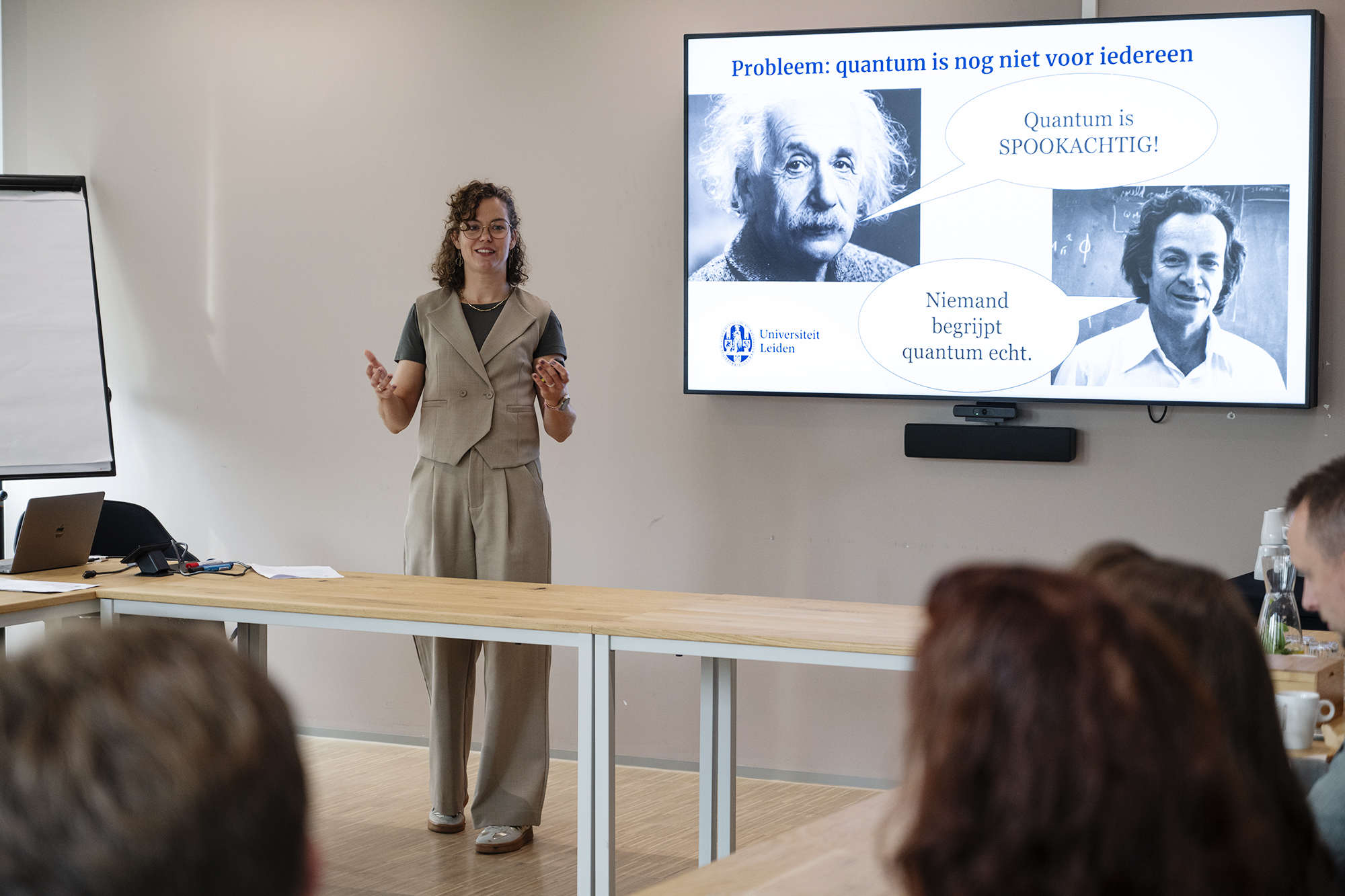
Julia Cramer presenting her research on Quantum & Society 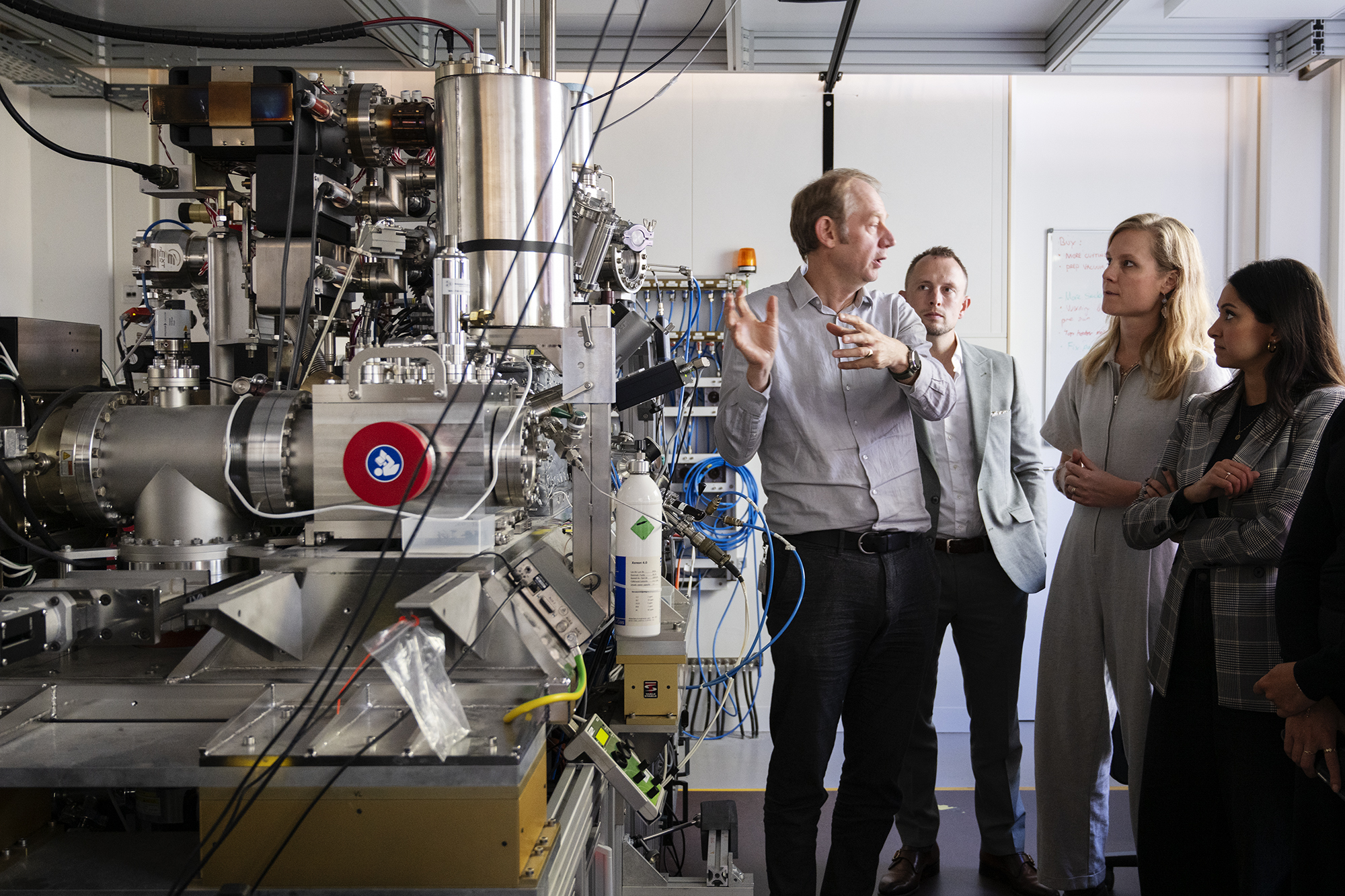
Labtour by Sense Jan van der Molen
Leiden researchers showed how fundamental quantum research can lead to new applications. Evert van Nieuwenburg presented his research at the intersection of quantum computing, AI and complex systems. Jan Aarts then showed how the Dutch quantum ecosystem works together at both national and regional level.
The MPs also saw quantum research in practice, with a tour of the physics laboratories by Sense Jan van der Molen.
The visit concluded with a discussion of an important question: 'How can the Netherlands maintain its societal and economic lead in quantum technology, and what political choices lie ahead?'
Julia Cramer says: 'It was great to see that the MPs not only showed a strong interest in quantum technology, but had also already familiarised themselves with the subject. By sharing our knowledge and engaging in an interactive discussion, we contributed to the conversation about the choices we face as this technology develops rapidly. Perhaps, a few decades from now, today's children will look back in amazement and say: 'Did you really live without a quantum computer?' '


