
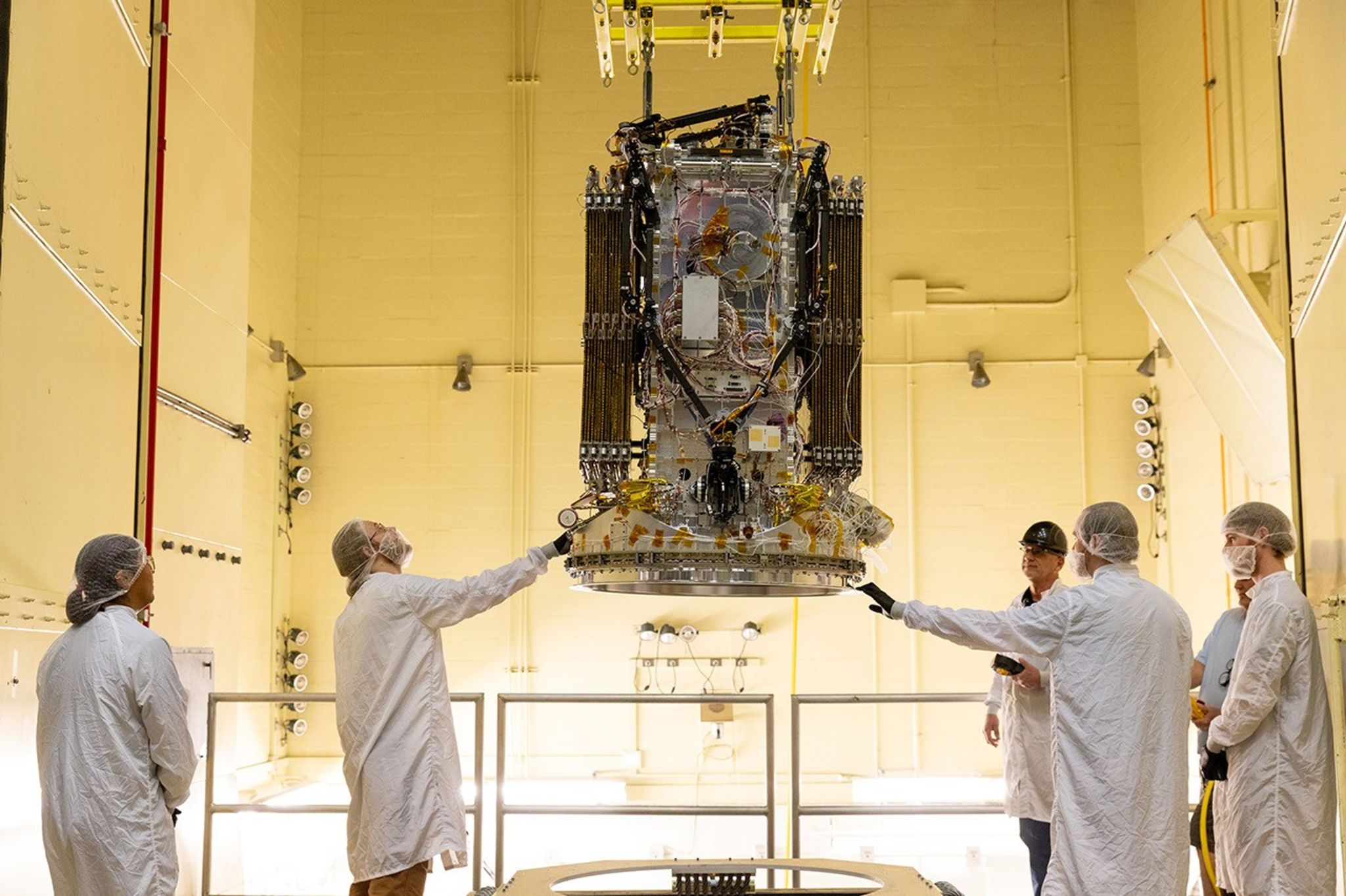
Media are invited to NASA's Wallops Flight Facility in Virginia on Wednesday, June 17, to view Northrop Grumman's Pegasus XL rocket, carrying a Katalyst robotic spacecraft that will attempt to boost the orbit of NASA's Neil Gehrels Swift Observatory.
Katalyst's robotic servicing spacecraft, called LINK, will launch on Pegasus in June to rendezvous with Swift and raise its altitude, extending its science mission lifespan.
Both United States and international media may apply for onsite credentials to view the Pegasus and the L-1011 Stargazer aircraft that will deploy the rocket at launch. In addition to interview opportunities on site, media also will receive images and video of LINK, as the spacecraft already will be encapsulated in the rocket.
NASA and Katalyst also will host an audio-only media teleconference on June 17 to preview the mission to boost Swift's orbit. Audio of the media teleconference will stream live on NASA's YouTube channel. Information about timing and teleconference participants will be shared closer to the event.
The application deadline for U.S. citizens to attend in person is 4 p.m. EDT, Wednesday, June 10. International media without U.S. citizenship must apply by 3 p.m. EDT, Wednesday, May 27. NASA's media accreditation policy is available online.


