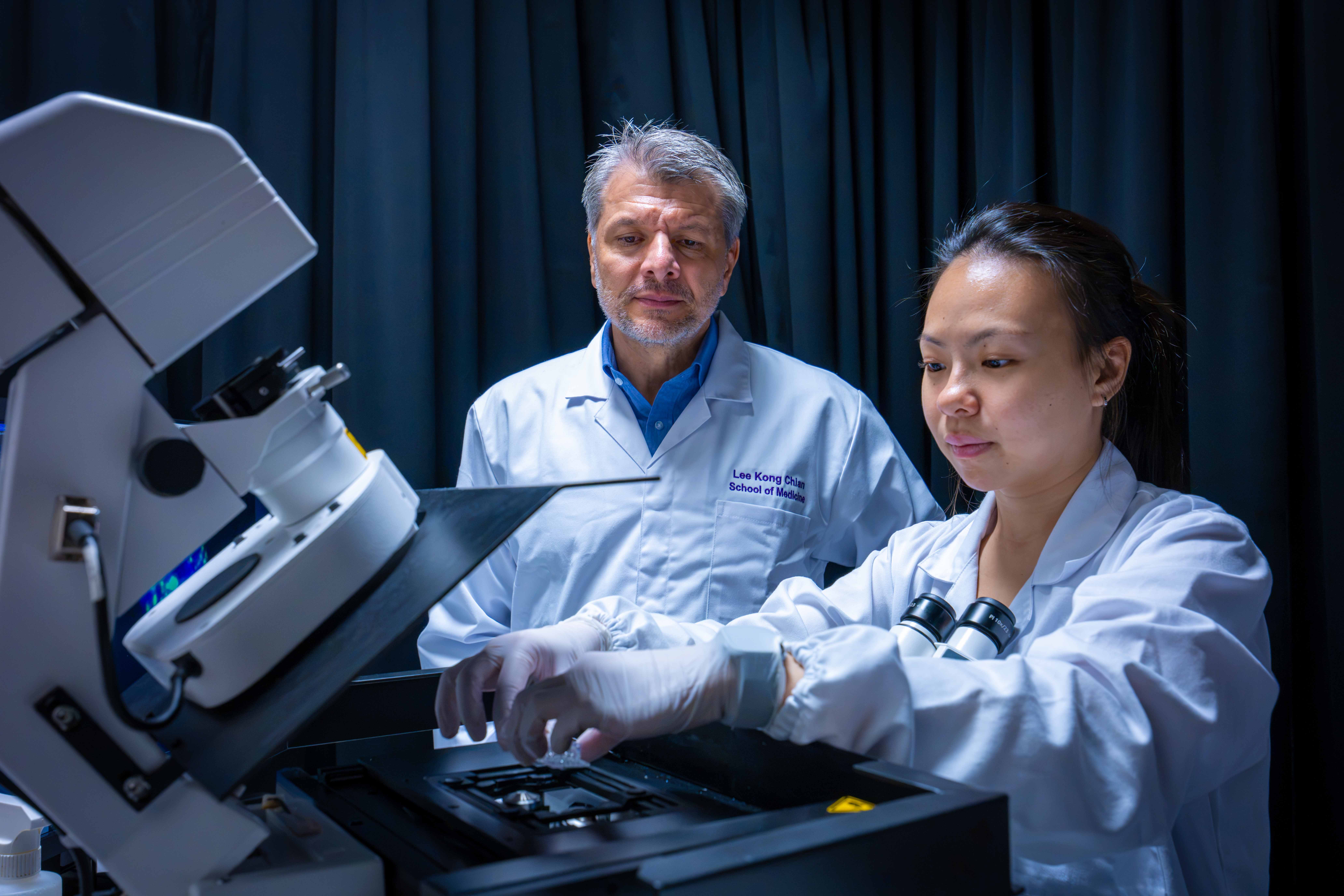
Researchers led by NTU Singapore have found a new mechanism that enables hard-to-treat cancer cells avoid being killed by anti-cancer drugs known as PARP inhibitors.
By blocking the activity of an enzyme called PARP1, PARP inhibitors prevent cancer cells from repairing DNA damage, which causes the cells to die. However, some patients' tumours develop resistance to these drugs.
The researchers discovered that a protein called TEX264 helps clear molecules in cancer cells that can cause DNA damage. This protects the cancer cells from further damage and allows them to survive cancer treatment.
Inhibiting TEX264 reversed the cells' resistance to the drugs, which could pave the way for new treatments for resistant breast and ovarian cancers.
/Public Release. This material from the originating organization/author(s) might be of the point-in-time nature, and edited for clarity, style and length. Mirage.News does not take institutional positions or sides, and all views, positions, and conclusions expressed herein are solely those of the author(s).View in full here.