
Researchers at the University of Southampton have developed a promising new way to bolster the body's immune system response to cancer.
In a study published in Nature Communications , researchers used specially engineered multi-pronged antibodies to better activate cancer-killing T cells.
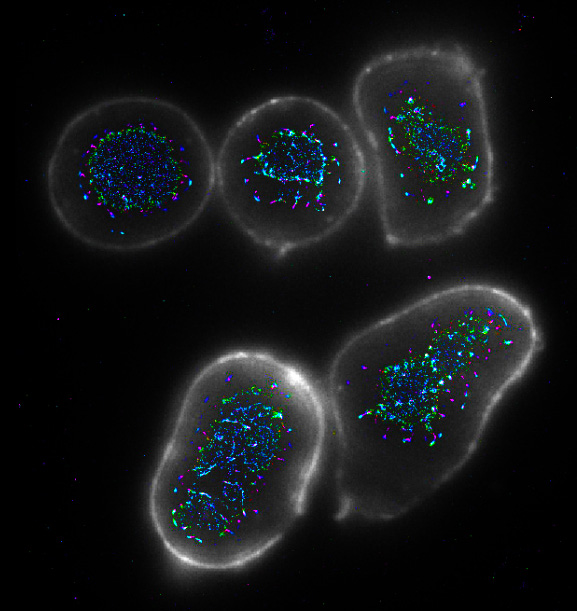
The antibodies work by 'grabbing' and 'clustering' multiple immune cell receptors - boosting the signal which tells the T cell to attack the cancer.
The team from the University of Southampton's Centre for Cancer Immunology focused their efforts on an immune receptor called CD27. CD27 needs a matching key (ligand) to activate T cells. This ligand is produced naturally in response to infection, but cancers lack this signal and T cells can only elicit a weak response against the cancer cells.
Antibodies can work a bit like a master key, but most commonly used antibodies are Y-shaped molecules with two prongs, meaning they can only engage two receptors at the same time.
While antibodies have revolutionised cancer treatment, some cancers don't respond because T cells don't receive all the signals they need to become fully active.
The antibodies developed by the researchers have four prongs, allowing them to grab onto more receptors. They also enlist the help of a second cell, forcing all the CD27 receptors they are holding to clump together. This amplifies the signal and mimics the natural way CD27 is activated in the body.
Professor Aymen Al‑Shamkhani at the University of Southampton, who led the study, explains: "We already understood how the body's natural CD27 signal switches on T cells, but turning that knowledge into a medicine was the real challenge. Antibodies are reliable molecules that make excellent drugs. However, the natural antibody format was not powerful enough, so we had to create a more effective version."
In lab studies using mice as well as human immune cells, the new antibodies were more effective in switching on CD8⁺ T cells - the 'special forces' of the immune system, than standard Y-shaped antibodies, delivering a more robust anti-tumour response.
By making CD27 more responsive to therapeutic targeting, the findings provide a blueprint for developing next‑generation immunotherapies that harness the immune system to fight cancer more effectively.
Professor Al‑Shamkhani said: "This approach could help improve future cancer treatments by allowing the immune system to work closer to its full potential."
The research was funded by Cancer Research UK and highlights the Centre for Cancer Immunology's role in advancing innovative cancer immunotherapies.
Harnessing Multivalency and FcγRIIB Engagement to Augment Anti-CD27 Immunotherapy is published in Nature Communications and is available online.


