
Megan King/NIST
Public health officials and law enforcement agents are facing a growing challenge in combating the fentanyl epidemic: They lack detailed and timely information on the harmful and potentially deadly substances, including anesthetics, industrial chemicals, veterinary sedatives and other adulterants, that drug suppliers increasingly mix into the illicit fentanyl supply.
Now, a new study from the National Institute of Standards and Technology (NIST) reveals how the prevalence of these adulterants changes over time and across different regions of the country. NIST chemist Edward Sisco and his colleagues base their findings, reported in the journal Drug Testing and Analysis, on an analysis of 4,563 samples of drug residues collected nationwide between January 2024 and June 2026. The team relied on a technology that identifies trace amounts of unknown compounds within seconds.
Alerting first responders to the prevalence of specific adulterants in local supplies of fentanyl may make the difference between life and death. That's because most of the harmful compounds aren't opioids and therefore require additional medical treatment to counteract their damaging effects. For instance, one of the adulterants, a veterinary anesthetic known as xylazine, causes leg or arm wounds so severe that amputation may be necessary if they are left untreated.
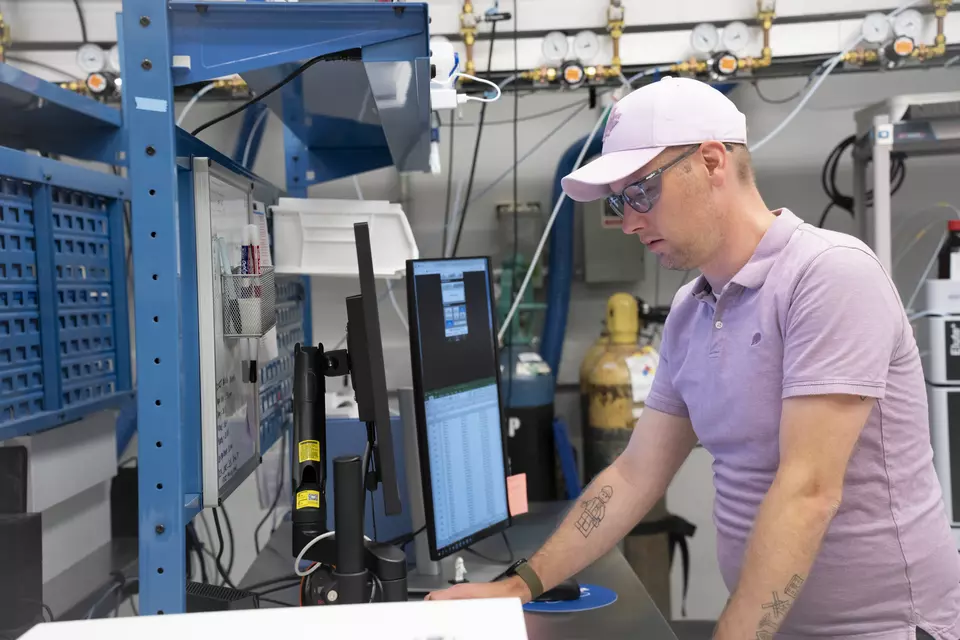
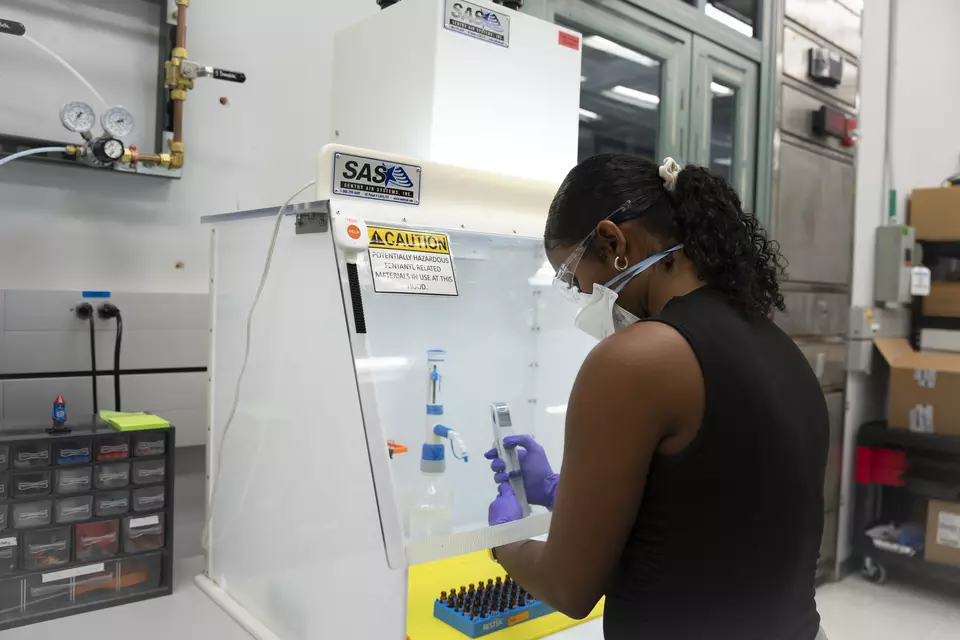
The NIST study is part of the Rapid Drug Analysis and Research program (RaDAR), which collaborates with partners in public health, law enforcement, forensic science and medical examiner offices across the U.S. to quickly capture and report the chemical makeup of the ever-changing landscape of illicit drugs. Currently, researchers and healthcare providers have very little data on the complex mix of chemicals in the U.S. illicit drug supply. The RaDAR program is filling this critical information gap by providing actionable, near-real-time data to frontline responders in communities across the nation.
"RaDAR enables NIST to immediately alert public health officials to the presence of new adulterants in their area, so that they can plan a more effective treatment for people who have consumed fentanyl," Sisco noted.
Megan King/NIST
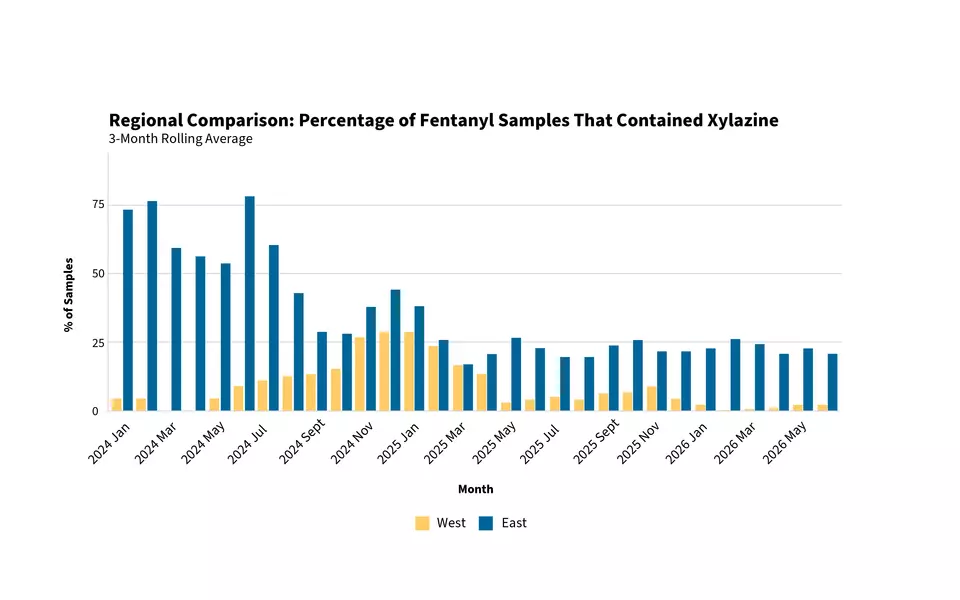
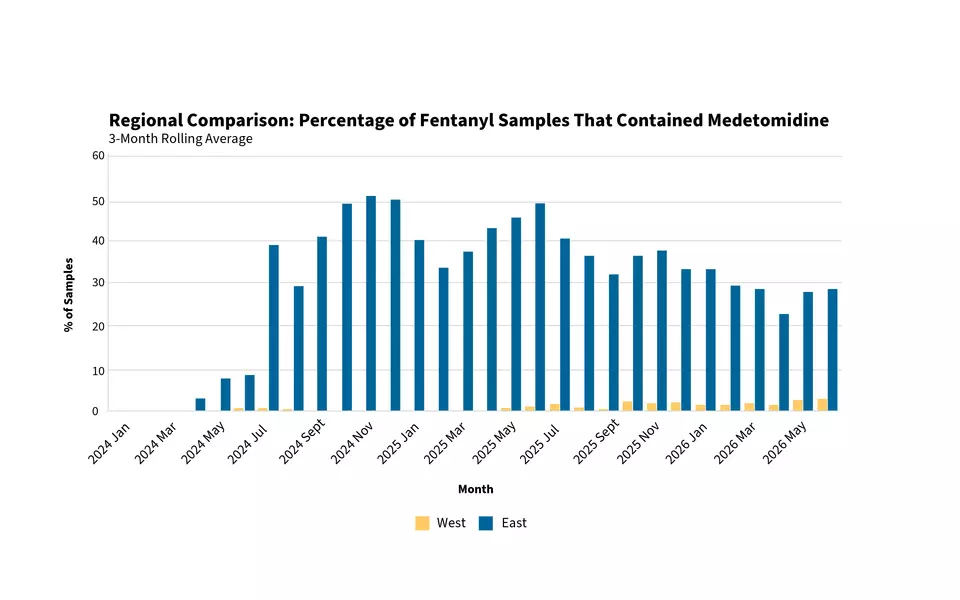
The new study includes samples from both the eastern and western parts of the U.S., enabling researchers to provide a more expansive view of how quickly fentanyl adulterants found in one region of the country spread to other regions over the 2 1/2-year span of the NIST study.
"We are now tracking fentanyl additives over a wide geographic area," said Sisco, "so we can see the movement of some of these additives over time, for example, from Philadelphia, down to Delaware and Maryland, and then out west."
Using that data, he and his collaborators are now trying to model the movement of different adulterants from one area of the country to another. "Our goal is that if some new additive pops up, say in Philadelphia, we'll be able to tell public health officials when that additive is likely to show up in Delaware, Maryland or the West Coast."
Ed Sisco/NIST
Ed Sisco/NIST
Among the study's key findings:
- Additives in the fentanyl drug supply appear to follow a cyclical pattern, each independently rising and falling in prevalence.
- Animal tranquilizers such as xylazine are much more common on the East Coast than in the West. In addition, xylazine is being replaced by medetomidine, a much more potent sedative that can cause severe withdrawal symptoms.
- An industrial chemical known as BTMPS, used in manufacturing plastics, has shown up in fentanyl samples in both the eastern and western parts of the U.S. since the summer of 2024. A potentially toxic substance, BTMPS can cause eye inflammation and burning.
- The fentanyl samples from the western part of the country tend to have fewer additives, but those additives appear in higher concentrations than in the drug supply in the eastern U.S.
- The number of additives in the fentanyl supply is rising. In early 2024, one to two additives were typically found in a drug sample; now six or more compounds are more common. With more additives, it's both more difficult to analyze a sample and more difficult to treat a drug overdose, Sisco said.
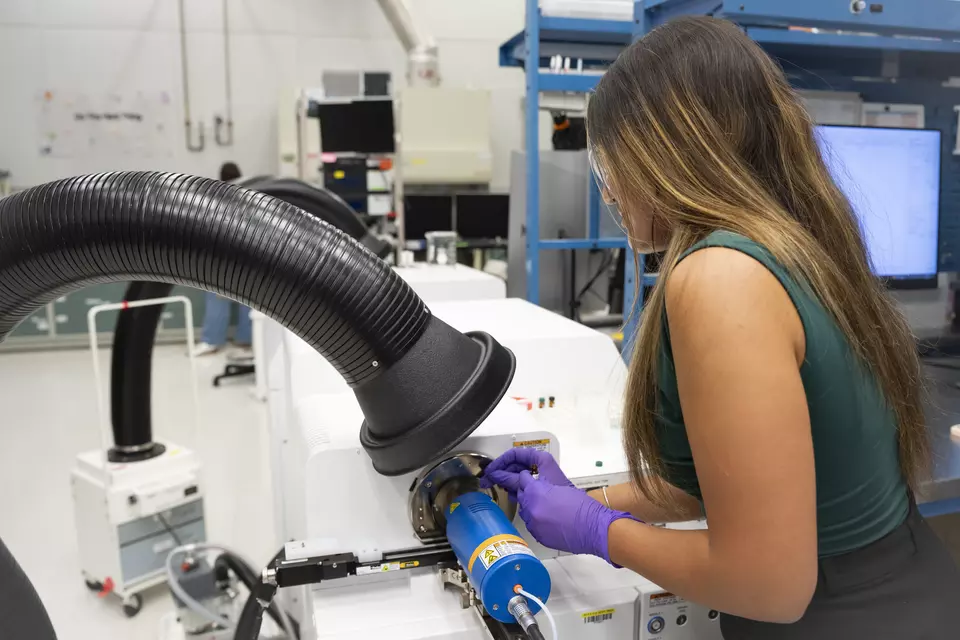
To rapidly identify the adulterants, the NIST researchers rely on a technique known as Direct Analysis in Real Time Mass Spectrometry (DART-MS), which uses a device called a mass spectrometer to create a unique chemical fingerprint for each compound in a sample.
Megan King/NIST
Conventional mass spectrometer systems employed in forensic and public health laboratories take tens of minutes to identify the components of a sample because the material must be vaporized and pass through a column with a special coating. By bypassing that step, DART-MS reveals all the components, even trace amounts of adulterants, in seconds.
Sisco and his collaborators are now planning a similar survey for additives in ketamine, an anesthetic that has increasingly become part of the illicit drug market. The team is also investigating additives in a new class of opioids known as orphines, some of which are more potent than fentanyl.
Paper: Edward Sisco, Elise M. Pyfrom, Meghan G. Appley, Elizabeth L. Robinson, Katya A. Beltran and Sarah A. Shuda. Trends in Fentanyl Adulteration From Rapid Drug Analysis and Research (RaDAR) Drug Checking Samples, January 2024 to June 2026. Drug Testing & Analysis. Published online Oct. 7, 2026. DOI: 10.1002/dta.70164


