
A Professor of Viking Studies at the University of Nottingham has led an ambitious new project and produced a fresh, annotated English translation of one of the most important medieval texts of northern Europe – The Saga of the Earls of Orkney (Orkneyinga Saga).
Professor Judith Jesch in the School of English translated the Icelandic saga – written in Old Norse – among the world's great literary treasures, which chronicles the lives and deeds of early Scandinavian settlers and especially the feuds and fights of their rulers.
Professor Jesch's new translation is the first major English version in nearly 50 years. The updated title, which reflects both the contents of the saga and the way it is referred to in the earliest manuscripts, is a groundbreaking edition which radically rethinks how the saga's complex manuscript history is presented in a translation – while offering detailed historical and archaeological annotations and a translation that more closely reflects the character of the original Old Norse text. The translation also includes two further short texts not included in previous translations, and a gazetteer of saga sites by archaeologist Colleen Batey.
The translation project was supported by a British Academy/Leverhulme Small Research Grant and an Arts and Humanities Research Council (AHRC) Research Development and Engagement Fellowship. The Fellowship project Ragna's Islands: A New Saga stimulated new research on the saga and the medieval history and archaeology of northern Scotland, and has striven to engage local communities in Orkney and Shetland with their Viking Age heritage.
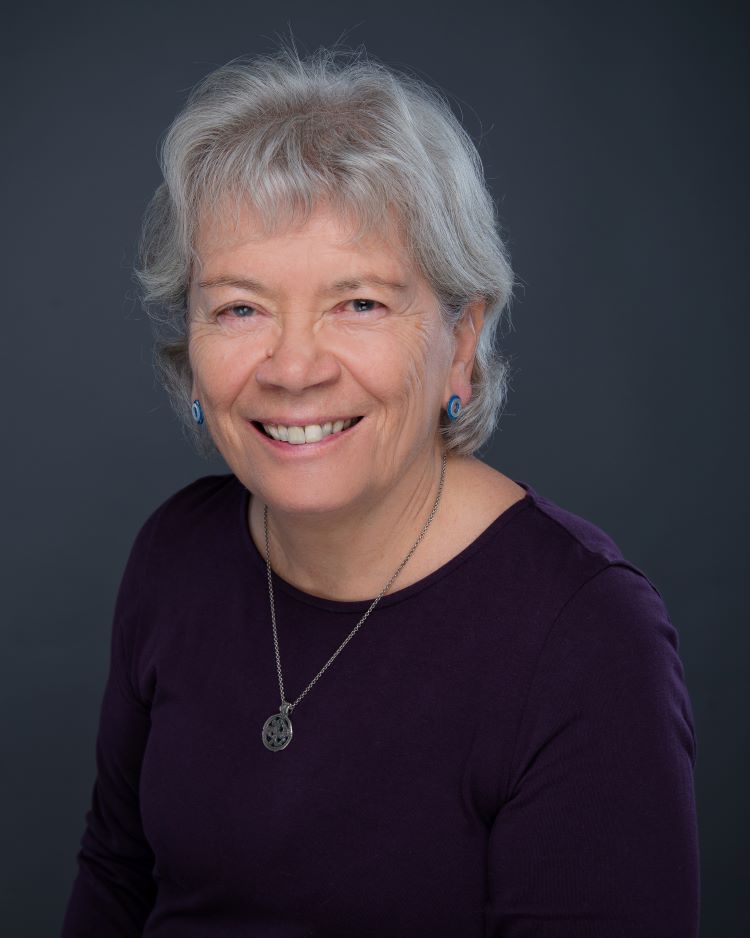
I have been studying this saga and its historical contexts for several decades, and started this translation project about seven years ago. The Ragna's Islands project developed out of my sense that there was still a lot to be learned about the Norse history of northern Scotland and that the translation could be used as a stimulus for new work, particularly on the place-names, which tell the history of a region with few early documents."
The research team – including Postdoctoral Research Associate Dr Matthew Blake and Research Archivist Corinna Rayner, along with project poet Charlotte Eichler, several archaeologists, and specialist collaborators – have been conducting fieldwork and community engagement across the northern isles, throughout 2024-25.
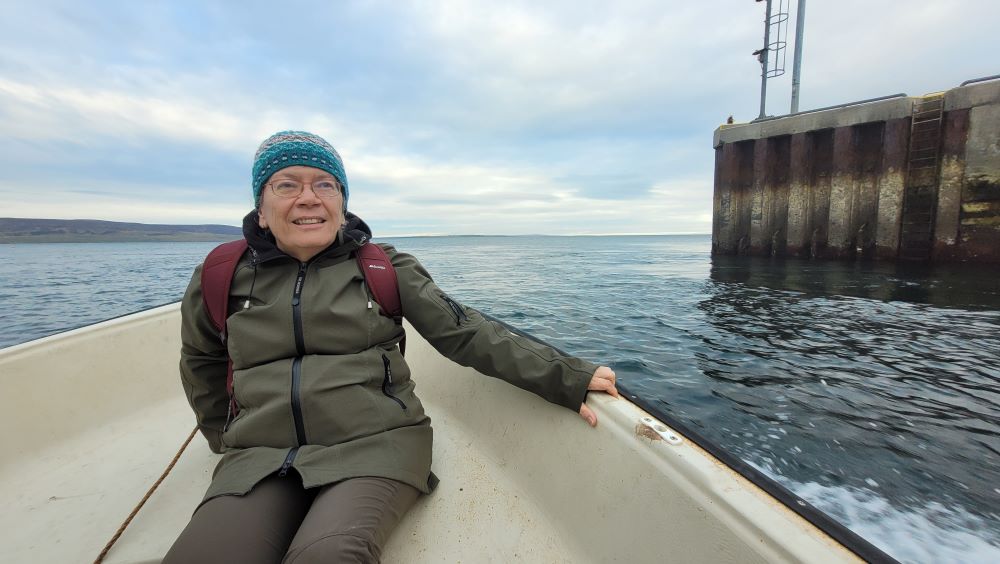
Public engagement has been central to the project. Volunteers from the northern isles have contributed place-name data, participated in workshops, and provided feedback on early versions of the translations. A particular focus of the project has been the Norse-derived place-names of northern Scotland, many of which are first recorded in the saga.
Corinna's PhD research, developed from the Ragna's Islands project, features new work based on the place-names of five of Orkney's islands; and alongside this, through islander interviews – particularly those who farm and fish and have lived their lives there – the Saga Place-Names Map was created, which launches later this month. The story map locates and provides interpretations, where possible, of Orkney, Shetland, Caithness and Sutherland places occurring in The Saga of the Earls of Orkney.
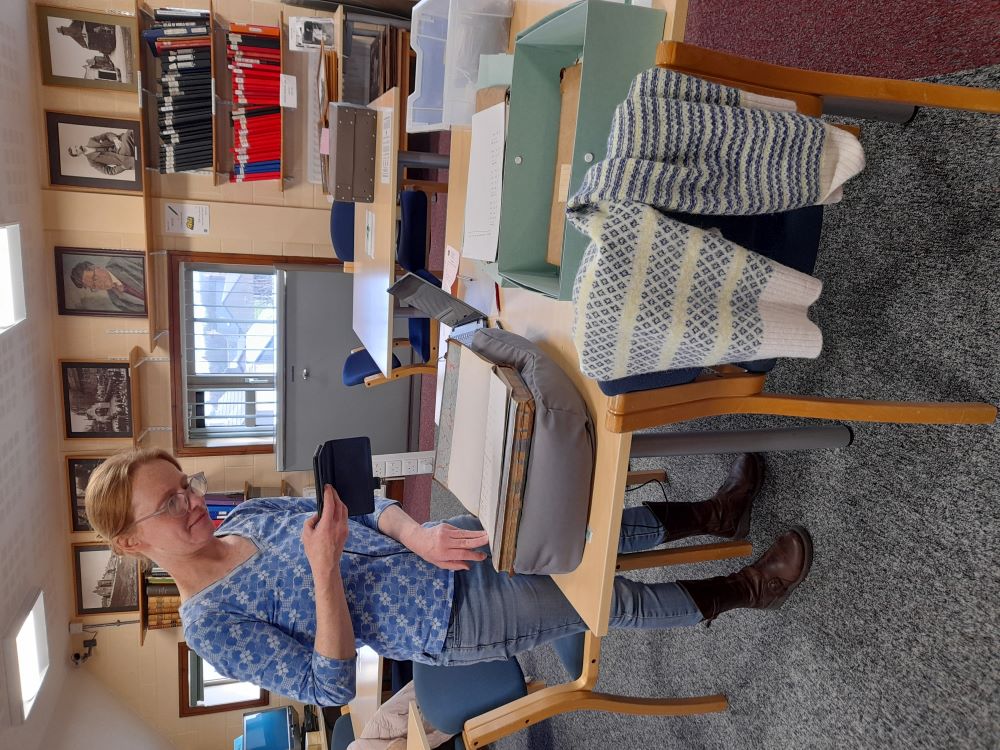
Corinna Rayner, said: "Orkney is a beautiful and captivating place, famed for its archaeology. While working on the project I soon realised that its place-name and linguistic past is equally fascinating and interesting. I was struck by the richness of the landscapes of the various islands we visited and how those landscapes have been used and named.
"It was speaking to that older generation of islanders with their local dialects, their wealth of local knowledge, and their perceptions of the landscapes and seascapes around them that highlighted for me the importance of talking with them about places and their names before that knowledge becomes irretrievable. And it was learning of the fragility of this knowledge which holds the key to the meanings of so many place-names that inspired me to continue with my research."
The final publication of The Saga of the Earls of Orkney is being accompanied by a series of public booklets and pop-up exhibitions, developed in collaboration with island communities, to share this renewed understanding of Orkney's Norse past with residents and visitors alike.


