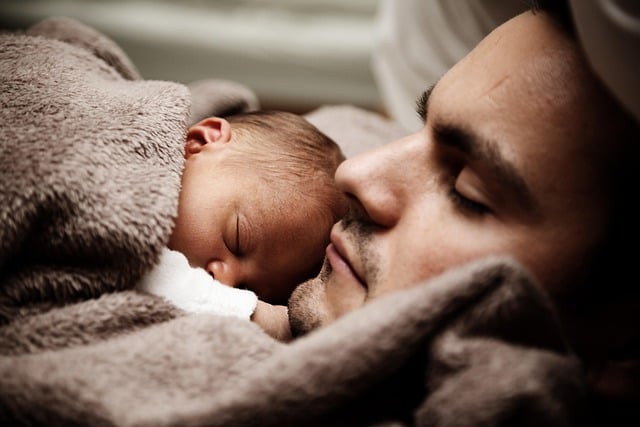
Ironworker Chris Scattone remembers walking slowly to the edge of the 63rd story of the skyscraper he was helping to build and imagining his own funeral. He remembers the orange glow from a nearby copper rooftop in lower Manhattan, and how his T-shirt was spattered with blood after he shot heroin that morning. He was homeless, severely underweight and convinced life was not worth living.
A coworker - a union brother - noticed him, grabbed his harness and asked if he was OK.
"Somehow I ended up in the middle of the floor, and I remember being in a fetal position, and it was the first time I ever cried for help in my whole life. I remember looking at him and saying, 'I don't want to die, and I need help,'" Scattone said. His coworker connected him to union support that helped him get into rehab.

Arianna Schindle (left) and Jeff Grabelsky (right) of the ILR School's Worker Institute talk with Paul Schwan (center), a member of the Ornamental and Architectural Ironworkers Union Local 361 and an instructor in the peer supporter program.
Now Scattone is sober and one of 20 union-based instructors in an innovative peer support program designed to destigmatize mental health and reduce suicide in New York City's construction industry by leveraging relationships within its unions. The program was co-created by the ILR School's Worker Instituteand the Building and Construction Trades Council of Greater New York (BCTC), which represents all 41 local union affiliates of all 15 international construction unions and more than 100,000 union members in the New York City metropolitan region.
"What Cornell is doing is a form of action," said Scattone, now member assistance program director at the Ornamental and Architectural Ironworkers Union Local 580. "It's not another slogan, it's not another poster, it's not another help line to call," he said. "It's an in-person action and I respect it, because it's saying it's OK to ask for help, and that's what they're providing."
The program, the Building Trades Peer Support Network, includes a two-hour training, "It's Not Weak to Speak." Another component trains union members to be on-site peer supporters who listen to troubled coworkers, assess the risk of their mental health and refer them to appropriate support.
The construction industry has one of the highest suicide rates of any industry in the country, second only to mining, according the Centers for Disease Control and Prevention. And construction workers die of drug overdoses at a greater rate than workers in any other industry, according to the CDC.
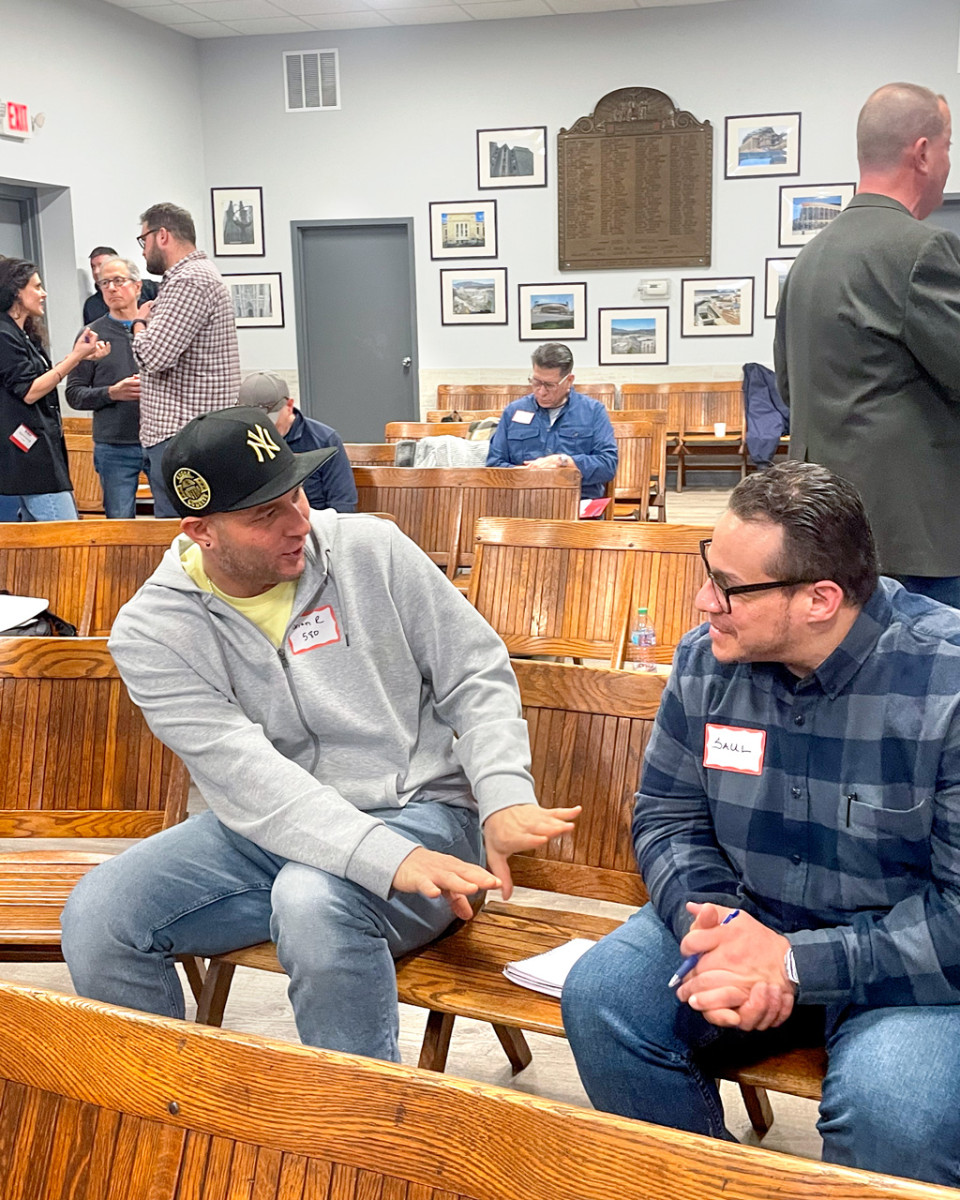
Two union members do a role play during a peer-supporter training at the Bricklayers and Allied Craftworkers Union Local 1, in Long Island City, New York.
The Worker Institute is collaborating with BCTC to conceptualize, design and develop the initiative, train union members and evaluate the program. Their goal is to train 1,000 union members - 1% of BCTC's membership - by spring 2026.
The initiative represents a cultural shift, said Arianna Schindle, director of training and curriculum design at the Worker Institute.
"It's not only launching a training program. It's actually launching an entire system of care and emergency support and response to end suicide in the construction industry in New York," she said. "The more people that are talking about it, the more effective the program will be."
The hope is to scale up the initiative to 235,000 union members throughout New York state, said Gary LaBarbera '94, president of BCTC and of the New York State Building and Construction Trades Council.
"I don't believe we could have really created the program and the curriculum without the assistance of Cornell," he said. "They did an outstanding job in creating the whole program, because it is a system of care and their expertise in that area was invaluable. I can't even put a price on that."
Emotional first aid
Construction workers face myriad stresses every day, said Robert McCleary, a shop steward at the Laborers Union, Local 66, in Suffolk County, Long Island. There's constant pressure to finish projects quickly. Hard physical labor takes a toll on the body.
"We're on work sites where there could be no floors, there could be no walls, there could be rain on you, and snow," he said. "Who wants to go out in 10-degree weather and shovel snow for eight hours, or dig a hole in 90-degree weather?"
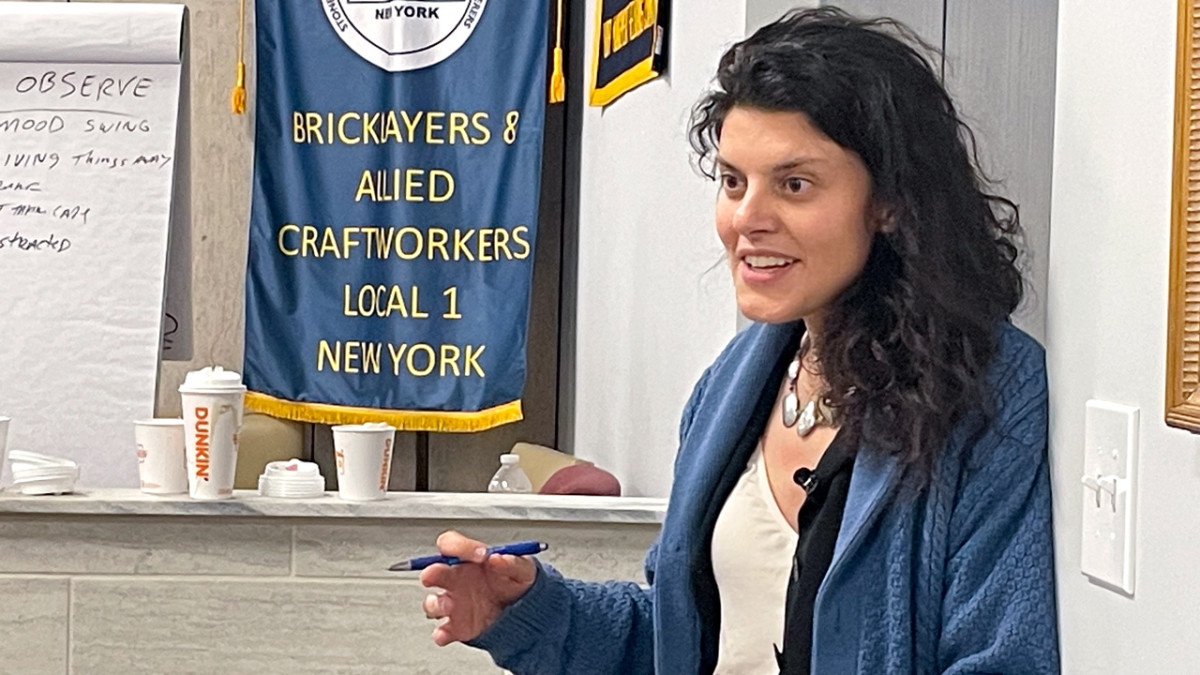
Arianna Schindle, director of training and curriculum design at the Worker Institute and a licensed therapist, offers feedback to peer supporter trainees.
And the work is dangerous. In North America, about 1,000 construction workers a year are killed on the job, according to the Center for Construction Research and Training.
"I watched someone get impaled in the face by an I-beam, and he never went home that day. I watched him pass away in someone's arms right there, on the job," said Lorenzo Curtis, an instructor at the International Brotherhood of Electrical Workers, Local 3, in New York City. "That is stuck with me forever."
The construction industry's stigma against sharing one's feelings only makes things worse, McCleary said. "You have to be a tough guy - can't let anybody know you're letting your guard down," he said. "To bundle it up and have someone tell you 'Shut up and go back to work' - it's not the right thing to do."
To address the problem, in 2024 BCTC began creating a peer assistance program led by union directors of member assistance programs (MAPs). They soon felt the need to bring in a higher education institution to assist, LaBarbera said.
"My first reaction was Cornell," he said. "I know the work that they do in terms of working with so many of the unions and creating curriculum and education. I thought that would be a natural fit."
Since then, the Worker Institute has collaborated with union MAPs to create a comprehensive program.
"We work with organizations to develop a plan that addresses their problems in the workplace," said Jeff Grabelsky, a senior extension associate at the Worker Institute. The ILR team began by listening to and leveraging the MAPs' experience, knowledge and wisdom, he said. "They're the ones who've been on the front lines dealing with the crisis of suicide and stress in the industry. We helped them come together in a more systematic and disciplined way, try to lift up their insights and integrate them into a coherent program."
The initiative will also include systems for reporting, documentation, referrals and care, and clinical supervision and support for MAP directors.
"It's Not Weak to Speak" covers cultural norms and the importance of seeking help, Schindle said. "It talks about being strong men. It talks about not talking about feelings. It talks about holding in pain. It talks about the stresses of the industry," said Schindle, a licensed therapist. "People cry. It's so emotional. I didn't actually expect it to be that emotional, even though we designed it."
Anyone who goes through that training can apply to become a peer supporter. Identifiable by a sticker on their hard hats, they will offer confidential support on job sites, assess the level of crisis and refer medium- and high-risk cases to MAP directors or other support. The Worker Institute is now conducting a four-month "train-the-trainer" pilot, where MAP directors learn to teach the curricula to union members
"They learn basically the very, very key skills of emotional first aid," Schindle said. "It's simple, but it's a pretty advanced system. They can meet you, listen to your problem, figure out what level of distress or crisis you're in, and get you the right referrals or supports for that level."
Ask, listen and reflect
Dozens of simultaneous conversations filled the air in a meeting hall at the Bricklayers and Allied Craftworkers Union, Local 1 in Long Island City in late February, where pairs of peer supporter trainees practiced role play after role play.
At the podium, Curtis described three key steps of peer support: Ask, listen and reflect. When a troubled coworker is speaking, it's crucial to give them full attention and reflect back what they've said by paraphrasing, he said.
"When you're listening, you want to repeat back those important parts," he said. "Those are all little things that can actually open up the conversation a little bit more to help you understand what type of help they need."
Peer supporters often find it hard to resist the temptation to do what they do every day: fix problems, Curtis said. "The premise of construction is to build. Key word: construction. We take something that is just a hole and we erect a big, giant building in it. They give us a problem. We find a solution."
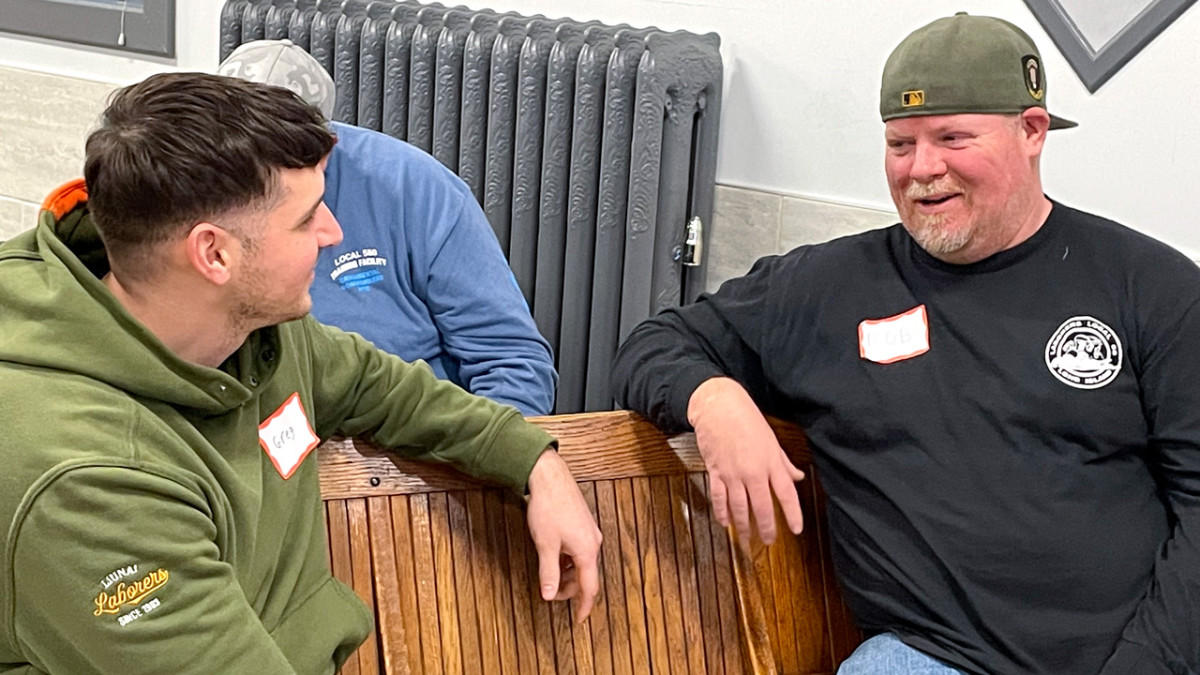
At right, Robert McCleary, a shop steward at the Laborers Union, Local 66, in Suffolk County, Long Island, does a role play with another union member during a training for the peer supporter program.
Schindle added that a troubled person is not necessarily looking for solutions at that moment. First, they need to feel heard, she said.
"They're talking to you because it feels unsolvable. And they need someone to know that it feels hard," she said. "Y'all carry heavy things. That's a heavy weight you're taking for someone, to say, 'I see how hard it is. I'm here. I got you.'"
The concept works because the support comes from another union member, Scattone said. "It's different coming from somebody who you know is digging that hole at the same time as you are," he said. "You know that they understand your job and how your problems might affect that job. They understand the stressors, they understand the culture."
McCleary says he jumped at the chance to participate because of his own experience. He struggled with financial problems and alcohol abuse disorder for the first half of his career - coming in late to work or not at all, on the verge of getting fired. But through a MAP director, he got help. "Someone reached out to me and showed me that there's someone out there to talk to and I didn't have to live with my struggles anymore."
He's been sober for three-and-a-half years. Now he sees asking for help with mental health as the same as asking for a hand on a construction site.
"As a job steward, I'm a big advocate of doing things together. If I need help at work, I can call over someone to come help me get the job done. What would stop me from calling someone to help me out with my problems that I'm going through?" he said. "We're a union."