
The risk for being bitten by a tick infected with bacteria that cause Lyme disease is as high in Ohio as it is for those living in Northeast states that have dealt with Lyme disease for over 50 years, according to a new study.
Researchers followed up on a 2014 study finding that Ohio's first established population of blacklegged ticks, carriers of the bacteria that cause Lyme disease, had been detected in 2010 in Coshocton County.
At that time, the infectious bacteria were detected in 2.4% of collected blacklegged ticks and antibodies indicating prior exposure to the pathogen were detected in 20% of white-footed mice, one of the most common of several small mammal sources of wildlife infections to ticks in their nymph and larval stages.
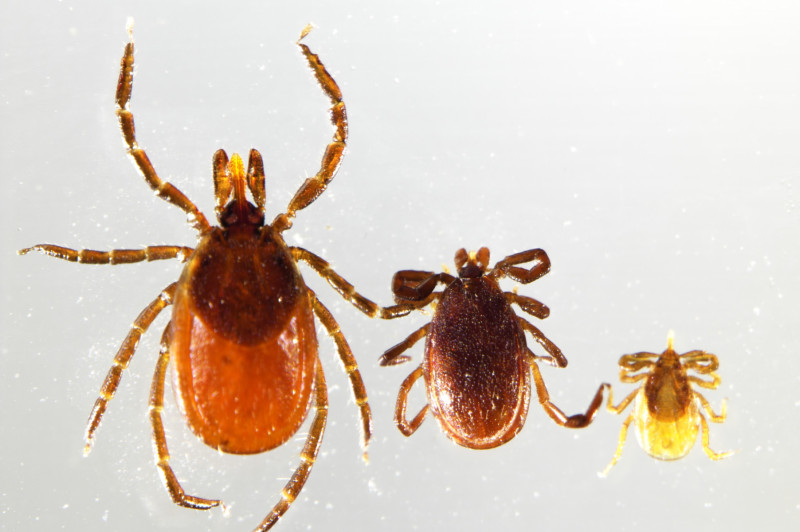
In the new study, the research team from The Ohio State University found that the prevalence of infection in captured ticks had increased to as much as 47.6% and in infected small mammals, up to 60.4%.
"Our suspicion was that 10 years later, when we have robust populations of the right hosts in this ecological community in Ohio, that this pathogen vector system could really establish and take off. And that's what this study essentially shows - that that is what happened," said senior author Risa Pesapane, associate professor of veterinary preventive medicine at Ohio State.
"And now Ohio has the same risk as those endemic regions in the Northeast. I think that is surprising to a lot of people because we think, sure, we have the tick and we have some of the hosts, but we're not Connecticut. But for some parts of Ohio, we are Connecticut at this point."
Pesapane noted that the risk for infection varies across Ohio and is highest in forested areas in the eastern and southern regions of the state. That said, the presence of blacklegged ticks has been reported in all 88 counties.
"I think it's really important to convey, when it comes to both personal protection and to the medical community's awareness, that you have the same chance of getting Lyme disease in Coshocton, Ohio, and other Ohio areas with the right habitat, that you do in Lyme, Connecticut."
The study was published recently in the Journal of Medical Entomology.
Blacklegged ticks, also known as deer ticks, are widely distributed in the eastern United States and are a known carrier of the Borrelia burgdorferi strains of bacteria that cause most North American Lyme disease cases in people and dogs. The ticks also carry Anaplasma phagocytophilum, the pathogen that causes anaplasmosis.
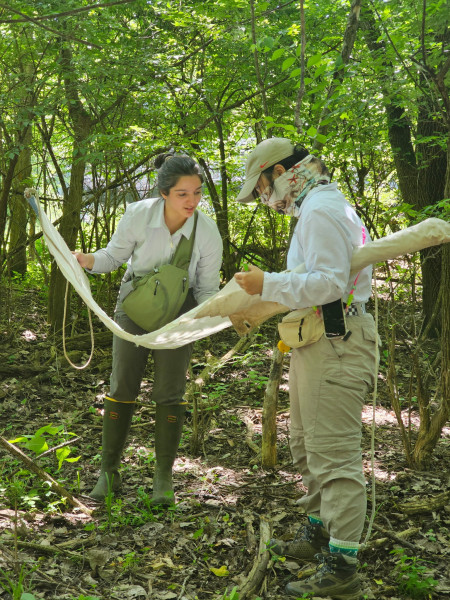
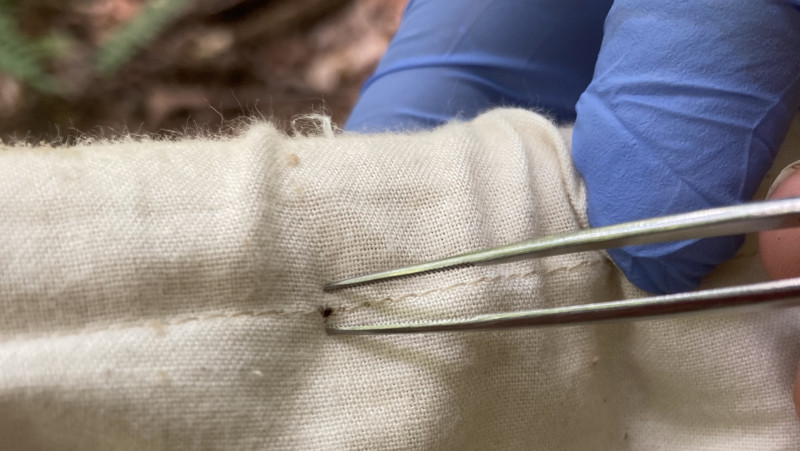
Ningzhu Bai, a PhD student in the Environment and Natural Resources Graduate Program at Ohio State, led this study for her master's thesis. The team collected 654 ticks demonstrating questing behavior and trapped 106 small mammals. Ticks pick up the infectious bacteria from small mammals that are reservoir hosts, which infect the ticks that bite them for a blood meal.
Deer, by the way, are not involved in the cycle of infection that occurs in ticks' earliest life stages, but are strongly linked to blacklegged ticks because white-tailed deer are the main hosts of adult ticks that are looking for blood meals and mates.
The researchers extracted genomic DNA from 368 ticks and from mammal tissue and blood samples to test for Borrelia burgdorferi and Anaplasma phagocytophilum.
"It was shocking to find that infection prevalence increased from 2.4% for Borrelia burgdorferi sensu lato to almost 50% in 10 years," Bai said. "And it was also really high for Borrelia burgdorferi sensu stricto - over 40% carried that pathogen."
The infection prevalence in ticks for the anaplasmosis pathogen was 15.5%. Six of the eight mammal species tested positive for infectious bacteria with prevalence of 60.4%, 19.8% and 11.9% for the same pathogens, respectively. White-footed mice and eastern chipmunks were the most frequently infected hosts.
"When I talk to people, I like to stress this means one out of every two ticks that you might encounter in Ohio could possibly be infected," said Pesapane, who also has a faculty appointment in Ohio State's School of Environment and Natural Resources.
The study provides the ecological data needed to guide where interventions could have the most impact - evaluating the effectiveness of tick-killing acaricides on small mammal reservoirs is an upcoming research plan for the Coshocton properties visited in this study.
"Ecological interventions are challenging. That's why we keep promoting personal protective actions, which work extremely well," Pesapane said. Steps include wearing tick repellent and long sleeves and pants, and tucking pants into socks while outdoors; performing a thorough tick check once inside, and showering; and using preventives for companion animals.
In Ohio, these protective tasks are worth it, she said: "If we look from 2010 all the way to 2025, there's been a 48-fold increase in the number of Lyme disease cases in Ohio, and we are going to be considered a high-incidence state moving forward."
In addition to frequently collecting and studying ticks of medical concern across Ohio, Pesapane invites the public to mail ticks to her lab. She is also the faculty director of the Buckeye Tick Test, an Ohio State service that tests submitted ticks for pathogens that cause disease, including Lyme disease, for a fee.
These submissions, and her own research, have made it clear that tick bites are not only a warm-weather threat.
"Even on days that have snow, as long as the ambient temperature is above freezing, blacklegged ticks will be seeking hosts and biting rather indiscriminately whomever they encounter," she said. "So year-round, there's a tick exposure risk."
Andreas Eleftheriou of Ohio State was also a co-author of the study. This work was supported by the U.S. Department of Agriculture National Institute of Food and Agriculture.


