
In the early 1970s, Australia was undergoing something of a seismic shift in its views towards the conservation and preservation of our most iconic natural environments.
Indeed, our unique Antipodean landscapes were becoming increasingly synonymous with our national identify, and helping to transform public policy in the process.
None more so than the Great Barrier Reef which was officially gazetted as a Marine Park on Friday, 20 June 1975 to protect it from potentially devastating mining activities.
It still beggars belief, particularly for anyone who has experienced firsthand the colour and majesty of the world's largest coral reef system, that it was once thought a viable source of oil and petroleum.
But perhaps even more unbelievable is, at the time, management of Australia's newest marine protected area - bigger than some European countries - was initially charged to a single person; a talented young scientist and engineer known affectionately in his later years as 'Rocket'.
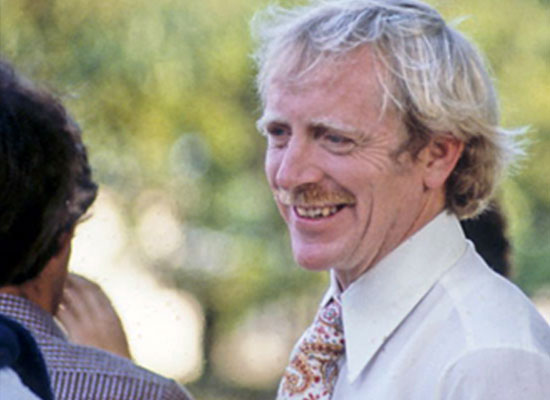
After a career spanning more than half a century, two countries, and a gamut of ecological and environmental challenges, Rod Williams admits he is now - somewhat - happily retired.
"I still do the occasional contract work," he says wryly, "when the opportunity permits."
His background in civil engineering and water sanitation has taken him from California's largely unregulated San Fransico Bay area of the 1960s and 70s, through to executive roles at some of the largest local government and private consulting organisations in Australia.
It was during the formative years of his career in the early 1970s that the Great Barrier Reef became part of the national consciousness, thanks to the successful Save the Reef campaign and the eventual creation of the Great Barrier Reef Marine Park.
And it was his time in North Queensland, as the Executive Officer and inaugural employee of the newly formed Great Barrier Reef Marine Park Authority, on which he reminisces most fondly.
"Day one, in September 1976, was probably the most exciting day of my life," he recalls.
And one for which he was incredibly well-versed, having not only grown up as a frequent visitor to the Reef, but having studied and monitored the human impacts wrought on marine environments both in Australia and abroad.
This included witnessing firsthand the devasting effects of the 1969 Santa Barbara oil spill, during which up to 100,000 barrels of crude oil spilled into the Santa Barbara Channel in Southern California.
It was following this catastrophic event that Rod completed postgraduate studies in marine and estuarial sciences at the University of California in Berkeley in the early 1970s, focusing on changes in species diversity in San Fransico Bay over the prior century.
"After I was appointed to the Authority - as we called it back then - I essentially set about reading up on all available literature regarding the Great Barrier Reef; noting the beautiful photographic books, particularly William Savile-Kent's book of photography which showcased not only what a beautiful marine ecosystem it was, but some of the changes that had occurred from the late 19th century to the present," Rod said.
"Obviously understanding our remit and the legislation (The Great Barrier Reef Marine Park Act 1975) was critical, as was appointing equally committed staff who could work with the community and implement a unique piece of legislation."
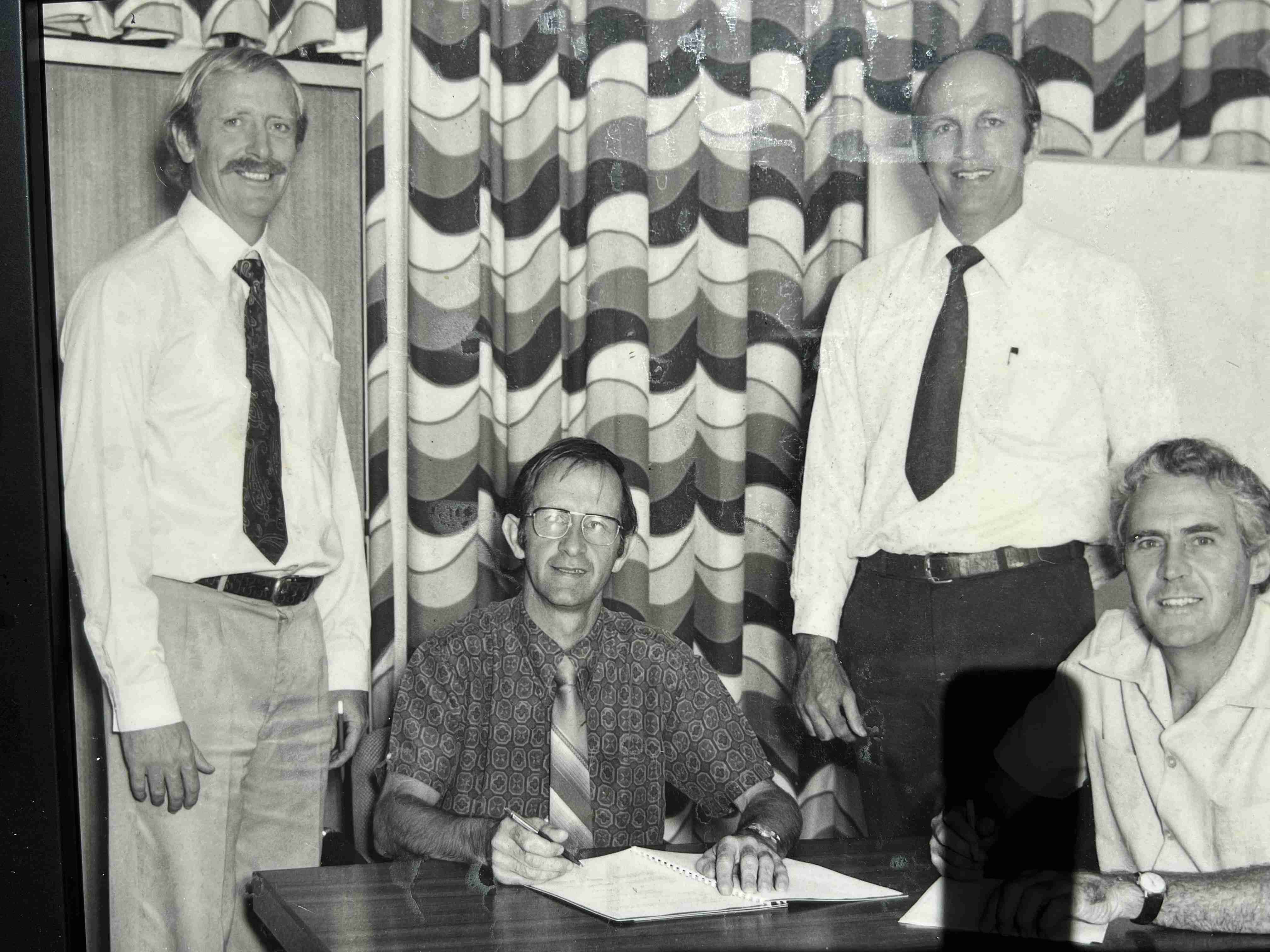
That started with the hiring of Anne Wallace as Reef Authority secretary and second employee, followed by the equally astute appointment of the late Richard Kenchington from James Cook University who brought his deep scientific expertise and knowledge; as well as Simone Woodley from the Commonwealth Department of Finance to provide administrative assistance on government policy, finance and human resource procedures and legislative implementation requirements and practices.
Rod says the government-appointment of the inaugural Marine Park Authority (MPA) Board, also represented an inspired choice, consisting of:
- Dr Don McMichael (Chair) - Commonwealth Director of Environment
- Professor Joe Baker - Director, Roche Research Institute of Marine Pharmacology
- Sir Charkes Barton - Queensland Coordinator-General of Public Works
In late 1976, Rod and the MPA Board also convened the Great Barrier Reef Consultative Committee made up of representatives from the Commonwealth and Queensland governments, professional organisations and interest groups, as well as a representative from the Reef Authority.
The Committee helped advise the newly formed Reef Authority and relevant Federal Minister on matters relating to the operation and potential impact of the Act. It also advised on matters related to the declaration and zoning of the Marine Park; and served as a forum between the public and private sectors, various user groups, and conservationists.
"Don (Chair) was a brilliant man, as were they all. My first task as Executive Officer was to convene a meeting of the newly appointed MPA Board, which was striving for an absolutely consultative approach from the very beginning," Rod recalls.
"We held our first meeting at the newly built Hotel Townsville on 22 September 1976, where several administrative matters were discussed, including the identification and declaration of the Great Barrier Reef Region.
"I was really impressed by the drive of the Board, the newly appointed Authority staff and the Consultative Committee members at the time to build and maintain the relationships with all levels of government, professional organisations and the community groups adjacent to the Great Barrier Reef Region.
"At that time, we were working out of a small office on the upper floor of the Commonwealth Bank Building on Flinders Street, and HR, finance and other core services were provided by the Australian Government out of Canberra and Brisbane."
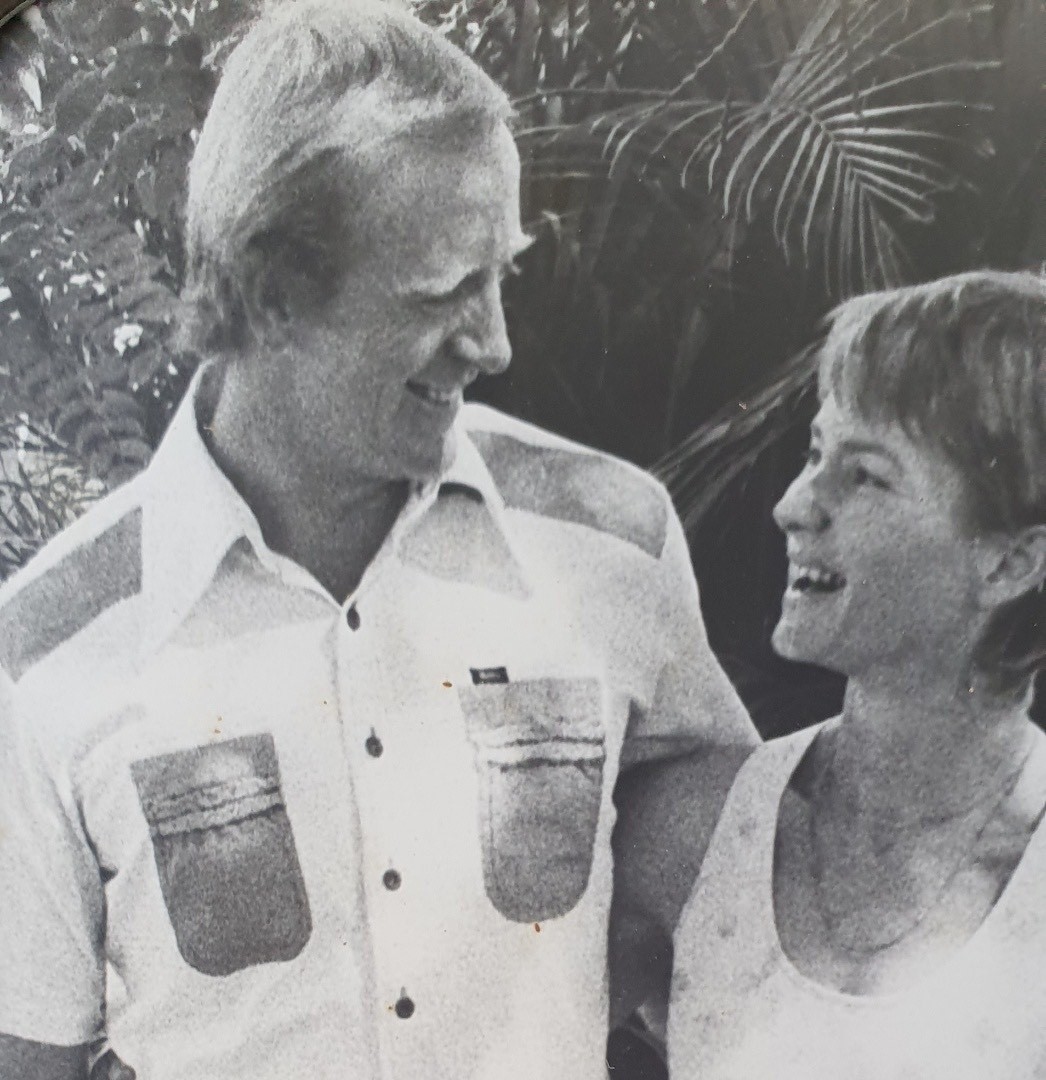
Staffing numbers reached double figures (10) by July 1977, and the following year, Rod and his family (including wife Barbara and their three children Jeremy, Menindee and Peter) made a permanent move from Canberra to Townsville, for a homecoming of sorts.
"I was actually born in Charters Towers and lived in Townsville as a child before we relocated to Brisbane where I completed my schooling and university studies," he said.
"In 1978, I relocated the core Reef Authority staff into a renovated commercial building in Stanley Street where, coincidentally, my father had worked throughout the 1940s."
It was this period, from late 1970s through to the early 1980s that Rod notes as arguably the most significant for the fledgling Reef Authority, culminating in increased efforts to improve public awareness of the agency and its work.
This included the Australian and Queensland governments signing the Emerald Agreement in 1979 and establishing a Ministerial Council to formalise the cooperative approach to managing the Great Barrier Reef; the declaration of the Capricornia section - the first section of the Marine Park, covering 12,000 km2 in Central Queensland, which set a precedent for collaborative marine planning and marked a new era in large-scale marine conservation.
Following its second meeting on 28 March 1980, the Ministerial Council adopted a zoning plan, outlining the types of activities permitted in an area. This was introduced to the Capricornia section in July 1981 following extensive public consultation.
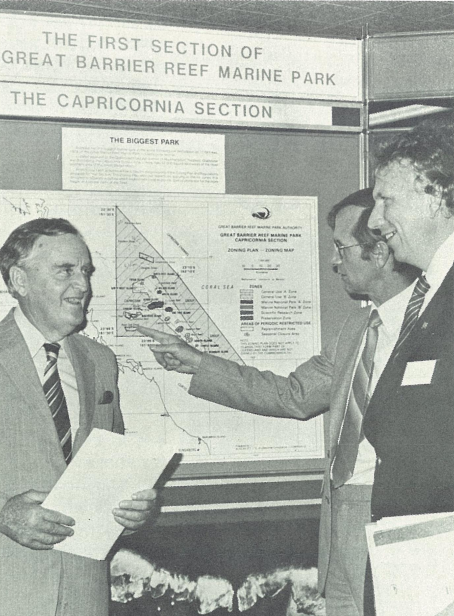
In 1980 the Great Barrier Reef was nominated for inclusion on the World Heritage List and in 1981, as Rod's nearly-five-year tenure was coming to an end, the Reef was declared a World Heritage Area because of its 'outstanding universal value' and standing as one of the most remarkable places on earth.
"I have very fond memories of my time with the Authority," Rod says.
"As many past employees and Board members have commented, it was the best and most exciting job they ever had, and for me it was no different. Each year brought new challenges."
Today, there is no greater challenge than a rapidly changing climate.
Through sheer scale and incredible biodiversity, the Great Barrier Reef is resilient, but not invincible. Its capacity to tolerate and recover from impacts is being compromised, and climate driven disturbances are compounding the effects of other key threats including coastal development, land-based run-off, and illegal fishing.
"When I left the Reef Authority there was really no such thing as coral bleaching but now, we are seeing the Reef struggling to adapt to warmer temperatures in such a short geological timeframe," Rod says.
"But I am confident that the people at the Reef Authority are doing all they can to protect the Reef and most importantly, continuing to educate the global public as leaders in their fields."
And while Rod admits the Reef of today will differ from the Reef of tomorrow, his memories from the earliest days of the Great Barrier Reef Marine Park Authority will live on.
"It was the honestly the most exciting and satisfying period of my working life."


